Dacrydium
Sol. ex Lamb. (1806)
Common names
There are no common names for the genus, but some species have distinct names. More species are native to Indonesia (10) and Malaysia (9) than to any other country and the name given to widespread species in those countries is "sempilor". That is also the trade name for Dacrydium timber; however it is also the trade name for other timber-grade podocarps.
Taxonomic notes
A genus of 21 species and one nothospecies:
Type species: Dacrydium cupressinum Sol. ex Lamb.
Synonymy (heteroptypic):
- Corneria A.V.Bobrov & Melikyan
- Gaussenia A.V.Bobrov & Melikyan
- Metadacrydium Baum.-Bod. ex Melikyan & A.V.Bobrov
As discussed for the Podocarpaceae, molecular studies have established Dacrydium as a highly distinct and monophyletic genus. There have been limited molecular studies evaluating phylogenetic relations within the species, although the work done so far indicates that (as is often the case among conifers) details of the morphology of the female cone seem to follow phylogeny closely. Dacrydium is sister to Falcatifolium, as shown by both genetic and morphological evidence. That clade in turn is sister to Dacrycarpus, and these three genera comprise the Dacrydioid clade, one of three major clades in the Podocarpaceae (there is also some evidence placing Acmopyle in this clade [Knopf et al. 2012]). Molecular clock estimates calibrated using the fossil record suggest a crown age of about 30 million years for the Dacrydium-Falcatifolium clade and about 54-95 million years for the Dacrydioid clade (de Laubenfels 1969, Biffin et al. 2011a, Biffin et al. 2011b, Little et al. 2013, Lu et al. 2014, Quiroga et al 2016, Stull et al. 2021, Khan 2022, Khan et al. 2023).
There have been two relatively complete molecular studies of the phylogeny of Dacrydium. Khan et al. (2023) used morphological and varied genetic markers to assess relationships among 11 species covering the range of the genus, and Keppel et al. (2011) used chloroplast DNA to investigate the species of Fiji and New Caledonia, while also considering several widespread "outgroup" taxa. Both studies concur on two points: D. cupressinum is sister to a clade comprising all other species of Dacrydium; and D. guillauminii is sister to D. lycopodioides (both are New Caledonia species). The two studies differ in conclusions about the remaining Fiji and New Caledonia taxa, but they agree that these taxa collectively comprise a monophyletic group separate from the more westerly taxa and from D. cupressinum. With regard to those more westerly taxa, Khan et al. (2023) find that they include two species pairs: D. beccarii plus D. elatum, and D. magnum plus D. xanthandrum, with these sister to each other. Other taxa in the region were not investigated, but a number of them consist of local endemics confined to mountainous areas. Basic island biogeography theory (MacArthur and Wilson 1967) leads to the hypothesis that these share a common ancestor with more widely-distributed lowland taxa present in those areas (the Malay Peninsula, Borneo, and New Guinea).
Description
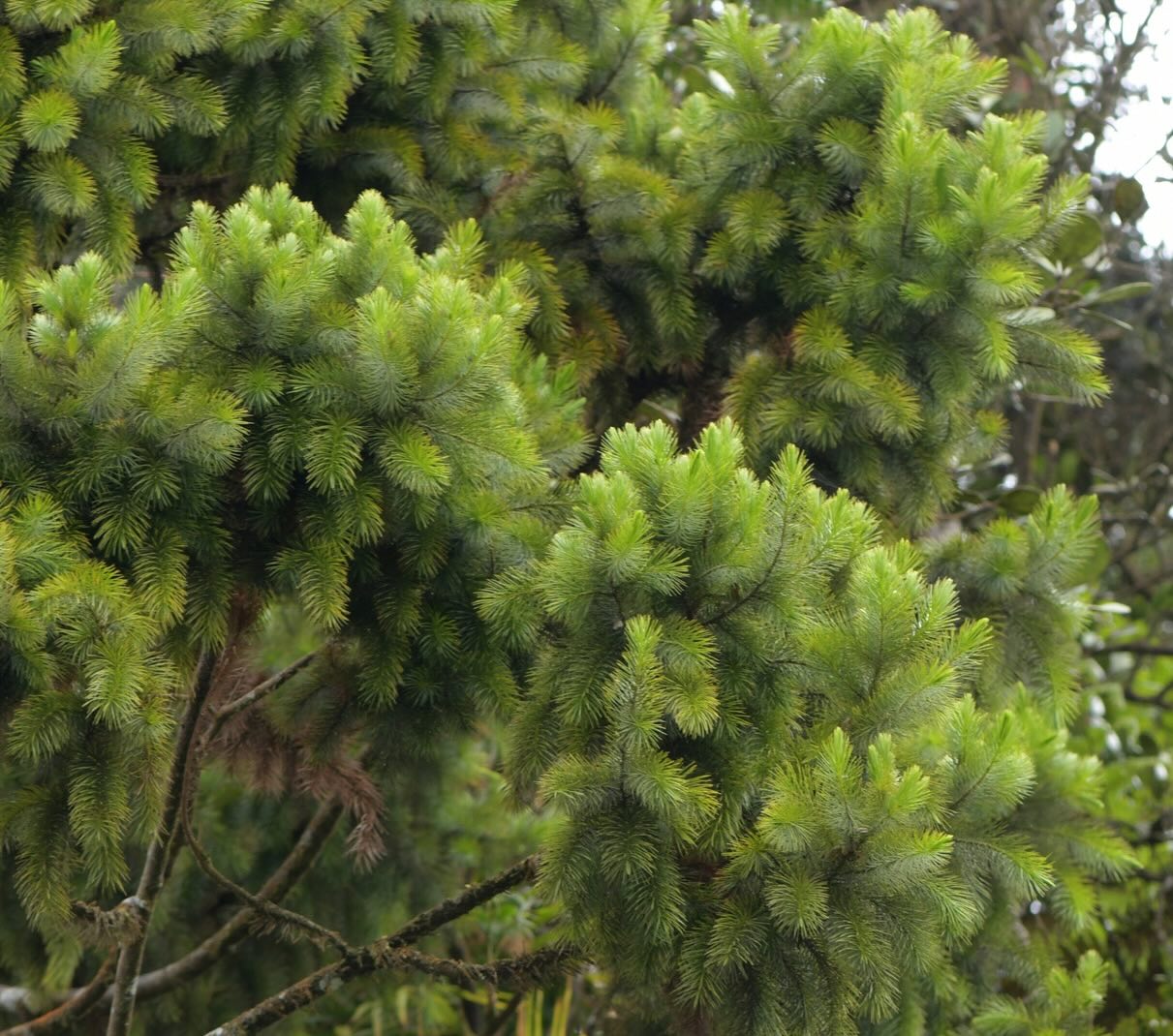
"Trees or shrubs with spreading linear to subulate, sometimes falcate, juvenile leaves that normally give way to shorter, strongly keeled adult leaves in the form of either subulate decurrent needles often with incurved tips, or appressed scales. Plants dioecious; males cones solitary, sessile and terminal or axillary; female cones terminal, consisting of several leaf-like bracts of which only one is usually fertile. Fertile bracts bearing a single ovule in a medial position on the adaxial surface and inclined so that it is partially inverted when first formed. Seed maturing in one season, often slightly flattened and usually remaining distinctly inclined towards the cone axis. At maturity the epimatium forming a submembranous asymmetrical sheath around the base of the seed and less than one-third its height. Cone bracts sometimes becoming fleshy and brightly colored at maturity" (Quinn 1982).
Dacrydium contains two pollen types: the “typical” form is bisaccate, has a strongly rugulate body and is placed in the fossil taxon Lygistepollenites florinii, while monosaccate pollen occurs in Dacrydium guillauminii and is reminiscent of Tsuga pollen in the Pinaceae (Morley 2011).
Distribution and Ecology
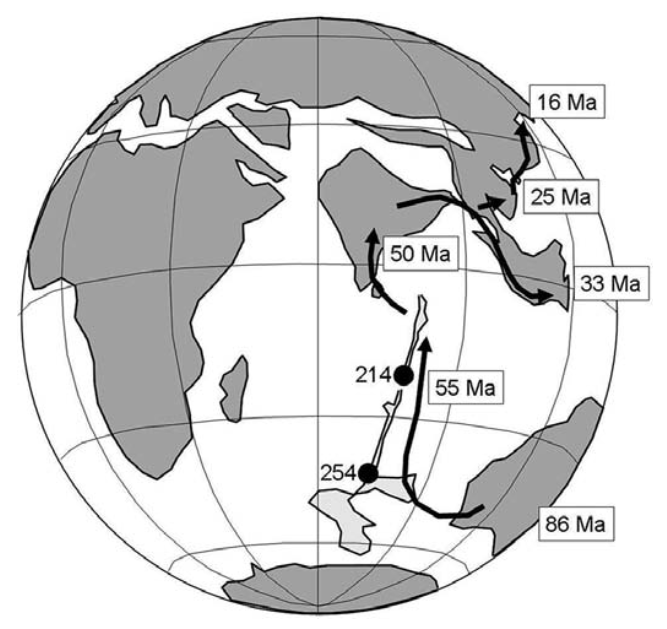
Dacrydium is most abundant in Indonesia (10 species), Malaysia (9 species), and Papua New Guinea (6 species); also in Brunei, Cambodia, China, Fiji, Laos, Myanmar, New Caledonia, New Zealand, Philippines, Thailand, Viet Nam, and Solomon Islands. The genus is confined to Malesia, with 3 exceptions: D. elatum occurs in lowland Indochina, D. elatum and D. pectinatum occur on Hainan Island (China), and D. cupressinum occurs in New Zealand. D. cupressinum is the most anomalous species in the genus, as it is the only one that is not found in Malesia, the only one that grows outside the Tropics, and genetically it is sister to all the other species. This reflects the evolutionary history of the genus. Like the other podocarps, Dacrydium or its ancestors were endemic to Gondwana; most fossil Dacrydium taxa are from Australia. Morley (2011) concluded that Dacrydium originated in Australia in the Late Cretaceous and dispersed to Southeast Asia in the Early Oligocene, probably by island-hopping up the Ninety East ridge, which had a number of islands (which are now seamounts) during Paleogene time. D. cupressinum, however, went east to New Zealand and thus has likely been isolated from the rest of the genus since the Paleogene. The remaining species all occur within Malesia, an area that has the highest diversity of southern conifers (Araucariaceae and Podocarpaceae) in the world (Enright and Jaffré 2011); see Van Steenis (1950) for definition of Malesia as a phytogeographical realm. Geography and the molecular data cited above indicate that the genus entered Malesia in the west, likely Indochina, and subsequently dispersed and speciated to the east, with the most highly differentiated species now found in Fiji and New Caledonia.
Distribution data for all species, from GBIF Occurrence Download https://doi.org/10.15468/dl.yvmru2 accessed 2025.12.08. Click on any point for more info.
Species of Dacrydium are typical of the podocarps in general in that they are not very shade tolerant and are uncommon in closed-canopy tropical forest, though they sometimes appear as early-successional species that persist as emergents in the mature forest; also a few species persist through gap-phase regeneration. Mostly they occupy more open forest and woodland habitats including mountain ridgetops, peat-rich and wetland soils, ultramafic-derived soils in New Caledonia, and the nutrient-poor soils of keranga forest in Malaysia and Indonesia. This reflects the general principle that conifers have lower maximum growth potential than similar angiosperms and thus are better able to achieve competitive dominance on sites where abiotic factors intrinsically limit growth (Bond 1989); these adaptations are usually accompanied by greater maximum tree sizes and generally longer life spans than competing angiosperms, allowing the species to survive long intervals between high-severity disturbance events. Podocarps also generally show superior ability, relative to angiosperms, to acquire nutrients on sites where those nutrients are in very short supply (Coomes and Bellingham 2011, Kitayama et al. 2011).
Several species are endemic to restricted mountainous areas. Some of the mountain species may experience occasional light frost but the genus as a whole is thoroughly tropical; excepting D. cupressinum in New Zealand, they are entirely confined to locales within 22° north and south of the Equator, and all are in maritime climates. As with other Podocarpaceae, their seeds are distributed by animals, primarily birds, and the reproductive structures have a distinctive anatomy adapted to this purpose (Nigris et al. 2021).
Many species in the genus have a common association with ultramafic-derived soils and some are exclusive to ultramafic substrates. Ultramafic soils have extremely low availability of nitrogen, phosphorus, potassium, and calcium, and have elevated concentrations of other metals such as iron, nickel, manganese and chromium. The ultramafic-adapted species include D. araucarioides, D. balansae, and D. guillauminii (exclusive to ultramafics) and D. gibbsiae, D. gracile, and D. pectinatum (common on ultramafics). These species have a greater ability, compared to co-occurring angiosperms, to acquire phosphorus from organic sources (Kitayama et al. 2011).
Remarkable Specimens
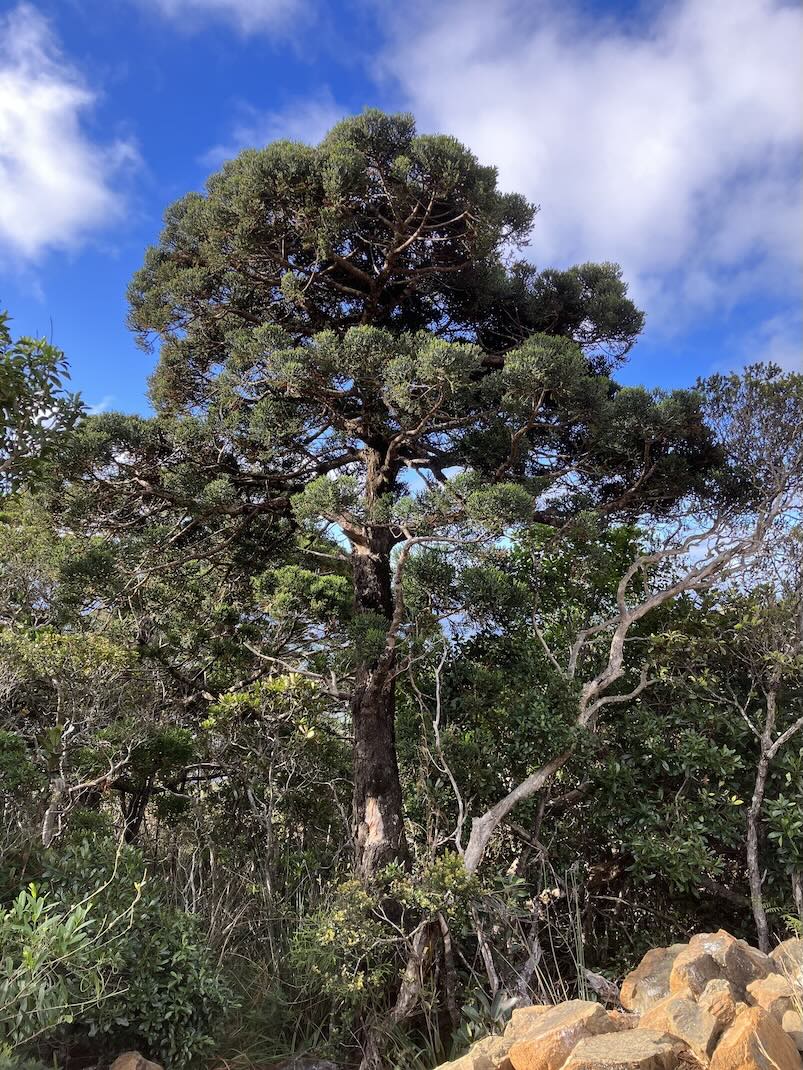
Dacrydium cupressinum of New Zealand appears to hold the size and height records, partly because it is much more studied than any of the other species, but also it truly does appear to be exceptional compared to the rest of the genus. The largest known tree is 258 cm dbh and 42 m tall, and not only holds both size and height records, but is also the largest specimen of this species ever measured.
Dacrydium cupressinum also holds the age record. There is a reliable age of 815 years for an extant specimen, and a vague report of 1200 years (a suspiciously round number) based on ring counts on basal stem sections. The two Fiji species D. nausoriense and D. nidulum both achieve about 400 years, based on radiocarbon dates. There are few age estimates for any other species.
Two species, D. leptophyllum and D. spathoides, are represented only by a single specimen, the type, and have never been otherwise recorded. Both were found deep in the highlands of New Guinea, the first in 1911, the second in 1939.
Ethnobotany
See the species accounts. Generally, there is little information on traditional use, but the species that occur in lowland tropical forest tend to achieve relatively large sizes and, where not protected, are subject to timber harvest. I have found no records of medicinal use or use for food. Dendrochronology is generally not feasible because most species live in tropical latitudes and experience climates with low seasonality; thus they do not produce consistent series of annual rings.
Observations
See the species accounts.
Remarks
Dacrydium is derived from the Greek word for a tear. Dallimore et al. (1967) and Farjon (2010) both say that this refers to resinous exudations from the wood, but Kirk (1889) says it refers to the weeping habit of the trees. The earliest published description (Forster 1786) alludes to this as a cypress, a group of trees that commonly have weeping foliage, so I am partial to Kirk's explanation. As it is relevant, and entertaining in its own right, I here give the description from Forster (1786), along with its English translation:
|
Pulcherrimum hocce Taxoque affine genus, cuius florescentiam non vidimus, ab Illustri Solandro nomen Dacrydii accepit. Reperitur in Nova Zeelandia, vbi Cookius, e junioribus ramusculis, foliis tenellis onustis, et resinosa materia amaricante featentibus, potum, cerevisiae quodammodo similem, parari jubebat, cuius praestantiam in malo scorbutico disertis verbis extollit in hodoeporico & succedaneum potumcereuisiae e taleis Pini canadensis consecti, inque America septentrionali & inter nautas notissimi, vulgo Spruce-beer esse voluit. Non tamen negandum est, hunc e Dacrydio cupressino paratum potum, jejunis nauseam et vertiginem nduxisse, parvo temporis spatio interjecto transeuntem.
|
This is a very beautiful genus, related to Taxus, whose flowers we have not seen. It received the name of Dacrydium from the illustrious Solander. It is found in New Zealand, where Cook ordered the preparation of young twigs, laden with tender leaves, and a resinous substance that gave a bitter odor, a drink somewhat similar to beer, the excellence of which he emphasized in eloquent words, in the case of scurvy. In North America, most famous among sailors, it was commonly known as "spruce-beer". It must not be denied, however, that this drink, prepared from the Dacrydium cypress, induced nausea and vertigo in the fasting person, which passed after a short time.
|
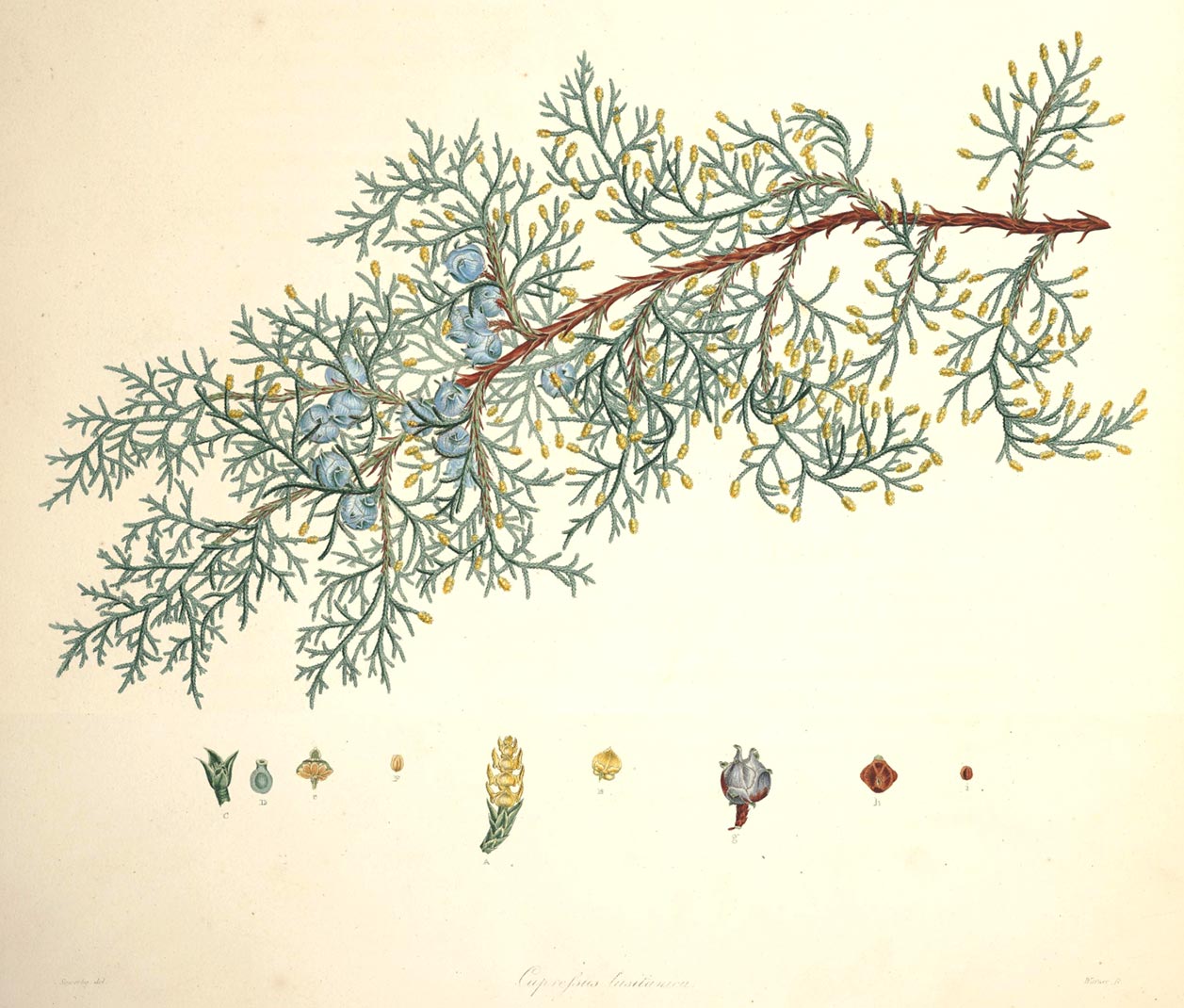
For many years Forster's description was accepted as the type description for Dacrydium, but it fails to give a morphological description of the plant; the first published description to do so was by Solander (Lambert 1806), thus his is the type description for both Dacrydium and D. cupressinum. Even so, it is a pretty sketchy description; in its entirety, it says "Arbor vasta, pulcherrima. Rami patuli, valde ramulosi, ramuli flexuosi, dependentes ; foliis junioribus, subulatis, divaricatis; adultioribus laxe imbricatis" (A vast, very beautiful tree. Branches broad, very branched, branchlets flexible, pendulous; younger leaves subulate, divaricate; older leaves loosely overlapping.) Actually, if you consult Lambert (1803), it has nearly as good a description, although not in Latin; and it has an excellent illustration.
Since it has a distinctive pollen morphology, the paleogeography of Dacrydium is reasonably easy to trace in the sedimentary record (see map at right). It is first found in Australia, in the Santonian stage of the Late Cretaceous. It also appears in the late Oligocene/early Miocene of Patagonia (South America). It is absent from middle Eocene and older sediments in Malesia and southeast Asia, but appears in western Malesia by the beginning of the Oligocene. At this time there was still about 1000 km of open ocean between Australia and Malesia, so direct dispersal by that route is unlikely; however Dacrydium was present in India in the early Eocene, and there are records of Dacrydium pollen from former islands on the Ninety East Ridge in the Paleocene and Oligocene; thus dispersal into Malesia and southeast Asia likely came via this route. This is plausible given that Dacrydium is bird-dispersed and is thereby capable of crossing relatively large water barriers. Following the Oligocene appearance of Dacrydium in Malesia, it spread quickly to China and reached as far north as Japan for a brief period during the mid-Miocene climatic maximum about 16 million years ago (Morley 2011).
Citations
Biffin, Ed, Timothy J. Brodribb, Robert S. Hill, Philip Thomas and Andrew J. Lowe. 2011a. Leaf evolution in Southern Hemisphere conifers tracks the angiosperm ecological radiation. Proceedings of the Royal Society B, doi.org/10.1098/rspb.2011.0559.
Biffin, Edward, John G. Conran, and Andrew J. Lowe. 2011b. Podocarp evolution: a molecular phylogenetic perspective. Pp. 1-20 in B. L. Turner and L. A. Cernusak (eds.), Ecology of the Podocarpaceae in Tropical Forests. Smithsonian Contributions to Botany no. 95. Smithsonian Institution, Washington, DC.
Bond, W. J. 1989. The tortoise and the hare: ecology of angiosperm dominance and gymnosperm persistence. Biological Journal of the Linnean Society 36:227–249.
Coomes, David A. and Peter J. Bellingham. 2011. Temperate and tropical podocarps: how alike are they? Pp. 119-140 in B. L. Turner and L. A. Cernusak (eds.), Ecology of the Podocarpaceae in Tropical Forests. Smithsonian Contributions to Botany no. 95. Smithsonian Institution, Washington, DC.
de Laubenfels, D. J. 1969. A revision of the Malesian and Pacific rainforest conifers, I. Podocarpaceae, in part. Journal of the Arnold Arboretum 50:292-295. Available: Biodiversity Heritage Library, accessed 2025.12.14.
Enright, N. J., and T. Jaffré. 2011. Ecology and distribution of the Malesian podocarps. Pp. 57-77 in B. L. Turner and L. A. Cernusak (eds.), Ecology of the Podocarpaceae in Tropical Forests. Smithsonian Contributions to Botany no. 95. Smithsonian Institution, Washington, DC.
Florin, R. 1931. Untersuchungen zur Stammesgeschichte der Coniferales und Cordaitales. I. Morphologie und Epidermisstruktur der Assimilationsorgane bei den rezenten Koniferen. K. Svens. Vetenskapskad. Handl. 10(1).
Forster, G. 1786. De Plantis Esculentis Insularum Oceani Australis Commentatio Botanica, p. 80. Available: Biodiversity Heritage Library, accessed 2021.12.24.
Keppel, G., P. Prentis, E. Biffin, et al. 2011. Diversification history and hybridisation of Dacrydium (Podocarpaceae) in remote Oceania. Australian Journal of Botany 59:262-273. doi.org/10.1071/BT10181
Khan, R. 2022. Towards the systematics and evolution of the conifer family Podocarpaceae; New insights into the key aspects. PhD Thesis, University of Adelaide, Australia.
Khan, Raees, Robert S. Hill, Jie Liu, and Ed Biffin. 2023. Diversity, distribution, systematics and conservation status of Podocarpaceae. Plants 12(5):1171. https://doi.org/10.3390/plants12051171.
Kirk, T. 1889. The Forest Flora of New Zealand. Government Printer, Wellington. 345 pp. Available at Google Books, accessed 2011.03.27.
Kitayama, Kanehiro, Shin-ichiro Aiba, Masayuki Ushio, et al. 2011. The ecology of podocarps in tropical montane forests of Borneo: distribution, population dynamics, and soil nutrient acquisition. Pp. 101-117 in B. L. Turner and L. A. Cernusak (eds.), Ecology of the Podocarpaceae in Tropical Forests. Smithsonian Contributions to Botany no. 95. Smithsonian Institution, Washington, DC.
Knopf, P., C. Schulz, D. P. Little, T. Stützel, and D. W. Stevenson. 2012. Relationships within Podocarpaceae based on DNA sequence, anatomical, morphological, and biogeographical data. Cladistics 28:271–299.
Lambert, A. B. 1803. A description of the genus Pinus, illustrated with figures; directions relative to the cultivation, and remarks on the uses of the several species. 1st edition. J. White, London.
Lambert, A. B. 1806. Description of the genus Pinus 1(2): p. 93 and t. 41. Available: Biodiversity Heritage Library, accessed 2025.08.28.
Little, D. P., P. Knopf, and C. Schulz. 2013. DNA barcode identification of Podocarpaceae—the second largest conifer family. PLoS ONE 8:e81008.
Lu, Y., J.-H. Ran, D.-M. Guo, Z.-Y. Yang, and X.-Q. Wang. 2014. Phylogeny and divergence times of gymnosperms inferred from single-copy nuclear genes. PLoS ONE 9:e107679.
MacArthur, Robert H. and Edward O. Wilson. 1967. The Theory of Island Biogeography. Princeton, NJ: Princeton University Press.
Nigris, S., G. D’Apice, S. Moschin, R. Ciarle, and B. Baldan. 2021. Fleshy structures associated with ovule protection and seed dispersal in gymnosperms: a systematic and evolutionary overview. Critical Reviews in Plant Sciences 40:285–302.
Quiroga, M. P., P. Mathiasen, A. Iglesias, R. R. Mill and A. C. Premoli. 2016. Molecular and fossil evidence disentangle the biogeographical history of Podocarpus a key genus in plant geography. Journal of Biogeography 43:372-383.
Morley, R.J. 2011. Dispersal and paleoecology of tropical podocarps. Pp. 21-41 in B. L. Turner and L. A. Cernusak (eds.), Ecology of the Podocarpaceae in Tropical Forests. Smithsonian Contributions to Botany no. 95. Smithsonian Institution, Washington, DC.
Stull, G. W., X.-J. Qu, C. Parins-Fukuchi, et al. 2021. Gene duplications and phylogenomic conflict underlie major pulses of phenotypic evolution in gymnosperms. Nature Plants 7:1015–1025.
Van Steenis, C. G. G. J. 1950. The delimitation of Malaysia and its main plant geographical divisions. Flora Malesiana v. 1, ch. 3, pp. LXX-LXXV. Available: Biodiversity Heritage Library, accessed 2025.12.21.
See also
Van Royen 1979 provides extensive taxonomic citations.


 Back to top