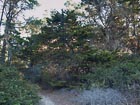
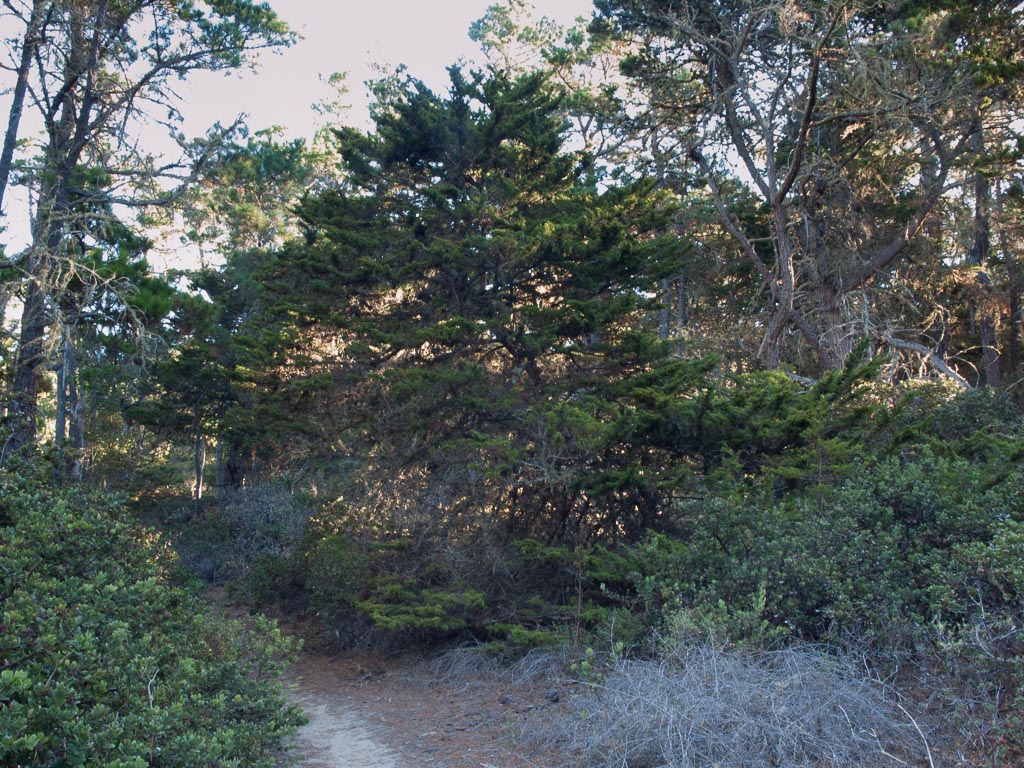
Forest interior tree about 5 m tall, growing beneath a Pinus radiata canopy at Point Lobos State Park [C.J. Earle, 2014.01.18].
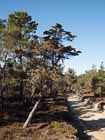
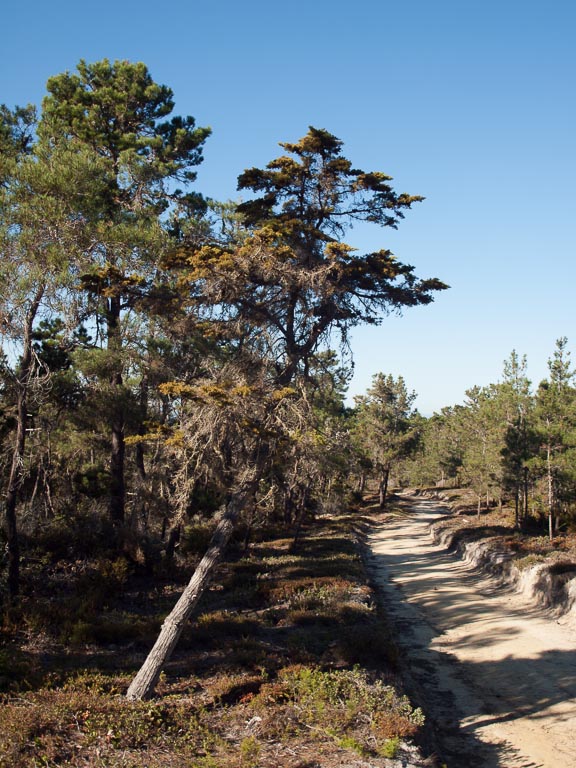
Mature tree about 6 m tall growing with Pinus muricata on extremely nutrient-poor, excessively well drained sandy soils at the S.F.B. Morse Botanical Reserve, Pebble Beach, CA [C.J. Earle, 2014.01.18].
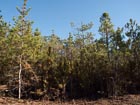
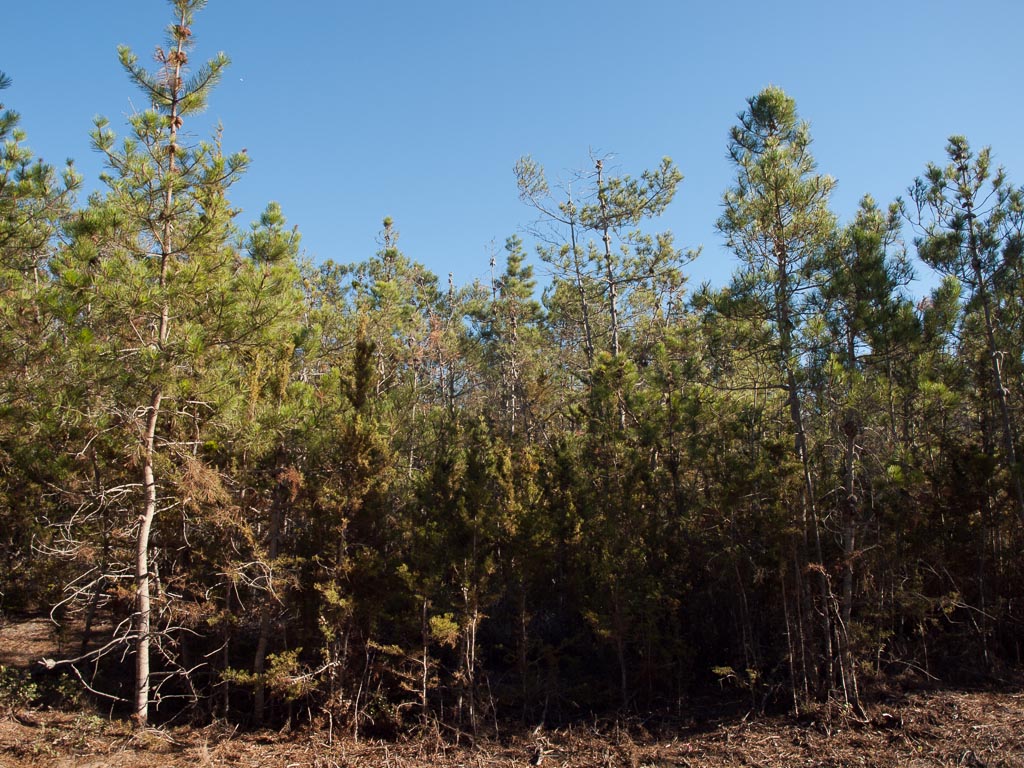
Postfire "doghair" forest of C. goveniana (shorter) and Pinus muricata developing a postfire forest on nutrient-poor soils at S.F.B. Morse Botanical Reserve. Tallest trees (pines) are ca. 4 m tall. This area was burned in the Morse Fire on 1987.05.31 [C.J. Earle, 2014.01.18].
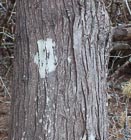
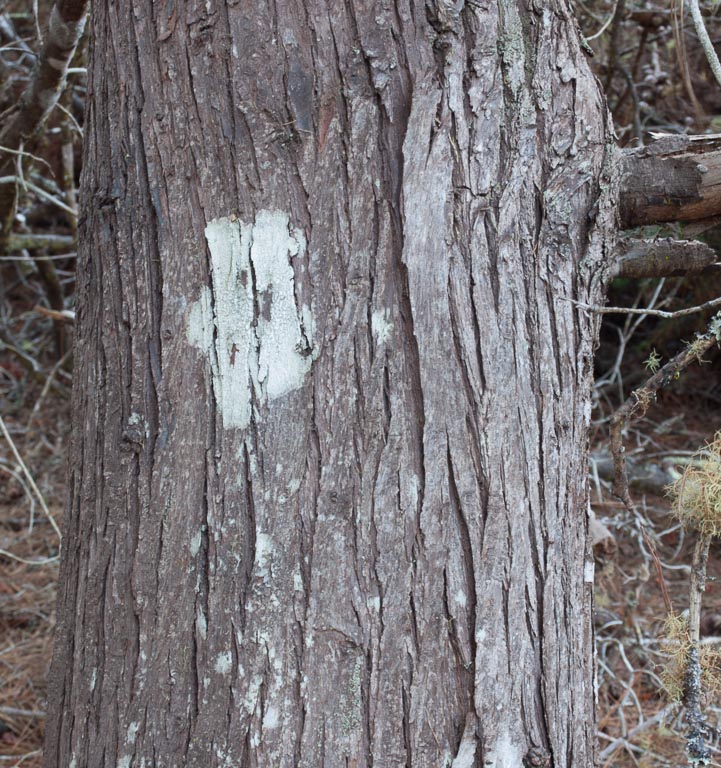
Bark on a stem about 20 cm diameter [C.J. Earle, 2014.01.18].
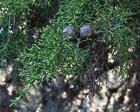
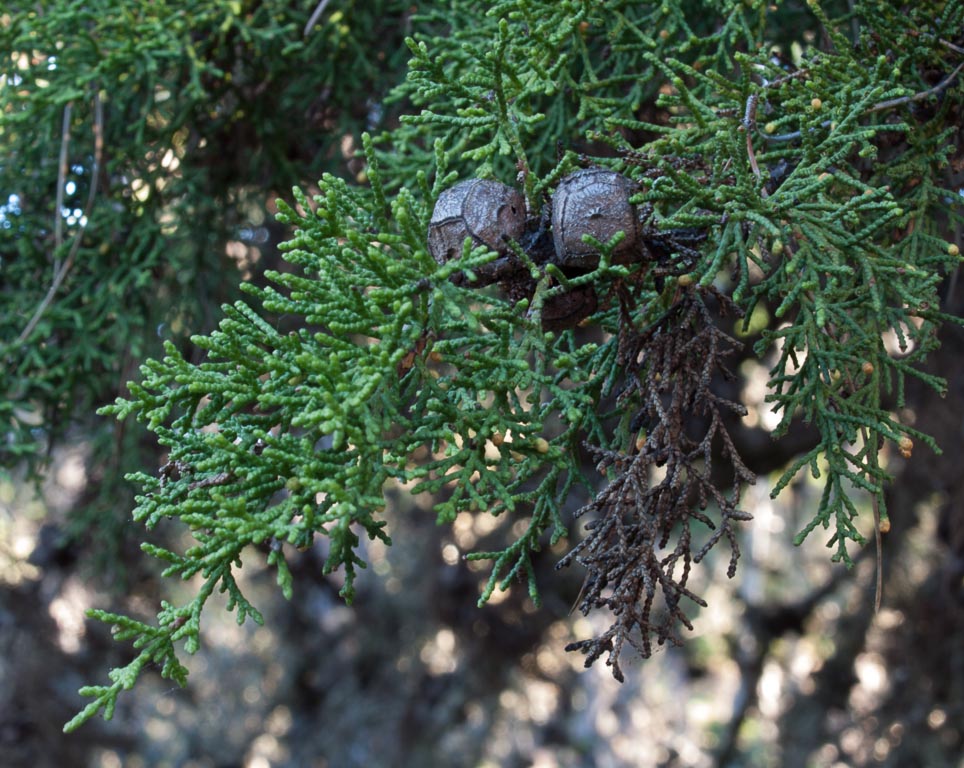
Branch, foliage, and mature cones an a forest interior tree [C.J. Earle, 2014.01.18].
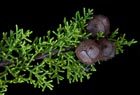
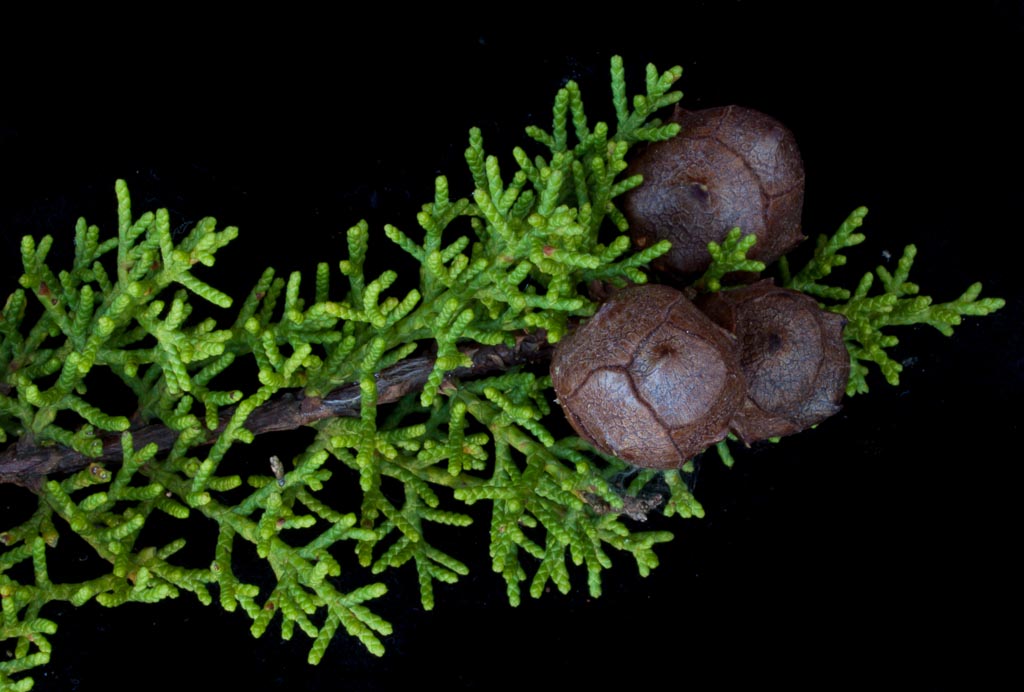
Foliage and mature cones. Cones are 18 mm diameter [C.J. Earle, 2014.01.18].
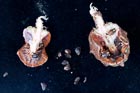
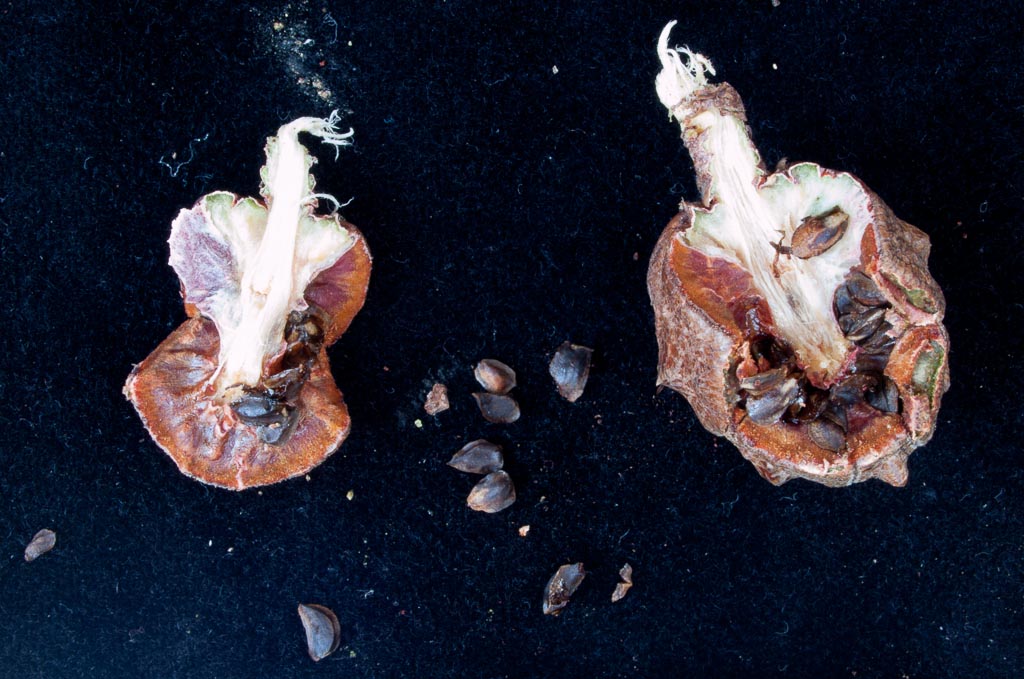
Seed cone opened to show mature seeds [C.J. Earle, 2014.01.18].
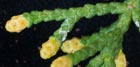
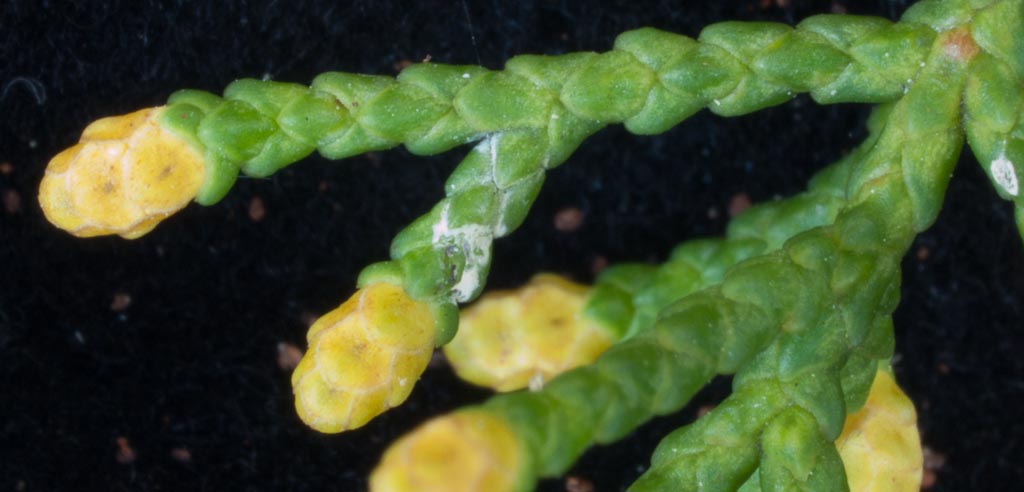
Developing pollen cones; image size is 7×14 mm [C.J. Earle, 2014.01.18].
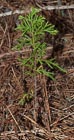
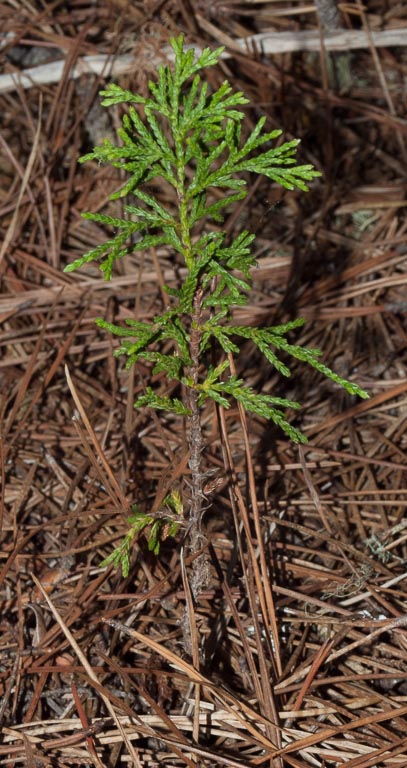
Seedling in forest interior, about 10 cm tall [C.J. Earle, 2014.01.18].

Conservation Status

Hesperocyparis goveniana
(Gordon) Bartel (Adams et al. 2009)
Common names
Gowen cypress.
Taxonomic notes
Type: California, Monterey County, Huckleberry Hill, C. T. Hartweg s.n. (holotype K); it seems to have been collected in mid-June of 1846 (Hartweg 1847). Synonymy: see POWO (accessed 2023.12.16). Molecular studies have shown a very close relationship with Hesperocyparis abramsiana and H. pygmaea. Each has also been described as a variety or subspecies of H. goveniana, and H. abramsiana appears to be sister (Little 2006, Terry et al. 2016).
Description
"Shrubs or small trees usually to 10 m, but to 50 m under favorable conditions, or bearing cones at as little as 2 dm on shallow hardpan soils; crown globose to columnar, dense or sparse. Bark smooth or rough, fibrous. Branchlets decussate, 1-1.5 mm diam. Leaves without abaxial gland or sometimes with embedded abaxial gland that does not produce drop of resin, not glaucous. Pollen cones 3-4 × 1.5-2 mm; pollen sacs 3-6. Seed cones globose, 1-2.5(-3) cm, grayish brown, not glaucous; scales 3-5 pairs, smooth, umbo nearly flat at maturity. Seeds 3-4(5) mm, dark brown to jet black, sometimes slightly glaucous" (Eckenwalder 1993). H. goveniana is distinguished from H. abramsiana by its smaller (13-20 mm long) cones and darker (brown-black, not glaucous) seeds (Farjon 2005), and from H. pygmaea by its pyramidal crown and shorter, stiff leader (Wolf 1948). See García Esteban et al. (2004) for a detailed characterization of the wood anatomy.
Distribution and Ecology
USA: California, at 60-800 m in coastal closed-cone pine forests, especially on sterile soils (Eckenwalder 1993). It occurs naturally only at two groves in Monterey County, located in the S.F.B. Morse Botanical Reserve (locally referred to as Huckleberry Hill) and in Point Lobos State Park. At Point Lobos the trees are growing in the understory of a fairly old postfire stand of Pinus radiata, which is also one of the only natural occurrences of that species. The trees are healthy, relatively large, and there is a small amount of regeneration in understory gaps, indicating that the species is fairly shade-tolerant, as are other cypresses located near or north of this latitude in western North America. At Huckleberry Hill, the trees are growing with Pinus muricata on an excessively well-drained, coarse, very nutrient-poor sandy soil. A large part of the stand was burned in the Morse Fire in 1987 and the remainder has regenerated from an earlier fire. The trees grow very slowly; the tallest are about 6 m tall and 20 cm dbh, and in some areas they can only form a prostrate shrub cover. This very unusual soil type also hosts a variety of rare angiosperm species. Similar soils occur north of San Francisco in woodlands of H. pygmaea, Pinus muricata and P. contorta var. bolanderi; see those pages for more detailed discussion of the ecotype.
Gowen cypress is reported to be hardy to Zone 8 (cold hardiness limit between -12.1°C and -6.7°C) (Bannister and Neuner 2001). See also Thompson et al. (1999).
Distribution of H. goveniana. Data from USGS (1999).
Remarkable Specimens
The largest specimen in habitat has height 12.2 meters, dbh 53 cm, and is at Point Lobos State Park (American Forests 2000). The largest known specimen is in New Zealand, with height is 88.8 cm dbh and 15.6 m tall (NZNTT 2014). There are three conifers endemic to the Monterey vicinity in California that all reach their largest size in New Zealand: Hesperocyparis goveniana, H. macrocarpa, and Pinus radiata var. radiata.
Ethnobotany
I have found no records of aboriginal use, but H. macrocarpa grows nearby; a decoction of its foliage was used by the Costanoan people in treatment of rheumatism (NAEB 2025). Decoctions of the foliage of many conifers are used for this purpose, so it is plausible that H. goveniana found such use. The species has not really been commercially exploited due to its rarity, but it was early introduced to the U.K. and is occasionally used as an ornamental; it has 21 named cultivars (Conifers Garden 2025).
Observations
The grove at Point Lobos State Park is in an upland portion of the preserve, not typically open to visitors, but a visit can be arranged with park administration (Vladimir Dinets (email, 2000.03.16). The S.F.B. Morse/Huckleberry Hill Reserve entrance can be reached through the Morse Drive entrance to Pebble Beach ($10 fee), or by hiking west from pullouts along CA Highway 68 about a half-mile south of the Morse Drive entrance to Pebble Beach.
Remarks
The species was named by George Gordon (1849) in honor of James Robert Gowen, Secretary of the Horticultural Society of London and thus Gordon's boss. The work of finding and describing the species, and getting it safely home to London, was done by Karl Theodor Hartweg (1812-1871), a German who spent 1845-1848 plant collecting in California at the behest of the Horticultural Society of London. Hartweg, like David Douglas, was a protegé of William Jackson Hooker. He first found this cypress "on the western declivity of the mountains of Monterey in Upper California, within two miles of the sea shore, in company with Pinus muricata, forming a dense bush from 6 to 10 feet in height" (Gordon 1849). This description fits the Huckleberry Hill grove (P. muricata is uncommon in this area), but he could have been in a grove that has since been extirpated. Hartweg sent seeds home from California, and Gordon described the species on the basis of plants grown from those seeds. Hartweg later recounted his adventures in several issues of the Horticultural Society's Journal in 1846-1848 (e.g., Hartweg 1847). Hartweg had a highly productive career, collecting widely from 1836 to 1848 in Colombia, Ecuador, Guatemala, Jamaica, and Mexico, discovering many orchids and other remarkable plants. His later years were spent as director of the Swetingen Gardens in Baden, Germany. His work among the conifers is commemorated in the alpine pine of Mexico and Central America, Pinus hartwegii.
Citations
Adams, R. P., J. A. Bartel and R. A. Price. 2009. A new genus, Hesperocyparis, for the cypresses of the western hemisphere. Phytologia 91(1):160-185 (p. 179). Available: Biodiversity Heritage Library, accessed 2026.01.29.
American Forests 2000. The National Register of Big Trees 2000. Washington, DC: American Forests.
Eckenwalder, James E. 1993. Cupressus. Flora of North America Editorial Committee (eds.): Flora of North America North of Mexico, Vol. 2. Oxford University Press.
Gordon, George. 1849. New plants, etc., from the Society's garden. 30. Cupressus goveniana Gordon. Journal of the Horticultural Society of London 1849(4): 295-296. http://www.cupressus.net/CUgovenianaGordon.html, courtesy of the Cupressus Conservation Project website.
Hartweg, C. T. 1847. Journal of a mission to California in search of plants, Part II. J. of the Horticultural Society of London 2:121-125. Available: Biodiversity Heritage Library, accessed 2025.12.02.
Little, D. P. 2006. Evolution and circumscription of the true cypresses (Cupressaceae: Cupressus). Systematic Botany 31(3):461-480.
[NAEB] Native American Ethnobotany Database. 2025. Results of searches for "Cupressus" and "Hesperocyparis". Available: http://naeb.brit.org/, accessed 2025.12.02.
New Zealand Notable Trees Trust [NZNTT]. 2014. Record NNR/1222. register.notabletrees.org.nz/tree/view/1222, accessed 2014.06.16.
Terry, Randall G., Matthew I. Pyne, Jim A. Bartel, and Robert P. Adams. 2016. A molecular biogeography of the New World cypresses (Callitropsis, Hesperocyparis; Cupressaceae). Plant Systematics and Evolution 302:921–942. https://doi.org/10.1007/s00606-016-1308-4.
See also
Elwes and Henry 1906-1913 at the Biodiversity Heritage Library. This series of volumes, privately printed, provides some of the most engaging descriptions of conifers ever published. Although they only treat species cultivated in the U.K. and Ireland, and the taxonomy is a bit dated, still these accounts are thorough, treating such topics as species description, range, varieties, exceptionally old or tall specimens, remarkable trees, and cultivation. Despite being over a century old, they are generally accurate, and are illustrated with some remarkable photographs and lithographs.
Adams, R. P. and J. A. Bartel. 2009. Geographic variation in the leaf essential oils of Hesperocyparis (Cupressus) abramsiana, H. goveniana and H. macrocarpa: Systematic implications. Phytologia 91(1):226-243.
Adams, R. P. and J. A. Bartel. Infraspecific variation in Hesperocyparis goveniana and H. pygmaea: ISSRs and terpenoid data. Phytologia 91(2):277-286.
Farjon (2005) provides a detailed account, with illustrations.
Griffin and Critchfield (1972).
Peattie 1950.
Threatened Conifers of the World.
U.S. Fire Administration. 1987. Urban Wildlands Fire, Pebble Beach, California. Appendix H, Vegetation Damage Assessment. Report USFA-TR-007. Available at Google Books, accessed 2014.02.20 (note that the authors made some errors of identification concerning Monterey and Bishop pines).
 Back to top