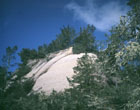
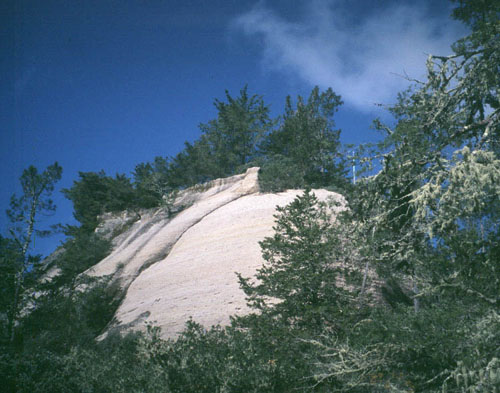
Trees growing on a sandstone outcrop at the Bonnie Doon site [V. Dinets, 2003.03].
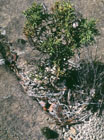
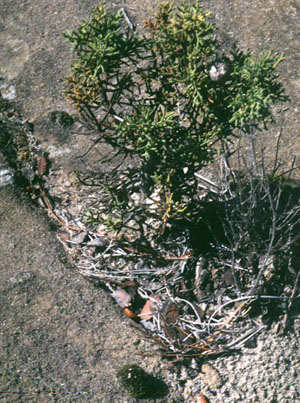
Dwarf trees growing in sandstone at the Bonnie Doon site [V. Dinets, 2003.03].
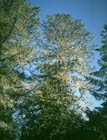
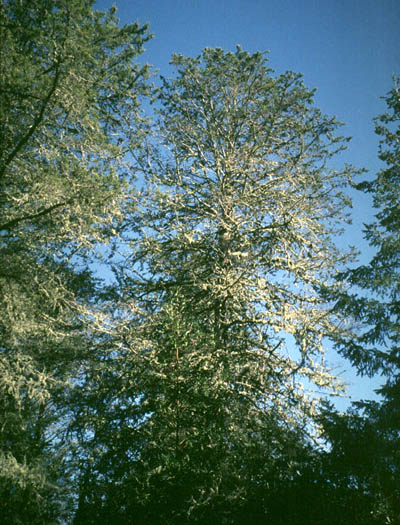
Large tree growing in soil at the Bonnie Doon site [V. Dinets, 2003.03].
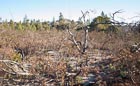
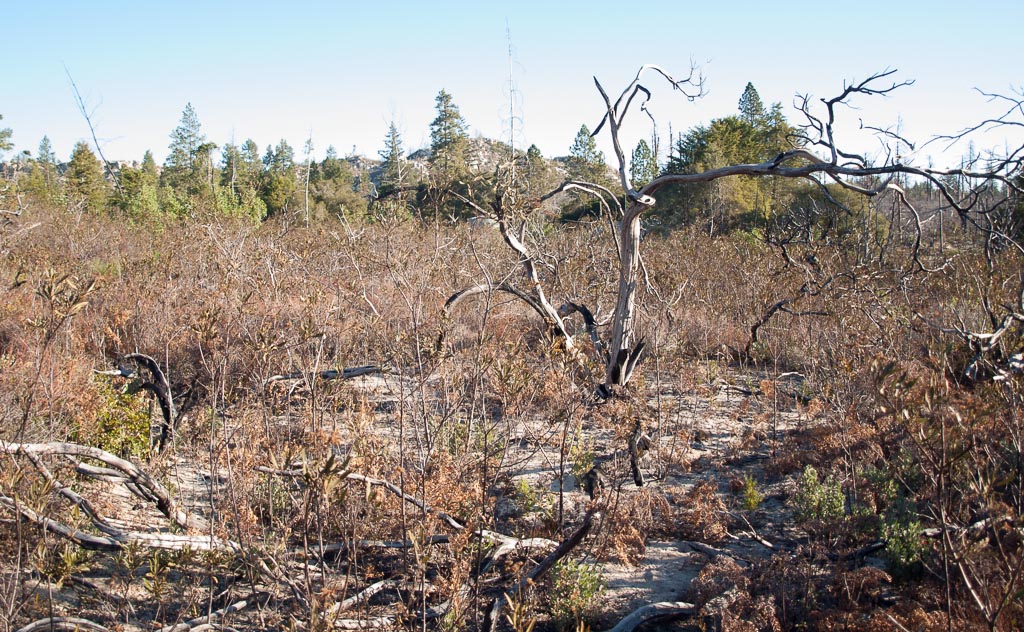
The Bonnie Doon site in recovery from the 2008 Martin Fire [C.J. Earle, 2013.01.20].
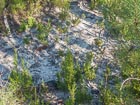
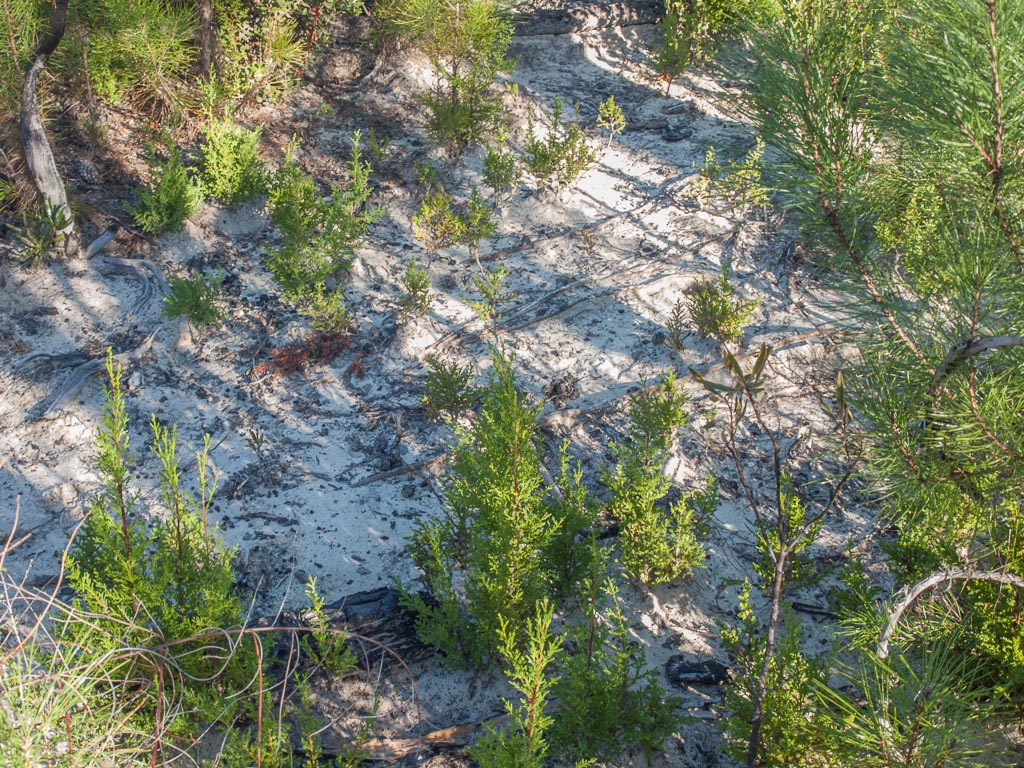
Abundant regeneration after the Martin Fire [C.J. Earle, 2013.01.20].
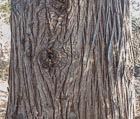
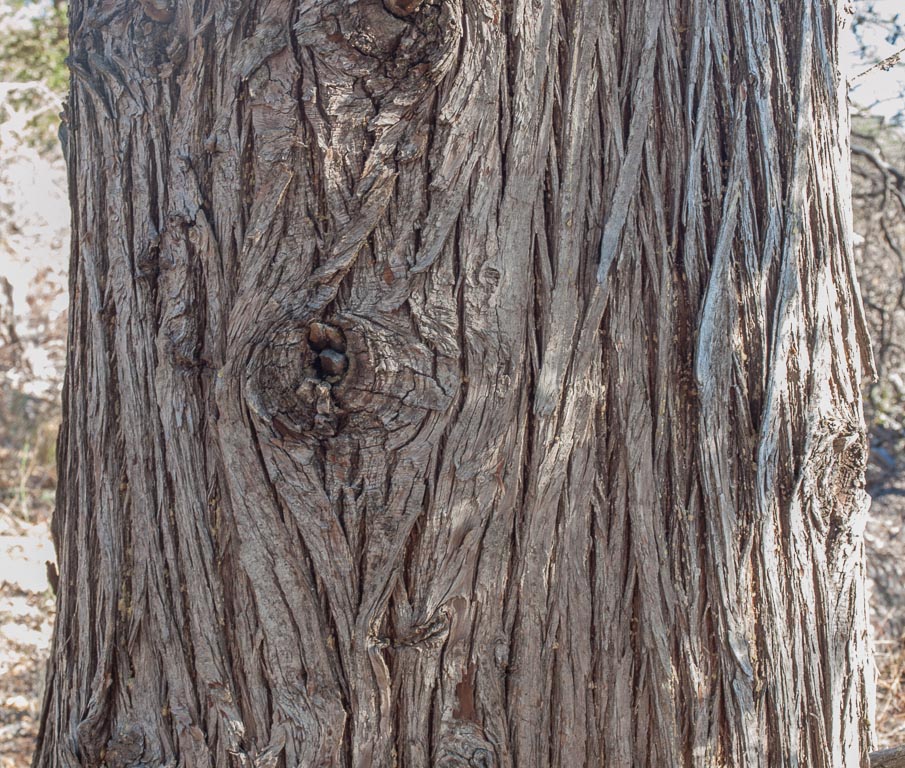
Bark on a tree about 35 cm diameter at the Bonnie Doon site [C.J. Earle, 2013.01.20].
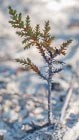
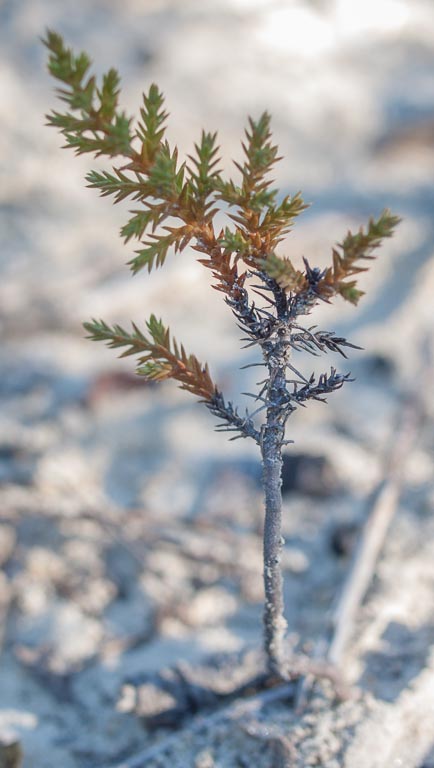
Second-year seedling 8.5 cm tall at the Bonnie Doon site [C.J. Earle, 2013.01.20].
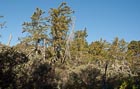
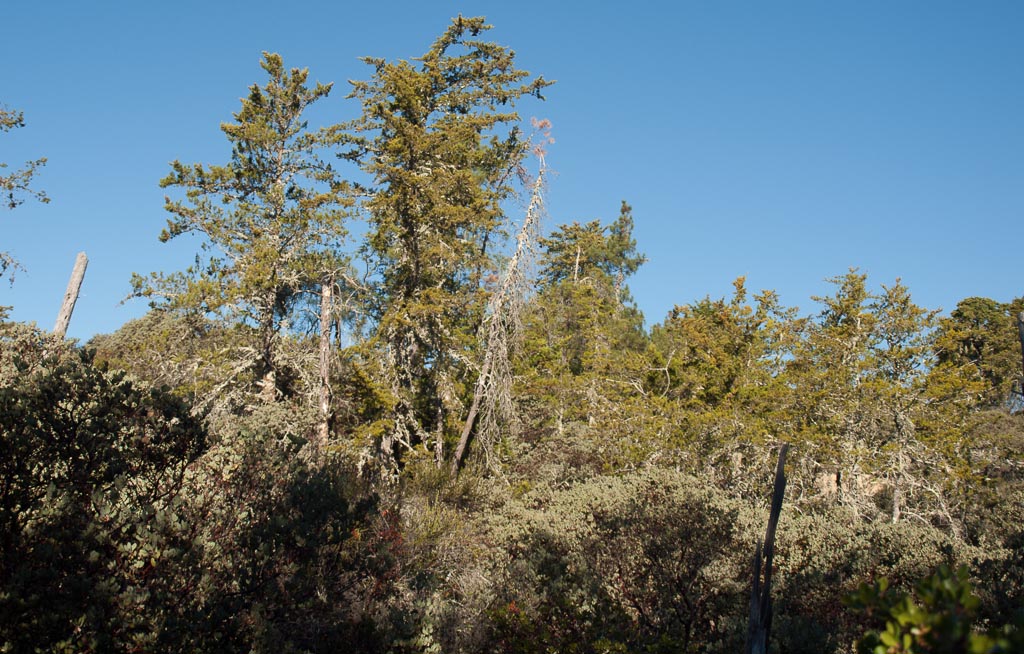
The unburned stand, seen from the edge of the burn, contains mature Cupressus mixed with Pinus attenuata [C.J. Earle, 2013.01.20].
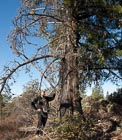
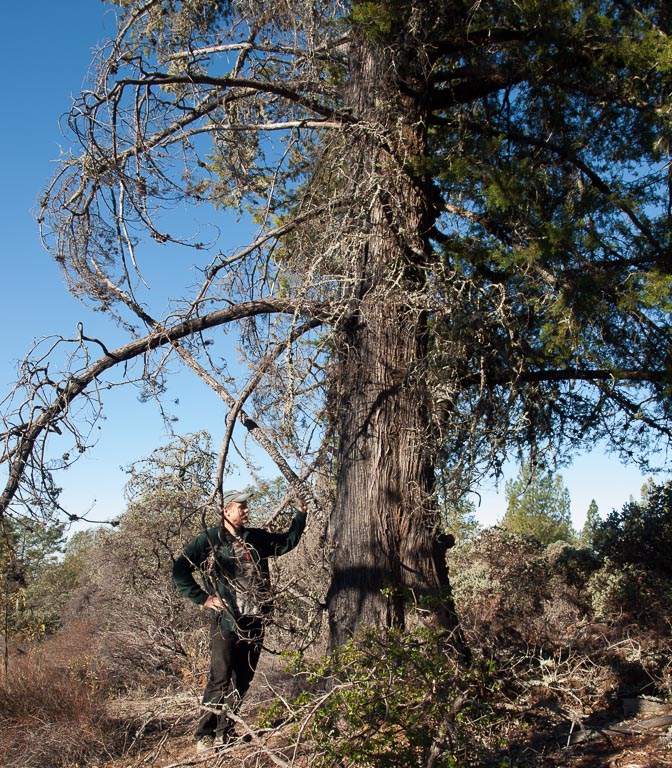
Largest tree found at the Bonnie Doon site; half of its crown had been killed by fire scorch [C.J. Earle, 2013.01.20].
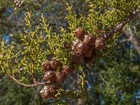
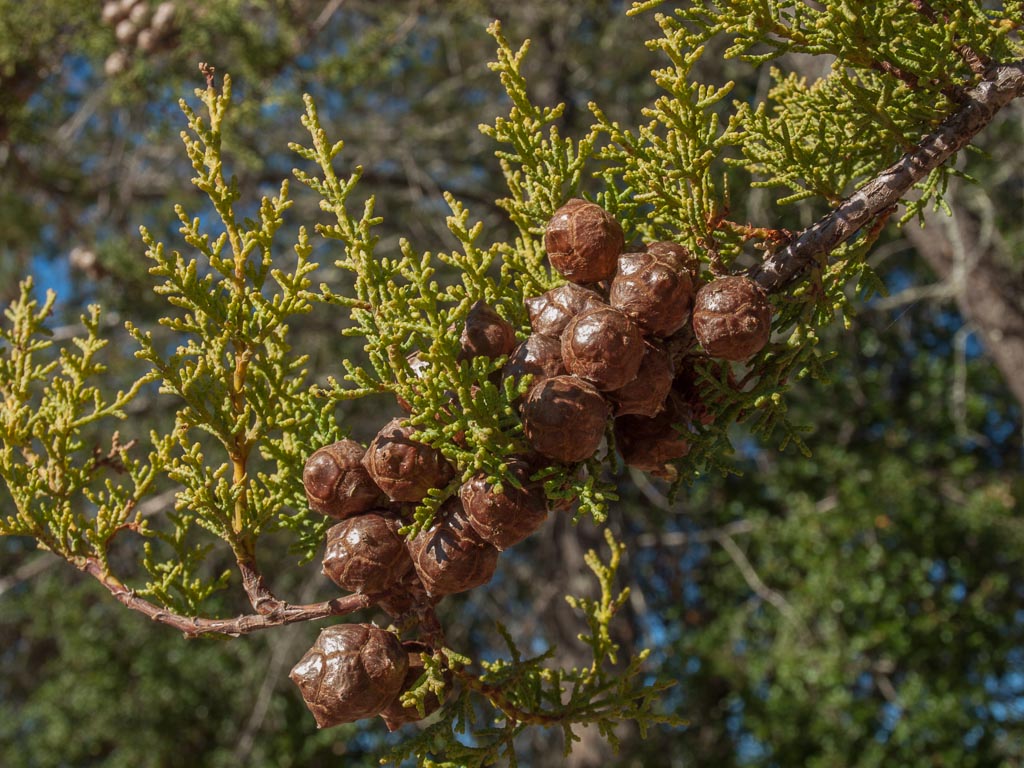
Branch, cones, and foliage; at the Bonnie Doon site [C.J. Earle, 2013.01.20].
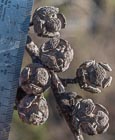
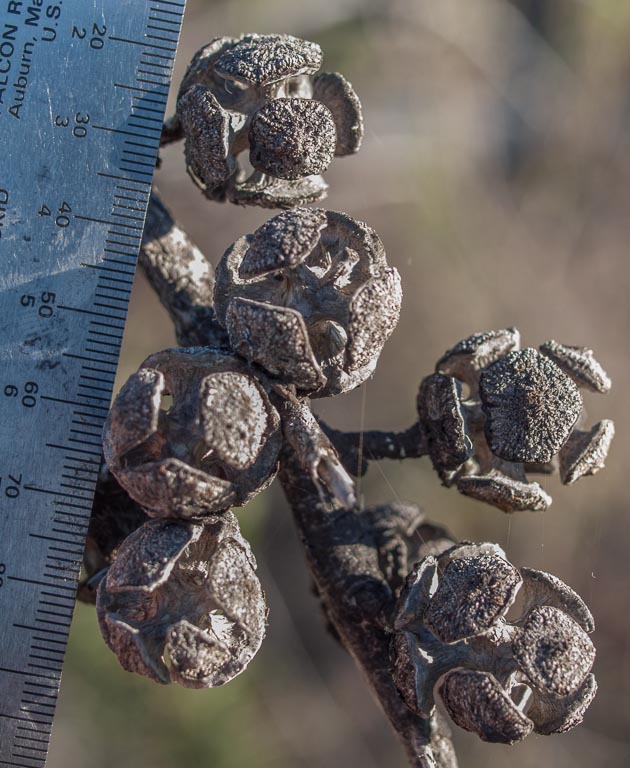
Cones that, burned by the fire, opened and spread their seed [C.J. Earle, 2013.01.20].

Conservation Status

Hesperocyparis abramsiana
(C.B.Wolf) Bartel (Adams et al. 2009)
Common names
Santa Cruz cypress.
Taxonomic notes
Type: California, Santa Cruz County, Bonnie Doon, ca. 1 km E of public school, C. B. Wolf RSA 6235 (holotype RSA). Synonymy: see POWO (accessed 2023.12.16). Although collected as early as 1881, specimens were described as H. sargentii or H. goveniana until Wolf (1948) described the new taxon, and it was not generally treated at species rank until 21st century molecular studies established it as having remained a distinct taxon since before the Pleistocene. Wolf (1948) regarded it as intermediate between the coastal H. goveniana and the widespread, interior species, H. sargentii (Griffin and Critchfield 1972), and McMillan (1951) proposed a hybrid origin from these two species. Molecular analysis of several lines of evidence has placed H. abramsiana sister to H. goveniana, with a most recent common ancestor in latest Miocene time; this clade is sister to H. sargentii plus H. nevadensis (Little 2006, Terry et al. 2016).
There is one population on Butano Ridge that is sometimes regarded as a distinct taxon (Cupressus abramsiana subsp. butanoensis Silba, Cupressus butanoensis (Silba) Malone & Bisbee, or Hesperocyparis abramsiana var. butanoensis (Silba) Bartel & R.P.Adams); it is distinguishable from the other populations on the basis of leaf essential oil composition and molecular genetic markers, but on the other hand, those other populations are also distinguishable from each other on this basis (Adams and Bartel 2009a, 2009b). As of 2025, most authorities reduce the Butano trees to synonymy with the rest of H. abramsiana.
Description
Shrubs or trees usually to 10 m tall; crown globose to columnar, dense or sparse. Bark smooth or rough, fibrous. Twigs decussate, 1-1.5 mm diameter. Leaves without abaxial gland or sometimes with embedded abaxial gland that does not produce drop of resin, not glaucous. Pollen cones 3-4 × 1.5-2 mm; pollen sacs 3-6. Seed cones globose, (15-)20-30 mm diameter, brown, not glaucous; scales 3-5 pairs, smooth, umbo nearly flat at maturity. Seeds 3-4(5) mm, brown, often glaucous. It can be distinguished from H. goveniana or H. pygmaea by its large cones, its brown and often glaucous seeds, and by its very isolated native range (Eckenwalder 1993, Wolf 1948, Farjon 2005). See García Esteban et al. (2004) for a detailed characterization of the wood anatomy.
Distribution and Ecology
USA: California, Santa Cruz Mountains, at 490-760 m (Peattie 1950). Found at 2 locales in Santa Cruz County and one in adjacent San Mateo County (Little 1970).
Data from USGS (1999).
Griffin and Critchfield (1972) provide the following detail on this species' native occurrence: "This cypress is confined to four populations in the Santa Cruz Mountains. Wolf (1948) discussed the Bonny Doon and Eagle Rock groves. The Butano Ridge stand, which Wolf looked for but could not find, was relocated in 1949 (McMillan 1952). ... [A] fourth stand [was found] near Boulder Creek which Thomas (1961) called the Brackenbrae grove. These cypress populations all grow in sterile, sandy, chaparral habitats within a Redwood-Mixed Evergreen Forest mosaic. The southernmost grove, along Martin Road near Bonny Doon, is probably the best known stand. These cypresses, at [490 m] elevation, associate with knobcone pine [Pinus attenuata] on sandstone outcrops and with ponderosa pine [Pinus ponderosa] on deeper soils. [Eleven km] north, near Eagle Rock lookout, is the smallest grove. This stand numbers less than a hundred trees. At [762 m], it is the highest-elevation grove. The larger Brackenbrae population is [4.8 km] east of Eagle Rock. It lies on the east side of Boulder Creek canyon around the [328-meter] level. The cypress trees are scattered within knobcone pine thickets. The northernmost stand is [11.25 km] northwest of Eagle Rock on the south side of Butano Ridge."
About half of the Bonnie Doon grove, including the area supporting ponderosa pine, was burned in the Martin Fire in 2008. As shown in photos at right, the fire was intense, with near 100% tree mortality in the burned area; however Hesperocyparis and Pinus attenuata regeneration were both abundant in the burned area when I visited in 2014. In 2020 the CZU Lightning Complex Fire burned through areas occupied by all known populations, resulting in near-complete mortality of mature trees on all burned sites; however abundant regeneration was reported two years later (Patten 2022).
In 1987, the U.S. Fish and Wildlife Service listed this as an endangered species; that status was downlisted to "threatened" in 2016, whereas a 2011 assessment by the IUCN lists it as "Critically Endangered". Relevant documents, including a recovery plan, are located on the web (accessed 2025.12.02). Primary threats to the species include the altered fire regime, invasion by nonnative species such as the trees Acacia dealbata and Genista monspessulana, and introgressive hybridization with other cypress species planted near H. abramsiana populations (USFWS 2009, 2016).
Remarkable Specimens
See Observations, below, and photo, at right.
Ethnobotany
I have found no records of aboriginal use, but some other California species of Hesperocyparis have been used, primarily for medicinal purposes; the Kawaiisu used a decoction of the dried seeds to treat colds, coughs, and related ailments; an infusion of the cones for backache and for kidney and menstrual problems; and the Costanoan and Miwak peoples used a decoction of the foliage to treat rheumatism and colds (NAEB 2025). These are common uses for many species of conifers in many parts of the world, so it is plausible that H. abramsiana was used similarly by the people familiar with it.
Abrams cypress has no known commercial use, and there no known cultivars (Conifers Garden 2025). As a threatened species, it is protected under a variety of laws that vary by country. It is hardy to Zone 8 (cold hardiness limit between -12.1°C and -6.7°C) (Bannister and Neuner 2001).
Observations
Vladimir Dinets (e-mail 2003.03.01) reports that it can be seen at the Bonnie Doon Ecological Preserve. "The reserve protects an unusual area of sandstone outcrops, surrounded by sandy flats with tall forest of ponderosa pine (the best one anywhere on Calif. coast). It has two endemic plant species. Overall, the place looks like a piece of Eastern Sierra transported to the coast. The largest cypress trees are more than 25 m tall, and (not the same specimens) approach 50 cm in diameter. There are also some dwarf trees, one had a cone but was only 15 cm tall."
Directions: From Santa Cruz, take Highway 1 north for a few miles. Before reaching Davenport, turn right on Bonny Doon Rd. Follow it for about 5 miles. Soon after it becomes Pine Flat Rd., turn right on Martin Rd and drive another mile or two. Park near volunteer fire station on the left; this is a recognized trailhead with signage, located in the midst of the burned area. The trails lead east, across the road, but the best cypress stand is visible to the west, across the burn.
Remarks
The epithet honors Leroy Abrams (1874-1956) "Emeritus Professor of Botany and Director of the Natural History Museum of Stanford University, author of an Illustrated Flora of the Pacific States, a Phytogeographic Study of the Trees and Shrubs of Southern California, author of Cupressus nevadensis, one of the most beautiful of the California species, and a member of the Advisory Board of Rancho Santa Ana Botanic Garden. In 1937 Dr. Abrams examined and studied the cypress trees with me at Bonnie Doon" (Wolf 1948).
Citations
Adams, R. P., and J. A. Bartel. 2009a. Geographic variation in the leaf essential oils of Hesperocyparis (Cupressus) abramsiana, H. goveniana and H. macrocarpa: Systematic implications. Phytologia 91:226–243.
Adams, R. P., and J. A. Bartel. 2009b. Infraspecific variation in Hesperocyparis abramsiana: ISSRs and terpenoid data. Phytologia 91:287–299.
Adams, R. P., J. A. Bartel and R. A. Price. 2009. A new genus, Hesperocyparis, for the cypresses of the western hemisphere. Phytologia 91(1):160-185 (p. 179). Available: Biodiversity Heritage Library, accessed 2026.01.29.
Eckenwalder, James E. 1993. Cupressus. Flora of North America Editorial Committee (eds.): Flora of North America North of Mexico, Vol. 2. Oxford University Press.
McMillan, Calvin. 1952. The third locality for Cupressus Abramsiana Wolf. Madroño 11: 189-194. Available: Biodiversity Heritage Library, accessed 2021.12.18.
[NAEB] Native American Ethnobotany Database. 2025. Results of searches for "Cupressus" and "Hesperocyparis". Available: http://naeb.brit.org/, accessed 2025.12.02.
Patten, Amy. 2022. After the fires. Flora 5(2):23. Available: https://www.cnps.org/wp-content/uploads/2022/03/Flora-v5n2-Winter-2022_021622.pdf, accessed 2025.12.02.
Terry, Randall G., Matthew I. Pyne, Jim A. Bartel, and Robert P. Adams. 2016. A molecular biogeography of the New World cypresses (Callitropsis, Hesperocyparis; Cupressaceae). Plant Systematics and Evolution 302:921–942. https://doi.org/10.1007/s00606-016-1308-4.
Thomas, J. H. 1961. Flora of the Santa Cruz Mountains of California. 434 p., illus. Stanford: Stanford Univ. Press.
U.S. Fish and Wildlife Service. 1998. Recovery Plan for the Santa Cruz Cypress (Cupressus abramsiana). U.S. Fish and Wildlife Service, Portland, Oregon. 51pp. + appendices.
U.S. Fish and Wildlife Service. 2009. Cupressus abramsiana 5-Year Review: Summary and Evaluation. Ventura, CA: U.S. Fish and Wildlife Service Ventura Fish and Wildlife Office. 19 pp.
U.S. Fish and Wildlife Service. 2016. Endangered and Threatened Wildlife and Plants; Reclassifying Hesperocyparis abramsiana (=Cupressus abramsiana) as Threatened. Federal Register 81:8408-8418.
Wolf, C. B. 1948. Taxonomic and distributional studies of the New World cypresses. Aliso 1:1-250.
See also
The species account at Threatened Conifers of the World.
Wolf's original description is online at http://www.cupressus.net/CUabramsianaWolf.html, courtesy of the Cupressus Conservation Project website.
 Back to top