Conservation Status

Hesperocyparis pygmaea
(Lemmon) Bartel (Adams et al. 2009)
Common names
Mendocino, pigmy, or pygmy cypress (Peattie 1950).
Taxonomic notes
Type: California, white ashy plains near Mendocino, J.G.Lemmon and wife 188 (lectotype JEPS, UC185946). Synonymy: see POWO (accessed 2023.12.16).
One molecular analysis has indicated that this taxon may be more closely related to Hesperocyparis macrocarpa than to H. goveniana (Terry et al. 2012), but the results thus far are inconclusive. Bisbee and Maerki (2012) present multiple lines of evidence supporting designation at species rank.
Description
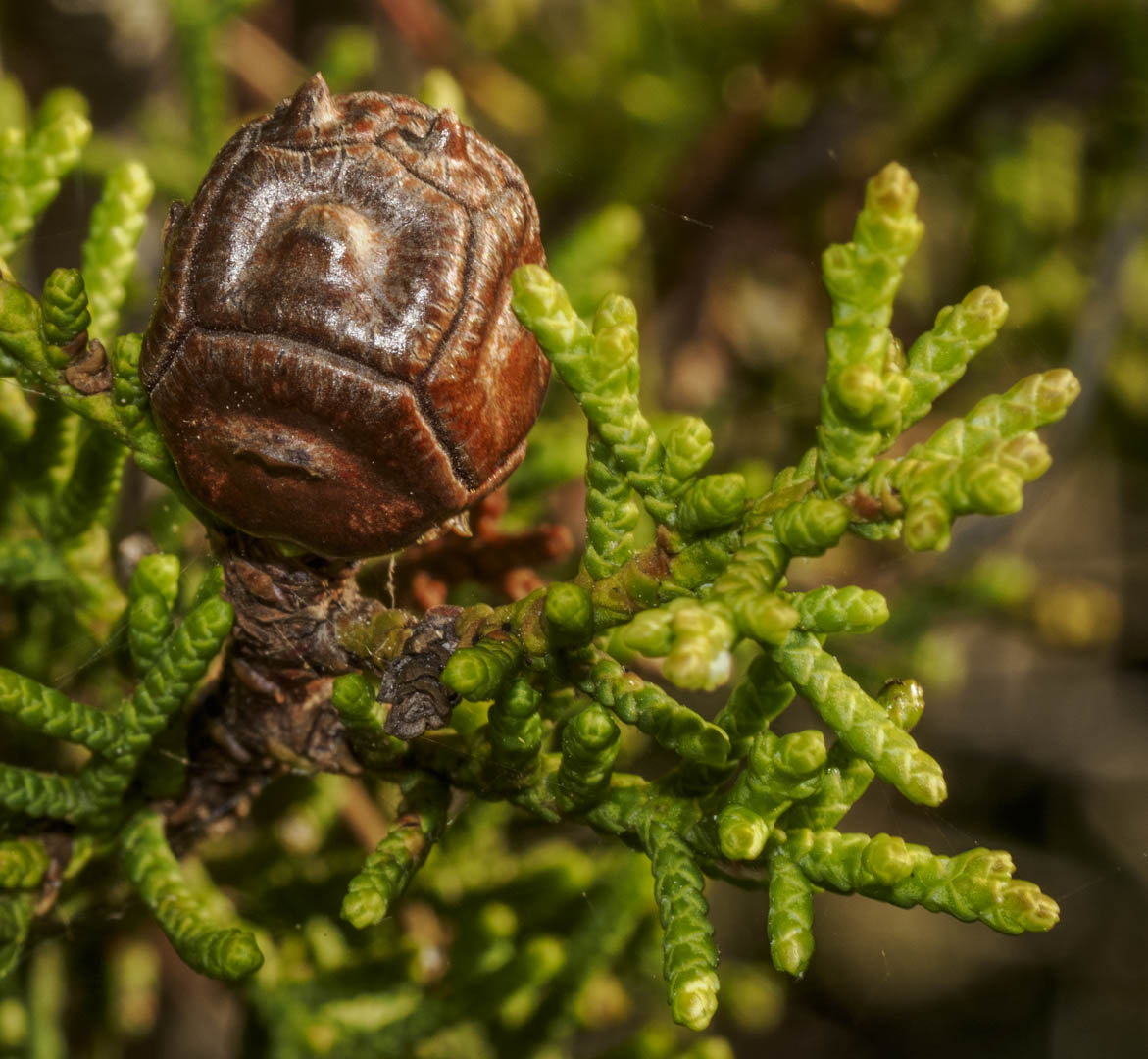
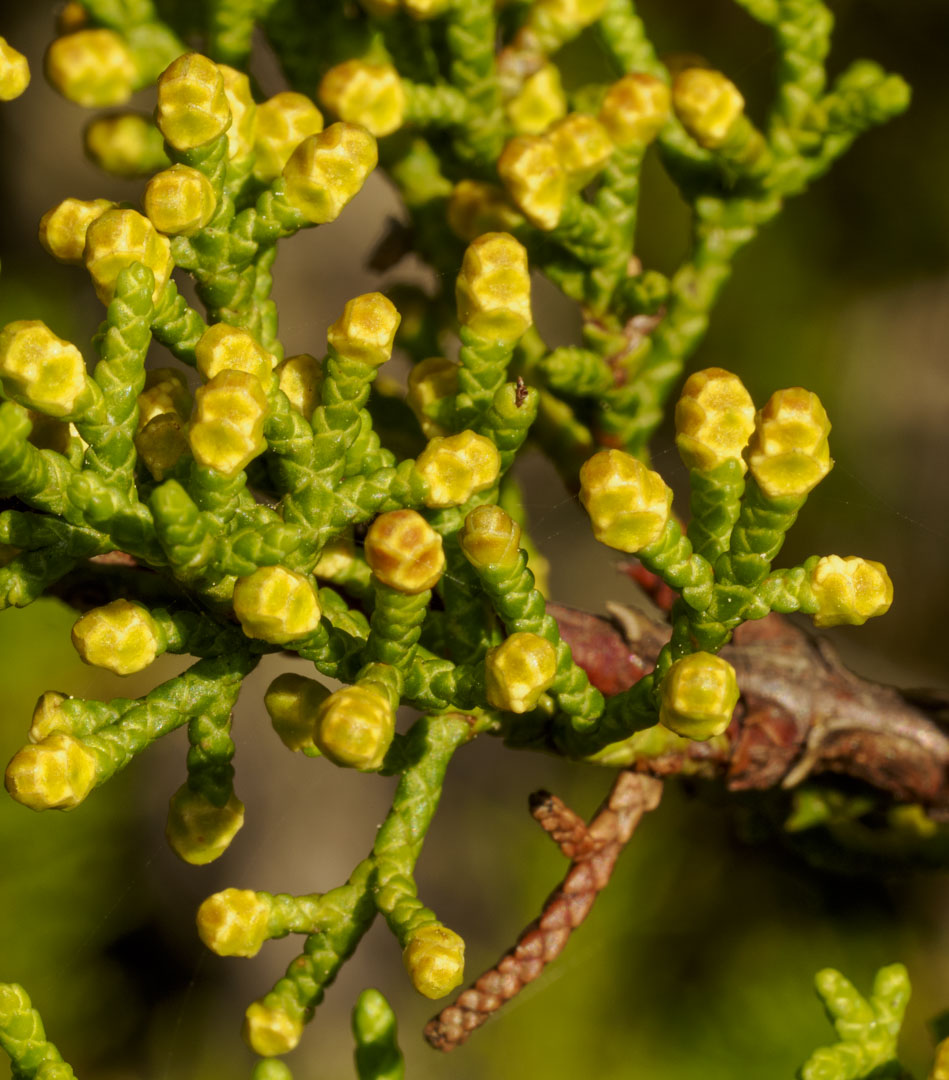
Evergreen dwarf trees a meter or so high when growing in sterile soils, with a trunk 1-2 cm diameter and a few branches 3-5 mm in diameter, bearing a few seed cones; such dwarfs may be 10 or more years of age. Trees in richer soils range in height from 10-50 m, up to 200 cm dbh with a 10-15 m crown spread. Bark gray-brown, fibrous, up to 2 cm thick. In general aspect the trees are dark, blackish, dull green, except when laden with pollen cones at which times they appear yellowish green. Current-year twigs ca. 20 mm long and are 1-1.5 mm diameter. Leaves 1-1.5 mm long, acutely pointed, rounded on the back, without a dorsal pit. Second-year twigs thicker, and on vigorous shoots some of the leaves are 7-10 mm long and 2-3 mm wide with an acute-spreading tip about 2 mm long. On twigs that shed their leaves the second or third year, the bark becomes a smooth brown and remains so for many years. Pollen cones abundant, produced at all seasons, these borne solitary on the ends of the twigs. At maturity they are 4-sided, 3-4 mm long, composed of 12 to 14 scales, each about 1.7 mm. long, triangular-obtuse at apex and nearly round at base; the extreme lower and upper scales bear only 3 or 4 pollen sacs while the rest usually have 5 sacs. At maturity the scales expand and the pollen sacs protrude between their margins. Seed cones abundant on dwarfed or mature trees; cones often borne in congested clusters; solitary at the apex of short twigs. Just before pollination the cone enlarges to 3-4 mm diameter, the 8 or 10 scales stand erect or slightly spread and expose the numerous ovules; the scales close soon after pollination, and the cone develops to nearly 1 cm in diameter the first season, is at first green, then changes to a rich tan and is nearly spherical with a low broad erect or slightly incurved umbo on each scale. At maturity the cones are 15(-20) mm in diameter, with less conspicuous umbos. As the cones remain on the trees for several years unopened, the surface becomes gray and the umbos weather away. Each cone contains about 130 brown to black seeds that are irregular flattish, 3-4 mm long and wide, with a stiff but thin narrow wing. Cotyledons 3-4, 8-12 mm long linear but a little flattened. During the second season, the branchlets produce leaves which gradually approach the mature type in shape and size (Wolf 1948).
Distribution and Ecology
USA: California: Mendocino County: two coastal area near Fort Bragg and Mendocino City. Habitat is the Mendocino White Plains, a highly acidic, nutrient-deprived white sandy soil over a hard clay. Some plants are dwarf, flowering when less than 1 m tall, and they occur with two pines (P. contorta var. bolanderi and P. muricata) that attain similarly diminutive sizes (Lanner 1999). These "pygmy" forests are a unique vegetation type where very acidic soils, mineral toxicities and deficiencies, podsolized iron hardpans, and extreme water conditions (both dry and wet) have resulted in forest communities dominated by a few stunted stress-tolerant conifers, along with a diverse community of many endemic or uncommon shrubs and herbs (Gardner and Bradshaw 1954, Millar 1989, Aitken and Libby 1994). The conifers mainly include Pinus muricata, P. contorta var. bolanderi, and Hesperocyparis pygmaea, though there are also occasional stunted Abies grandis, Tsuga heterophylla and Sequoia sempervirens.
The IUCN treats Hesperocyparis pygmaea as an ecotype of H. goveniana, and does not give it a separate conservation evaluation; thus the two taxa taken together are "Endangered," and each considered alone is still more so.
Remarkable Specimens
The largest living specimen has height 43 m, dbh 213 cm, crown spread 12 m, in Mendocino County, CA (American Forests 2000). Mathews (1929) reports detailed measurements, taken in 1914, for 13 trees near Fort Bragg. He concludes with "I measured the largest tree I ever saw of this species. This tree had a trunk 27 ft. in circumference at 5 ft. above the ground [262 cm dbh] and was well over 150 ft. [45.7 m] high. The tree was dead but the bark was still clinging to the tree and the wood was sound. In this same locality, on about 40 acres [16 ha], there were many trees of large size, all standing, but trees of other species were nearly all cut down, leaving almost a pure forest of the Cypress. Hundreds and thousands of Cypress seedlings were springing up all over the place and especially about the base of the trees."
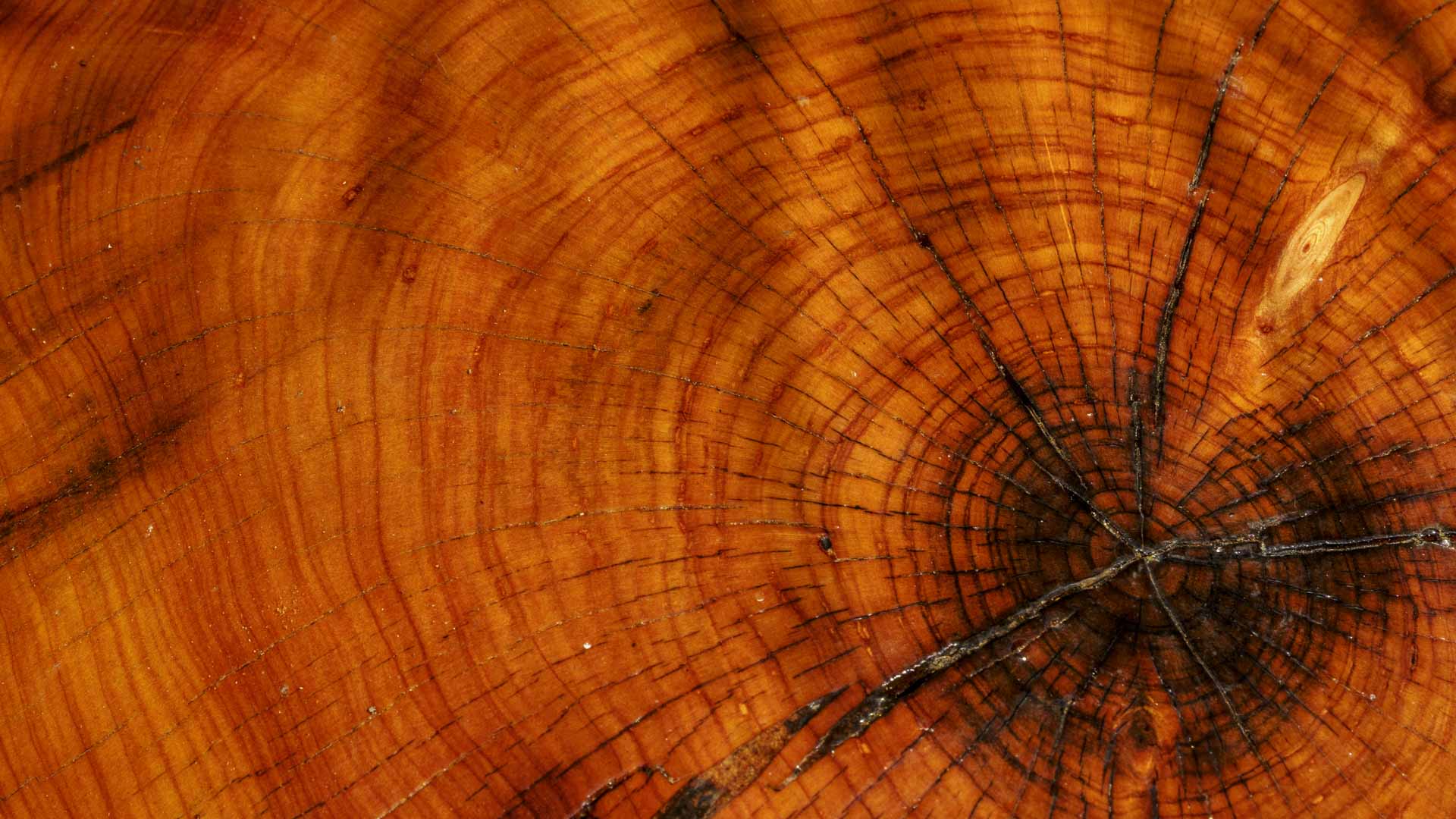
There are few age data; Wolf (1948) reports a specimen on which he counted 57 rings.
Ethnobotany
Formerly, it was used as firewood (Mathews 1929).
Observations
The best place to see Hesperocyparis pygmaea, in my experience, is at the Jug Handle State Natural Reserve about 3 miles S of Fort Bragg, CA. A trail here takes you up a series of emergent marine terraces, topping out at a pygmy forest of H. pygmaea with Pinus muricata and P. contorta var. bolanderi. The state website provides an interpretive trail guide, as does Jenny (1973). This location, by the way, is a registered natural landmark and probably the best-known of the various pygmy forests.
Remarks
The epithet pigmæa simply means "small". This was the original epithet given by Lemmon (1895), but when treated as a species it became Cupressus pigmaea, and when moved to the new genus Hesperocyparis it became "pygmaea" (IPNI 2025).
Citations
Adams, R. P., J. A. Bartel and R. A. Price. 2009. A new genus, Hesperocyparis, for the cypresses of the western hemisphere. Phytologia 91(1):160-185 (p. 179). Available: Biodiversity Heritage Library, accessed 2026.01.29.
Aitken, S. N., and W. J. Libby. 1994. Evolution of the pygmy-forest edaphic subspecies of Pinus contorta across an ecological staircase. Evolution 48:1009–1019.
American Forests 2000. The National Register of Big Trees 2000. Washington, DC: American Forests.
Bisbee, J. and D. Maerki. 2012. Cupressus pygmaea is a valid species. Bulletin of the Cupressus Conservation Project 1(2):27-33.
Gardner, R. A. and K. E. Bradshaw. 1954. Characteristics and vegetation relationships of some podzolic soils near the coast of northern California. Soil Science Society of America Journal 18(3):320-325.
Jenny, Hans. 1973. Pygmy forest ecological staircase: description and interpretation. https://www.mendocoastrec.org/files/ed72c4558/Pygmy-Forest-Jenny-1973-1.pdf, accessed 2025.11.22.
Lemmon, J. G. 1895. West-American Cone-Bearers, 3rd ed. Pp. 76-77. http://www.cupressus.net/CUpygmaeaLemmon.html, courtesy of the Cupressus Conservation Project website.
Mathews, Willam C. 1929. Measurements of Cupressus pygmaea Sarg. on the Mendocino "Pine Barrens" or "White Plains". Madroño 1(4):216-218. Available: Biodiversity Heritage Library, accessed 2025.12.08.
Millar, C. I. 1989. Allozyme variation of bishop pine associated with pygmy-forest soils in northern California. Canadian Journal of Forest Research 19:870–879.
Terry, R. G., J. A. Bartel, and R. P. Adams. 2012. Phylogenetic relationships among the New World cypresses (Hesperocyparis; Cupressaceae): evidence from noncoding chloroplast DNA sequences. Plant Systematics and Evolution DOI: 10.1007/s00606-012-0696-3.
Wolf, C. B. 1948. Taxonomic and distributional studies of the New World cypresses. Aliso 1:1-250.
See also
The species account at Threatened Conifers of the World.
Adams, R. P. and J. A. Bartel. Infraspecific variation in Hesperocyparis goveniana and H. pygmaea: ISSRs and terpenoid data. Phytologia 91(2):277-286.
Bisbee, Jeff. 2006. Photos at the Cupressus Conservation Project website.
Eckenwalder, James E. 1993. Cupressus. Flora of North America Editorial Committee (eds.): Flora of North America North of Mexico, Vol. 2. Oxford University Press.
Little (1970).
Sargent. 1901. North American trees. Botanical Gazette 31: 239-240. http://www.cupressus.net/CUpygmaeaSargent.html, courtesy of the Cupressus Conservation Project website.




 Back to top