
The Lives of Trees: Human and Tree Biology & Ecology
In 1948 Aldo Leopold wrote an essay called “Thinking Like a Mountain” where he explored the notion of landscape ecology, a field that wouldn’t even get a name for another 35 years. Today I want to talk about thinking like a tree, and to do it we will look at the most important ecological relationship in urban forests—the one between humans and trees. In particular I’ll look at scales of space and time, because we overlap with trees in those areas. This is one reason why humans tend to identify with trees, and is also why trees provide a great way to engage people with the idea that there really is an environmental crisis and that they really can do something about it.
| We’ll start by looking at parallels between human and tree biology. This includes similarities in scales of time and space, and also in reproduction and life cycles. This has led to some strong anthropomorphism about trees, in fact people often think of trees as woody people—as Ents, if you will. But there are some very important differences that make trees our complements rather than our counterparts. Life itself is often depicted as a tree, as seen here. | 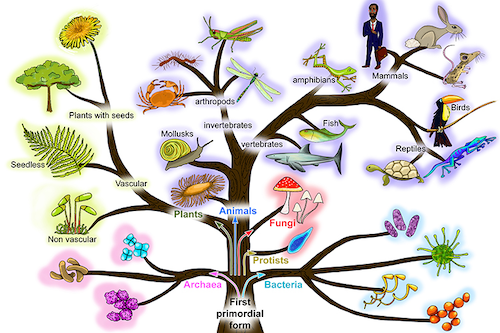 Mammoth Memory |
Then we’ll consider some parallels between human and tree ecology, mostly, how we harm or benefit each other. One of the strongest ecological relationships is a spiritual one, which for thousands of years has affected how humans relate to trees. Finally, we’ll briefly look at how to optimize benefits and minimize harm in the human-tree relationship.
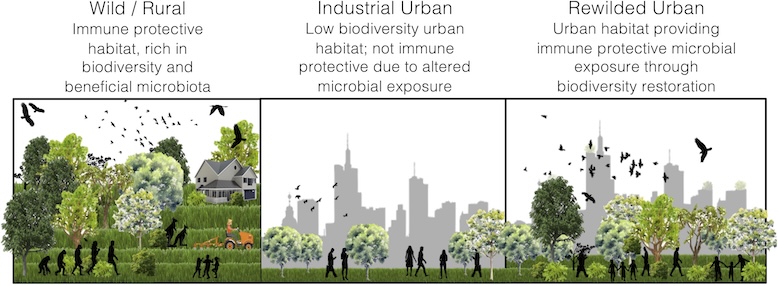
Mills et al. (2019)
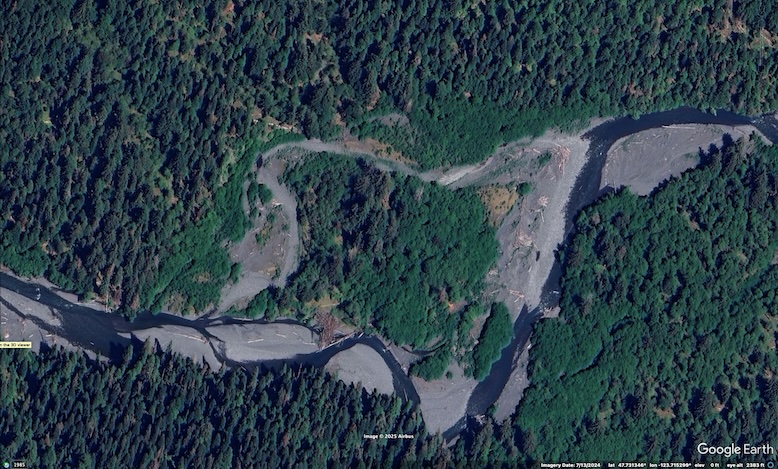
From a management perspective, there are 3 types of forest: wild, production, and urban. Generally, wild forests are naturally regenerated and unmanaged. They represent settings where human intervention has been minimal. The following example is in Olympic National Park. The forest shows great structural complexity, which is controlled by diverse environmental factors.
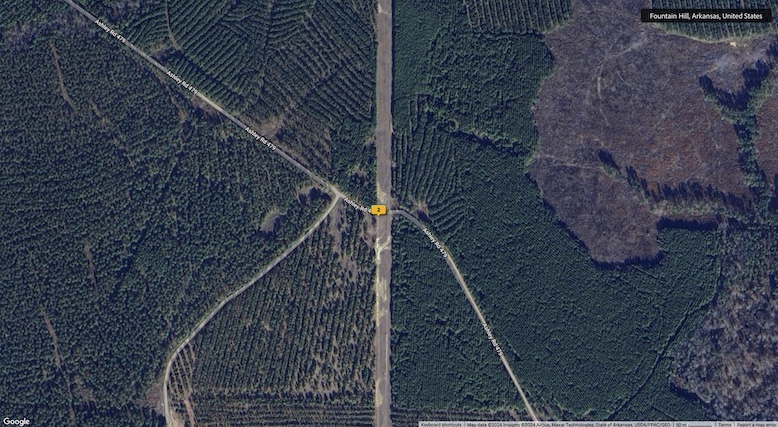
Production forests are focused on production of a commodity, like wood or apples. This example shows loblolly pine plantations in Arkansas. The forest is extremely monotonous in both age and structure. Like a cornfield, it has almost no biodiversity.
Urban forests are intended to enhance the quality of life in developed landscapes. This example is Central Park in New York City, originally designed in 1858 by Frederick Law Olmsted and still mostly following his vision. This forest shows structural diversity, but it has mainly been determined by purposeful human actions, managing the forest as part of a large garden. In this piece I’m primarily talking about urban forests, since that's where trees and people most commonly interact.
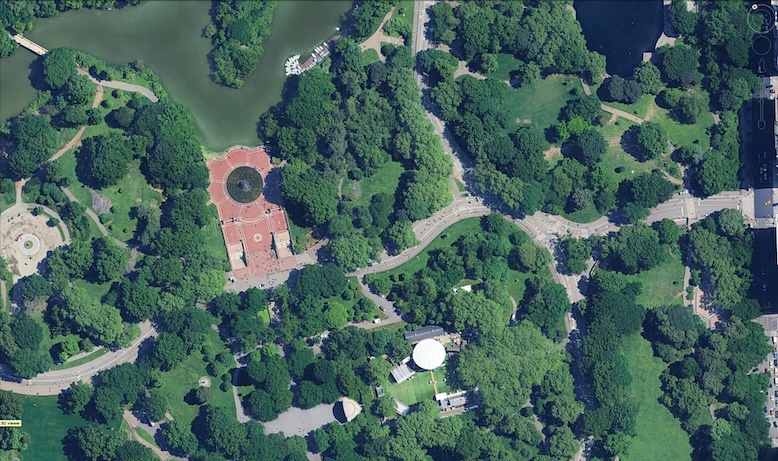
| The three forest types are not clearly distinct and over time one kind of forest can transition to another. For instance, the 2018 film “Leave No Trace” was mostly shot in the city of Portland, Oregon on lands that were first wild forest, were then harvested and became production forest, and today are urban forest. | 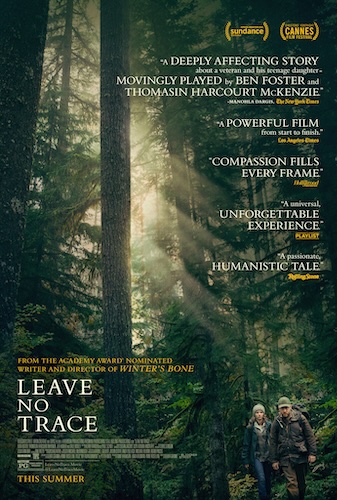 |
| This graph compares humans and trees in scales of space and time. The X-axis shows scales of space and the scale is ordered by powers of ten, with the smallest scale about a nanometer and the largest about the size of planet Earth. The Y-axis does the same thing with time, with the smallest time being about a millionth of a second and the largest about 4 billion years. The pale gray box shows the whole universe of space and time occupied by living things: the whole planet, 4 billion years. Way down here on the left are things that happen inside of living cells, at the scale of atoms and molecules, and the yellow color indicates these are about the same for all living things—people, plants, bacteria, whatever. We then move up above the X-axis to the scale of whole cells. These are millions of times larger than atoms and molecules, and processes happen much more slowly, but they are still about the same between plants and animals. The green color indicates that plant cells, however, sometimes live much longer than animal cells. | 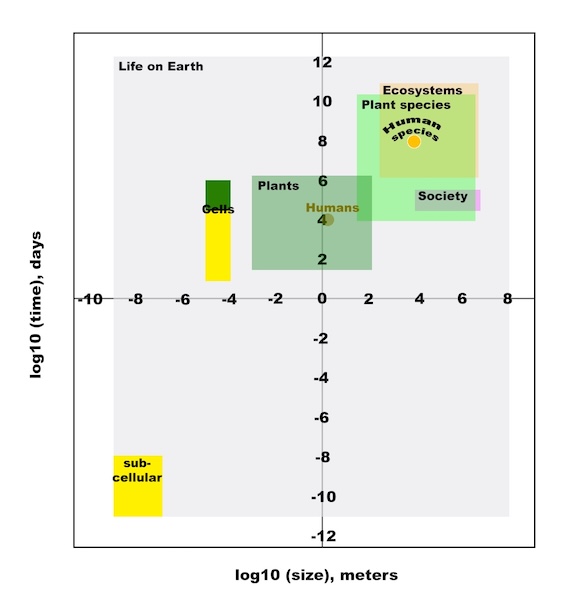 |
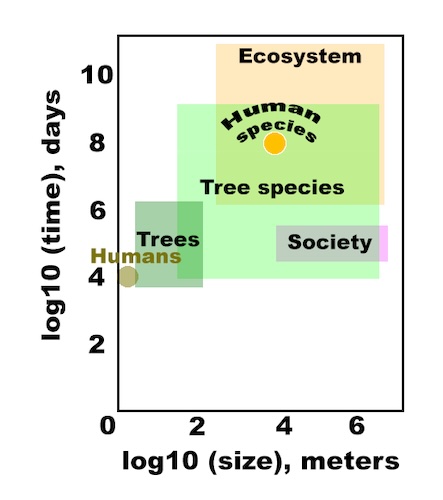 |
If we focus on the top right part of that graph, we get to the scale of individuals - trees, people, and their larger agglomerations, which include species and ecosystems or, in the case of humans, societies. Trees and humans partly overlap in size and time. Most but not all trees are bigger and longer-lived than humans. We’ll look at that more closely in a few minutes. At the species level, humans are pretty well defined. Anthropologists tell us that our species, Homo sapiens, has been around for about 300,000 years. Most of us live in urban areas, and our urban areas cover about 2% of the world’s land area. Trees are not so clearly defined. Since there are about 75,000 species of trees, they are pretty variable, with the rarest ones consisting of a single tree. The most common is something like black spruce (Picea mariana) or Scots pine (Pinus sylvestris), covering the landscape across many thousands of kilometers. Tree species also vary wildly in age, with some less than a thousand years old and others persisting for tens of millions of years. Trees are accumulated into ecosystems that also vary hugely in space and time, from tiny ecosystems on isolated islands to huge ones like the boreal forest that circles the earth north of about 55 degrees latitude. The oldest ecosystems are in places with the most stable climate; about 50 million years in coastal Queensland, Australia. One of the youngest ecosystems is our own Douglas-fir forest in Cascadia. It’s only been here for about 4,000 years. Humans are organized into societies. Our current society originated in western Europe about 500 years ago and now dominates most of the globe. Societies in prehistoric times tended to be smaller but long-lasting. Like ecosystems, they were driven mostly by long-term slow changes in climate. Both humans and trees are keystone species, that is, many other species are enabled or blocked due to the sheer magnitude of tree and human effects on the ecosystem. |
Left, Wikimedia Commons; right, biographixmedia.
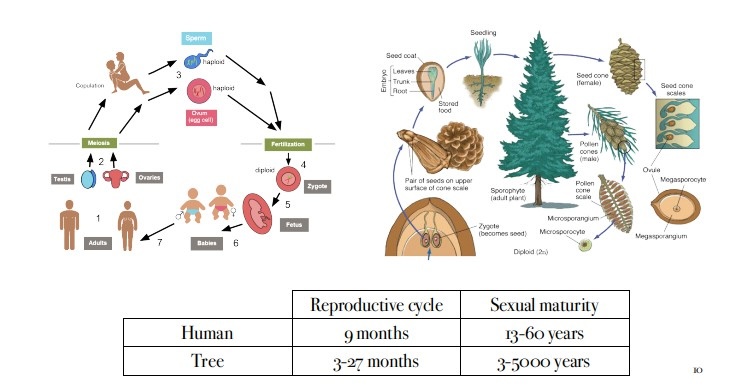
Now we’ll look at some biological parallels between humans and trees, starting with reproduction. Curiously, although human and tree reproduction involve very different biological processes, they both take about a year. The regeneration time is 9 months for humans, and falls into the range of 3 to 24 months for most trees. We also overlap with trees during our effective reproductive lifespan. The time during which we can do reproduction is about 47 years, from ages 13 to 60, for humans. It’s a lot more variable with 75,000 species of trees, and ranges from 3 years to about 5000 years, but is usually a large fraction of the tree's lifespan.
Left, Wikimedia Commons; right, flickr.
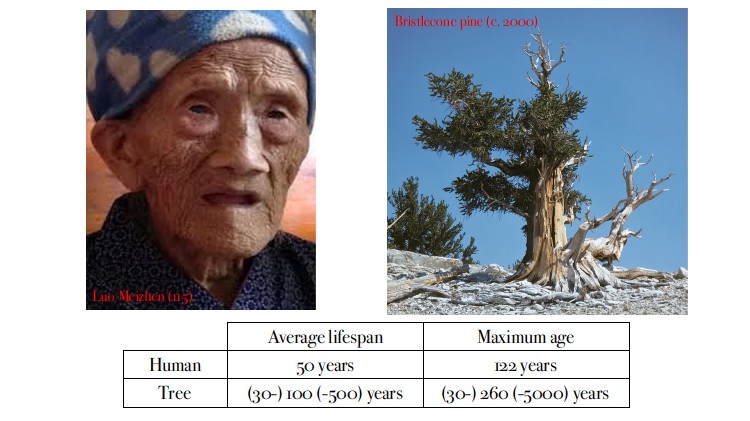
There are also some strong similarities in tree and human lifespan. But, the demographics are a lot different. In ancient times a human baby had about a 25% to 50% chance of living to maturity. Assuming that its village wasn’t visited by any of the four horsemen—famine, plague, pestilence, or war—that baby had a typical life expectancy of about 50 years. Humans have a genetically programmed life cycle with fairly well defined juvenile, reproductive, and post-reproductive stages, and they have a genetically determined absolute maximum lifespan of about 120 years. In the modern world, medicine has nearly eliminated infant mortality and most people in contemporary societies can expect to live about 80 years, but that 120 year limit has really not moved. The woman on the left here, Luo Meizhen, died a few years ago at the age of 115 years.
Trees have very different demographics but comparable lifespans. To begin, they generally produce enormous numbers of seeds, many of which might germinate but generally much less than 1% will reach maturity. Unlike humans, trees have an indeterminate growth and they very quickly reach reproductive age, but in general, they have no senescent stage; in theory most trees can live far longer than the age at which they are typically killed by an external agent. I recently was coauthor on a paper (Brienen et al. 2025) where we assembled maximum longevity data on over 900 tree species. Although they reach maximum ages of about 5,000 years, the average for those 900 species was 260 years, or about twice the maximum human lifespan. There are not very good data on average tree lifespan, but the available sources indicate that it’s typically less than half the maximum. So, the 80 years that humans commonly achieve these days is actually pretty close to the average tree life expectancy. Also, human activity can greatly change tree demographics and lifespan. A typical urban forest tree was grown from seed in a nursery and has an excellent chance of reaching maturity. It then lives until it suffers a calamity or a management decision is made to remove it.
By the way, the photo on the right is a Great Basin bristlecone pine. These trees frequently live for over 1000 years.
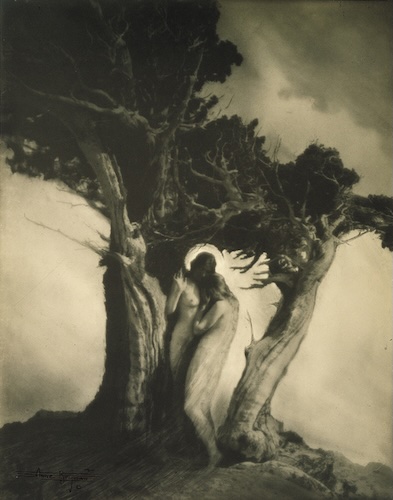
| Anthropomorphism is when you attribute human behavior to something that isn’t human. We see it a lot with animals, but we also have an emotional or spiritual relationship with trees. We identify with them, and attribute human characteristics to trees. For example, people often will say “trees talk to each other” or “trees are ancient beings.” Trees don’t talk and they are not individuals; instead they do things that humans can hardly even imagine, and that we cannot do. I like trees because of that, but for most people, anthropomorphism is much easier. This photo, by the way, is "Heart of the Storm" (1902) by California photographer Anne Brigman, who created many works on the theme of human and tree spirits. People who work with trees, such as arborists and foresters, have a responsibility to try to understand the tree on its own terms. But, if anthropomorphism inspires someone to care about trees, to protect them or learn more about them, that’s a good thing. It makes it easier to educate people in ecological awareness and to motivate them to treat their planet in a more ecologically responsible way. |
 Wikimedia Commons |
 Wikimedia Commons |
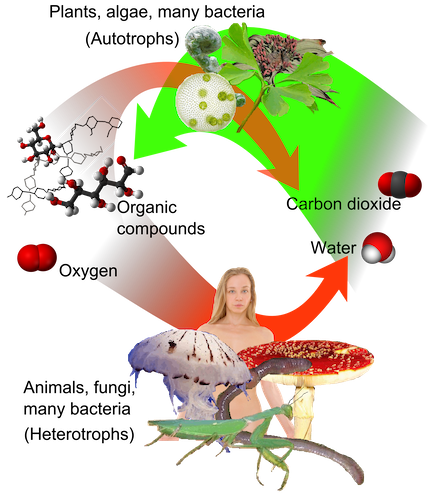
As a final point on biology, we have to remember that in many important ways, trees are fundamentally unlike humans. This is why anthropomorphism gets in the way of understanding the trees. For starters, trees are autotrophs, not heterotrophs. This of course is a wonderful thing; they take in carbon dioxide and use it to make oxygen, while human and all other animals take in oxygen and produce carbon dioxide. This is the clearest example of a complementary relationship between trees and humans. |
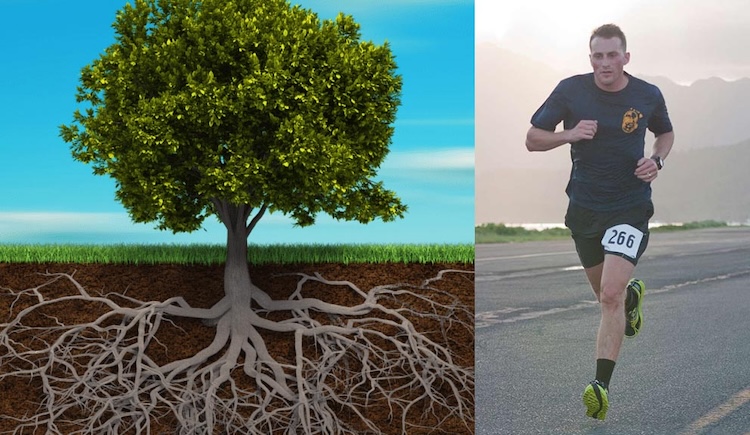
famvin and getarchive
Also, trees are stationary, while humans are mobile. This is pretty obvious but it’s one of the biggest problems with anthropomorphism; a lot of how we relate to the world is based on our ability to move around, to let go of this and choose that. Our whole existence is based on processing information, making choices, and taking action. A tree’s life is mostly about adapting to what cannot be avoided or changed.
| An even more fundamental idea is that humans are individuals, and trees are not. They are modular organisms, consisting of basic structural elements that self-replicate in an indeterminate fashion, allowing them to grow indefinitely and to assume shapes that are determined by environmental factors. This is one of the most important strategies trees use to survive despite being incapable of movement. The images here are not a tree; they are entirely generated using a simple recursive mathematical model that happens to produce the structure of a bigleaf maple crown. This modeling work showed how simple processes can produce the infinite variety of forms that we see in different trees. | 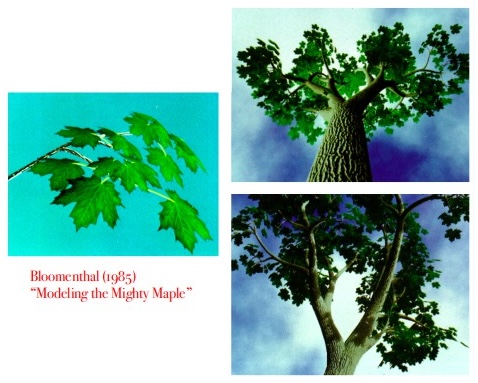 |
C. J. Earle
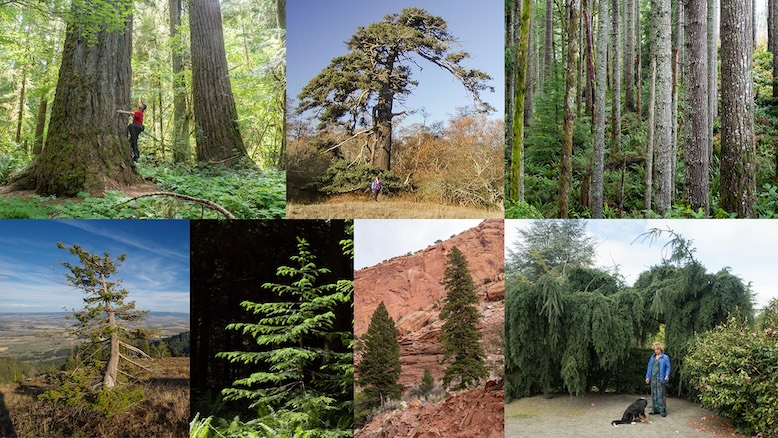
Here is an example. These are all Douglas-fir trees. They all have essentially the same genetic makeup, but their growth forms are very different because they have grown in such different environments. This is enormously more growth variation than we would ever see in a deterministic organism such as a human or another animal. These are all wild trees except for the pendulous cultivar at lower right.
| This is what I mean by indeterminate growth. Humans have determinate growth; they grow quickly to a certain size and then stay that way for the rest of their lives. Indeterminate growth allows a tree to keep getting larger throughout its life. It also allows a tree to keep producing seeds for its whole life, while humans have a fairly well-defined time interval when we are capable of reproduction. | 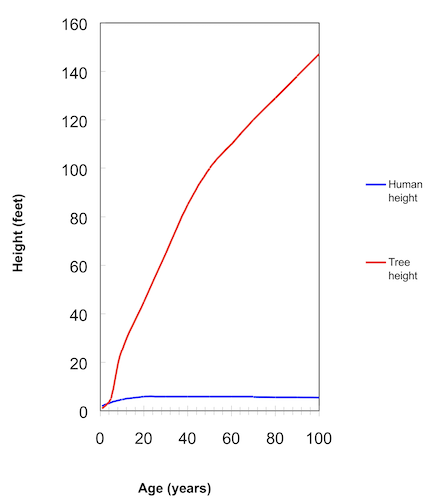 |
 |
 |
|---|---|
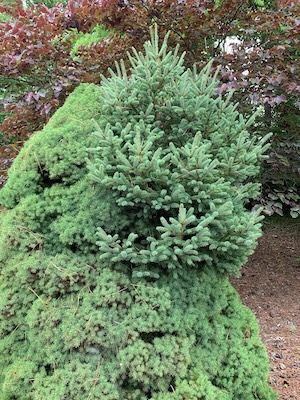
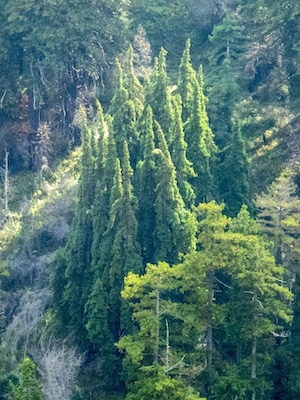
| Finally, unlike a human, a tree is not one genetic individual. Being a modular organism, any one of the modules can develop reproductive structures. An example is at the left here, where a Norway spruce cultivar has experienced a “reversion” so that one branch has lost the ability to be a cultivar and is growing like a wild Norway spruce. | The picture at the right is a coast redwood clone made of all fastigiate-growth trees. Zane Moore at the University of California Davis has recently shown that redwoods mutate very quickly (Moore 2023). The typical old-growth redwood crown has millions of mutations. These mutations can have important consequences. For instance, Zane found a large, ancient redwood clone near Santa Cruz where the trees are unable to form reaction wood; they fall over and grow along the ground. |
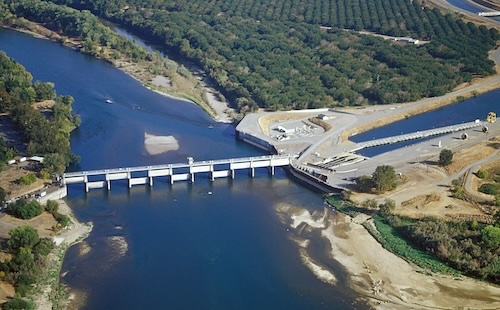
| Now, what about the ecological relationships between humans and trees? First I’ll briefly review the main types of ecological relationship that may apply here. In competition, organisms compete for a limited resource. A classic example is when humans take water out of an ecosystem and use it in a way that only benefits humans. |
 Wikimedia Commons |
 C. J. Earle |
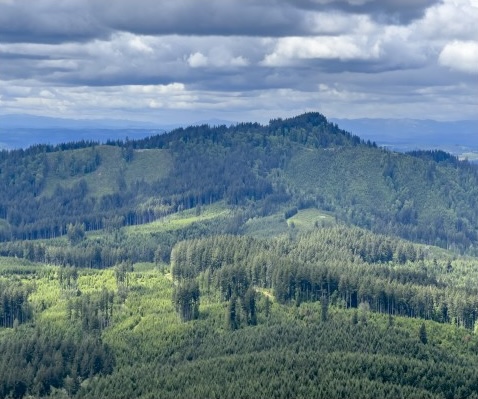
In predation, one organism feeds on another. Logging is an example. |
Raihan (2023)
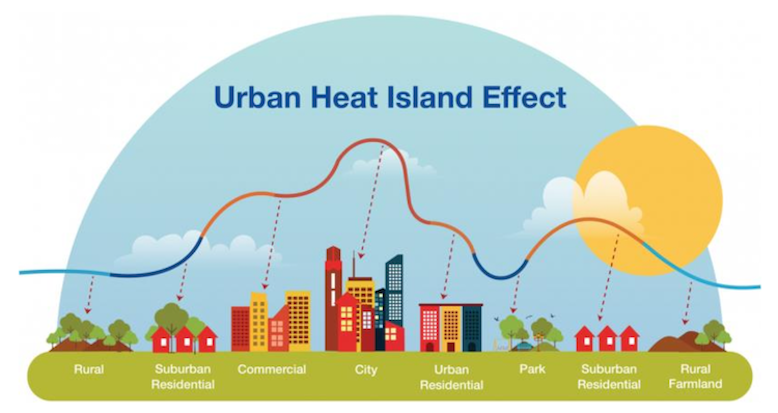
In commensalism, one organism gets a benefit, and the other is not harmed. For instance, humans benefit when urban forests reduce the “heat island” effects of urbanization, but it doesn’t affect the trees very much one way or the other.
| In mutualism, both organisms benefit. This is common in urban forests, where the trees are cared for by people, and the people get recreational and other amenity benefits from the trees. | 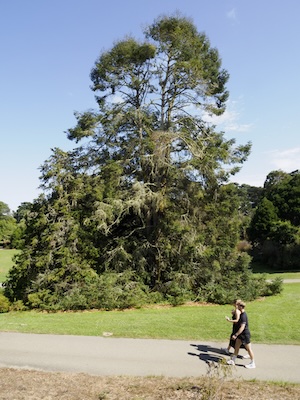 C. J. Earle |
 Wikimedia Commons and BLM |
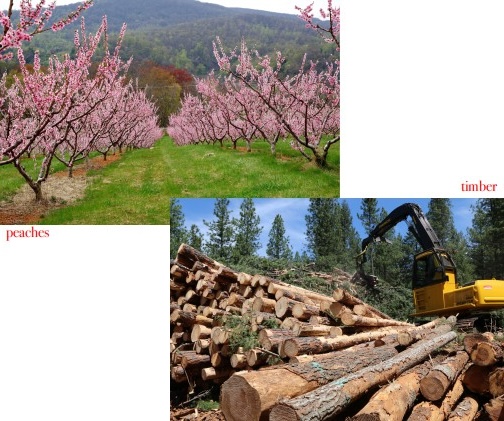
Now let’s look at how these ecological relationships play out between trees and humans. How do trees benefit humans? One, trees give us practical material benefits such as food from fruit trees, wood from timber species, and firewood. These values are not usually important in urban forests, though. |
| Second, trees provide ecosystem services that include tangible services like air quality, water, microclimate, and wildlife habitat; and also intangible services like community spaces, gardens, recreation, education. All of these are important values in urban forests. | 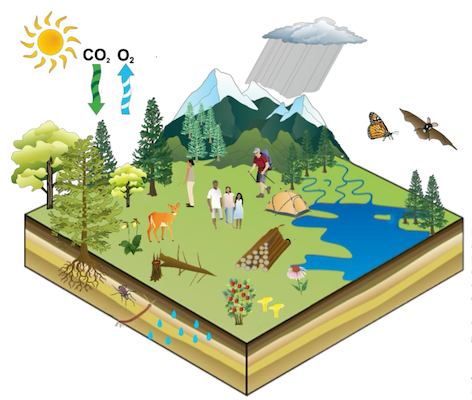 Holzwarth et al. (2020). |
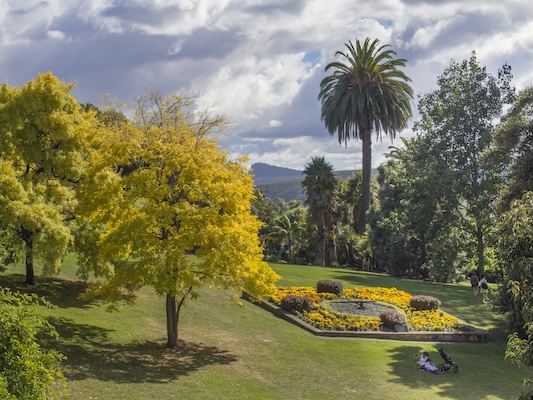 C. J. Earle |
Lastly, we have amenity value; urban forests are just nice places to be. |
Why is that, though? Why do humans have this spiritual or aesthetic attachment to trees, which allows us to derive such intangible benefits from them? Many scholarly, popular and creative works have asked why humans love trees. This love for trees goes back for thousands of years and touches nearly every human culture.
 Wikimedia Commons |
 Wikimedia Commons |
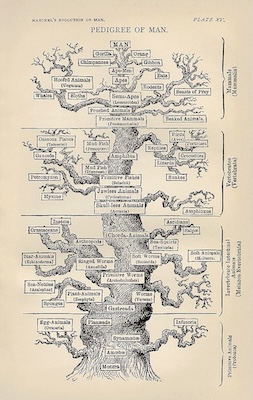
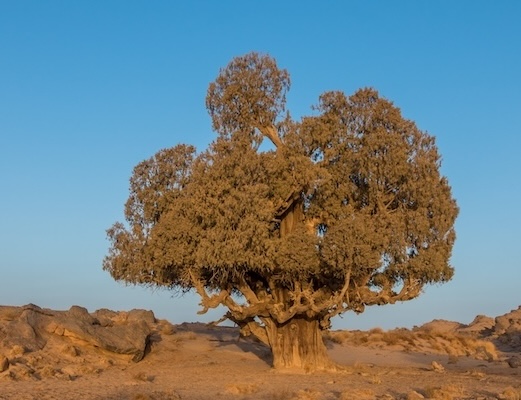
| Part of it is physical; as we’ve seen, humans and trees have similar age and size scales, but trees are commonly a bit larger and older, a sort of “big brother”. They stand upright and their branches look like arms and fingers. There are other similarities too; the tree on the right here is the Tarout, Cupressus dupreziana, the ancient cypress of the Sahara. There are so few of these trees left that most of them have individual names, but the name “Tarout” is a butcher’s term (in Arabic) for the lungs and windpipe of a goat or sheep. The physical similarity is often also a metaphorical structure, as in a family tree or an organizational tree. The drawing here is Ernst Haeckel’s “Pedigree of Man”. Haeckel’s vision of evolution as a ladder with Man at the top is now discredited, but this 1866 illustration is the very first published example of a phylogenetic tree. | |
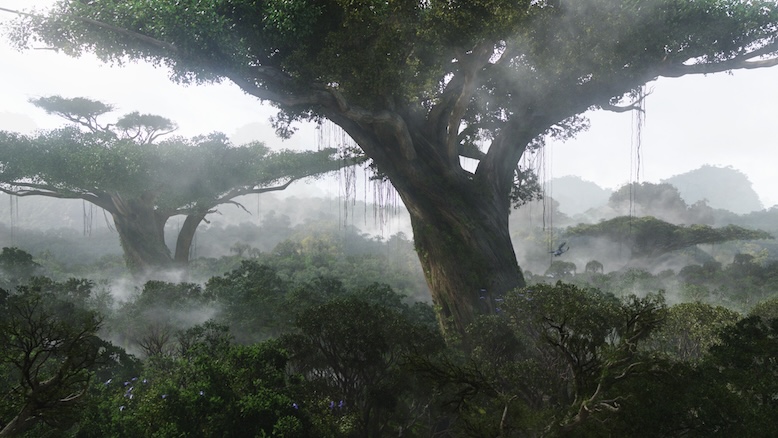
| Trees also provide us with a sense of stability and rootedness. Trees have a long life and stay put in one place, triumphing over hardship by enduring it. By doing that, trees call up comforting emotions such as nostalgia, awe and wonder. Lots of many artworks evoke this feeling. This view of the home tree from “Avatar” (2009) is one example, and so is the Lorax (Dr. Seuss 1971), who speaks for the trees. | 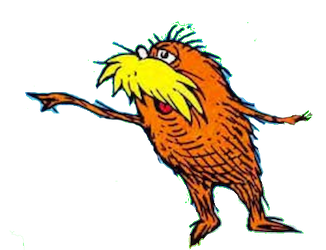 |
 |
The health benefits of trees currently are widely promoted through Shinrin-yoku [sheen-deen-yoku] or “Forest Bathing”. The kanji for Shinrin is shown here; I think it’s great that in Japanese, the word for forest IS a forest. Research has shown that spending a little time in a forest, especially for stressed urban dwellers, can result in lower stress hormone levels, a lower pulse rate, reduced blood pressure, improved sleep cycles, and improved short-term memory. |
Trees play a spiritual role throughout human culture, including in every major religion, most aboriginal belief systems, and many systems of folklore and mythology. This importance is very much a continuing thing, widely expressed in the modern secular world. Here are some examples:
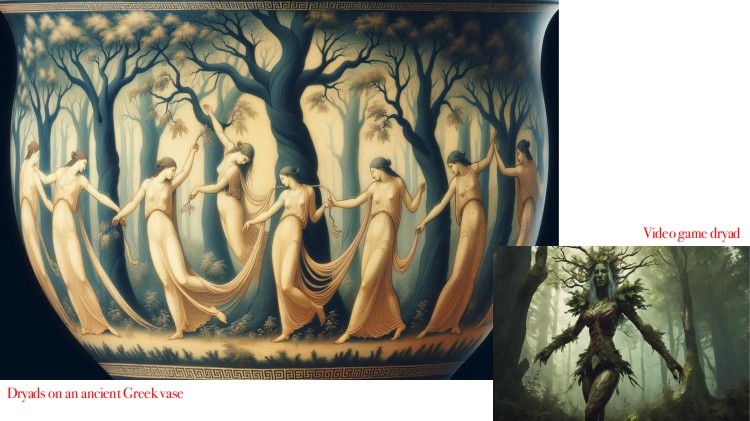
both images from paleothea
Above left are dryads (female tree spirits) on an ancient Greek vase. Dryads persist today; on the right is a dryad from a video game. Tree spirits occur in many cultures and are typically female.
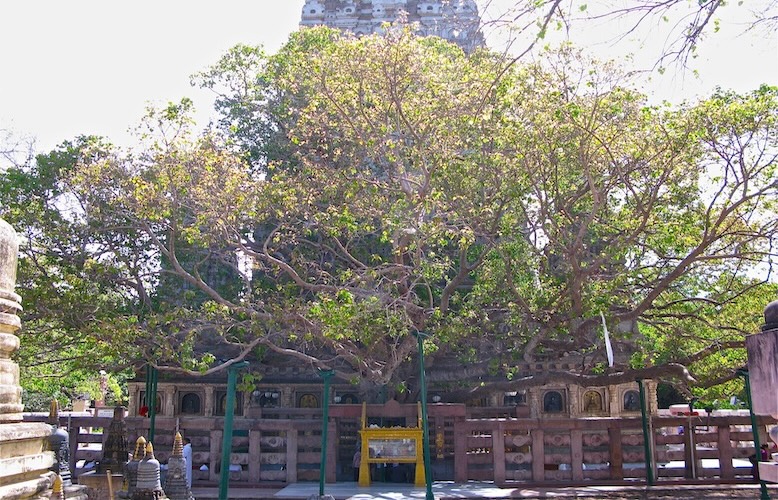
At about the same time the Greeks were pondering dryads, the Buddha achieved enlightenment while meditating under a Bodhi tree in Bodh Gaya, India. That tree has died but a scion was planted on the same spot when it died, and that tree, shown here, is still visited and worshipped by reverent pilgrims from around the world.
 C. J. Earle The Christians, Jews and Muslims also love trees. Where does the Bible start? In the Garden of Eden, of course, with the Tree of Life and the Tree of the Knowledge of Good and Evil. Here we have a 1791 depiction of the Tree of Life in that garden. In fact the tree of life is probably the most universal of tree archetypes, represented in dozens of cultures from around the world, and the term is still used today in secular culture. |
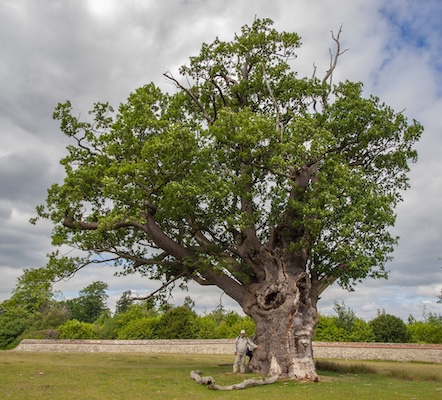
Roman writers tell us the Celtic peoples had a particular reverence for oaks. To this day, ancient oaks are widely revered in the UK and western Europe. This one grows in a medieval deer park at Sevenoaks, southeast of London.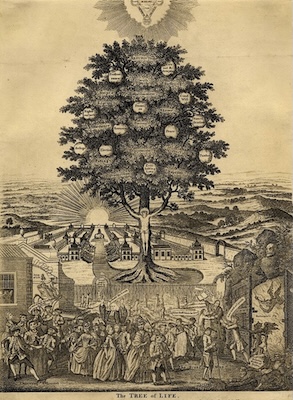 Wikimedia Commons |
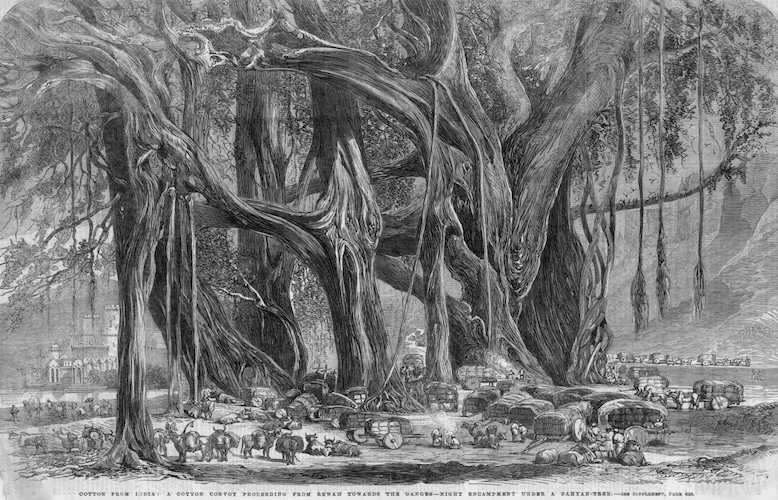
The Hindu also love trees, believing them inhabited by Devas, a local species of Dryad. The Banyan (Ficus religiosa) is also sacred. This 1862 illustration shows a large trading encampment set up beneath a giant banyan.
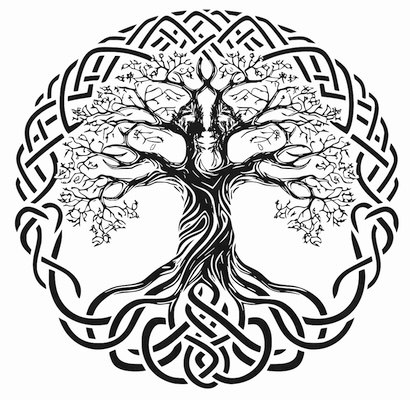
| This Celtic knot design depicts Yggdrasil, the Norse tree of life, whose roots and branches form the Earth and Sky itself, while also linking the living world with the underworld. pixabay |
 |
Wikimedia Commons and a Princess Mononoke screenshot
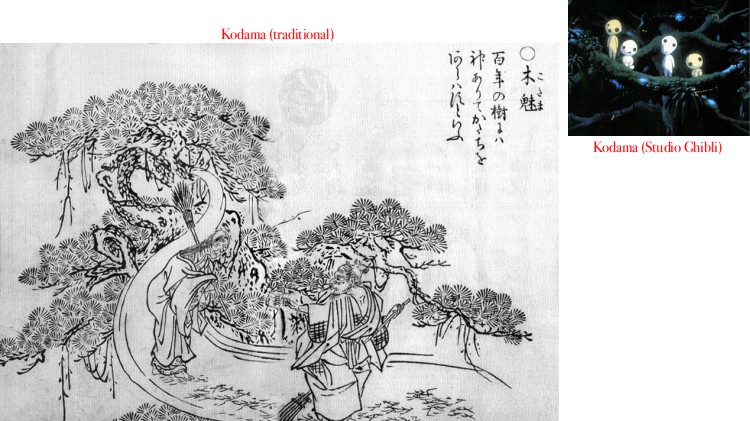
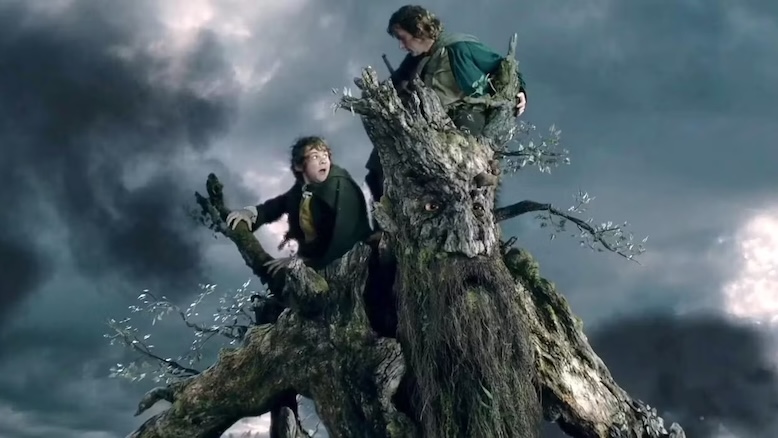
Trees are also sacred in many far Eastern cultures, including but not limited to the Chinese, Korean, and Japanese. This print shows a kodama, the Japanese dryad, as an old woman whose spirit inhabits a pine. If that’s a bit esoteric for you, you may recognize the modern vision of kodama by Studio Ghibli in the film “Princess Mononoke”. Trees continue to be revered even in popular culture today, as seen below in Treebeard, the enormously popular walking, talking tree from “The Lord of the Rings.”
Trees also have a memorial and ceremonial significance, as seen in trees planted in cemeteries and at temples, and at secular memorials such as the “Moon Trees” grown from seeds that Apollo astronauts took to the Moon. This human affinity for trees provides a powerful way to inculate environmental values and protect ecologically critical spaces.
| That covers the many benefits that humans receive from trees. What do they get from us? Humans mostly benefit trees intentionally, by caring for them, but also unintentionally by dispersing them and creating habitat for them. The ubiquitous Tree of Heaven, Ailanthus, is a classic example, as are English holly and Siberian elm. | 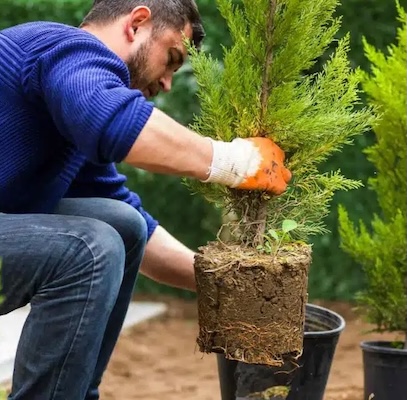 source unknown |
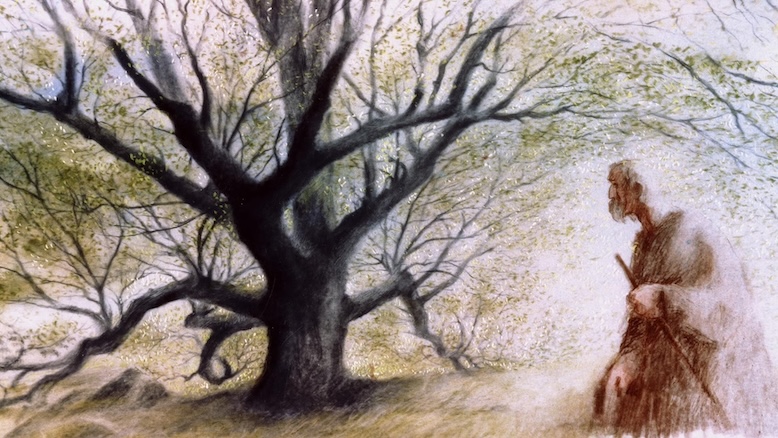
The Man Who Planted Trees screenshot
Humans also disseminate trees across the landscape. One of the best examples is the Italian stone pine; humans have been its primary seed disperser for at least 6000 years. The image above is from a 1988 animated film “The Man Who Planted Trees”, based on a 1953 book by Jean Giono. A lone shepherd, working for decades, reforested a desolate valley in Provence simply by planting acorns wherever he went. The film won the 1988 Oscar for animation.
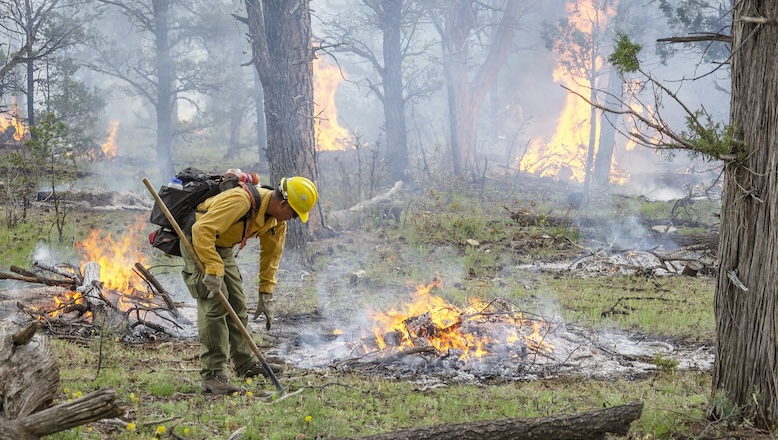
Humans also benefit trees through habitat modification. One of the most common forms these days is by prescribed burns, as shown below, which are often performed in semi-urban forests such as in the wildland-urban interface. Irrigation and fertilization are also forms of habitat modification.
source unknown
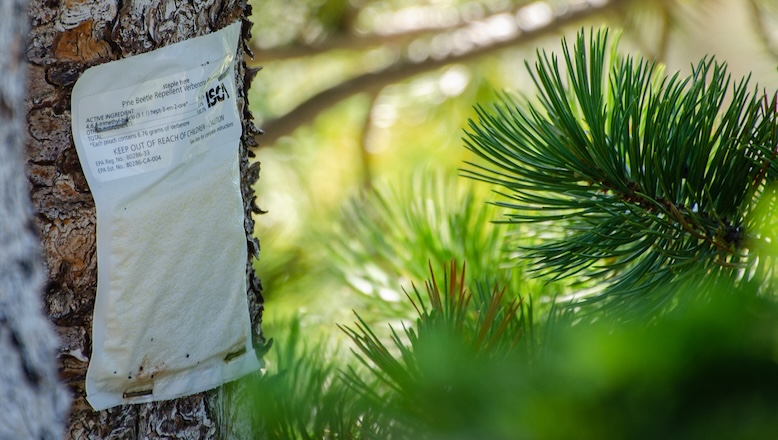
Pest control is another benefit. In some areas, this is the primary reason why some tree species survive; for example, periodic treatment is almost essential for eastern hemlock to survive the constant threat of hemlock woolly adelgid infestation. The photo here shows a pheromone attractant packet intended to protect whitebark pine from pine beetle infestation. A variety of other planning and management practices can also benefit trees at scales from the individual plant up to entire regions, as in the case of ongoing efforts to prevent further spread of the emerald ash borer.
| On occasion, trees harm humans. Mostly it happens on very short timescales; often we don’t see these problems coming, though hazard trees may develop over a period of many years, and sometimes are taken out only after a long period of tracking. The example here is a culturally and historically significant Oregon white oak tree that was recently the subject of a major community dispute in the town of Tumwater, Washington. The city feared the tree would fall onto a neighboring highway. An exceptionally thorough hazard tree analysis was performed on this tree and as a result the local government decided to retain the tree. | 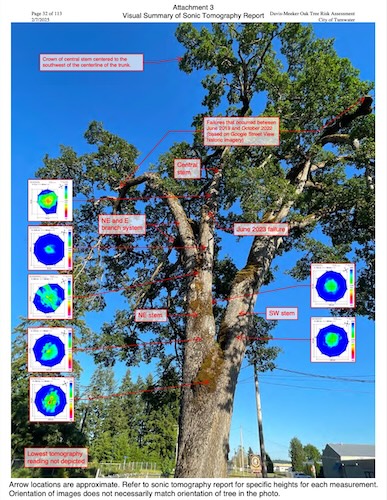 Till and Prager (2025) |
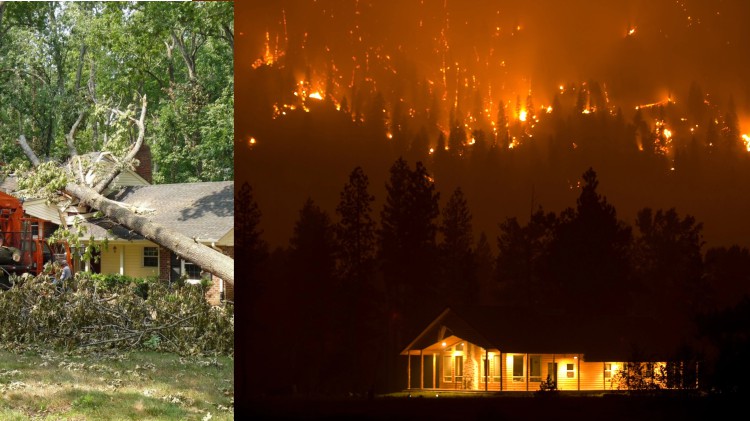
Windstorms and wildfires can also be very destructive to humans and to their structures. Windstorms are often foreseeable and can sometimes be managed, for example by choosing windfirm species. Wildfires are usually ignited by careless or destructive humans, but can sometimes be anticipated, for example as a consequence of a management problem like poor fuels management.
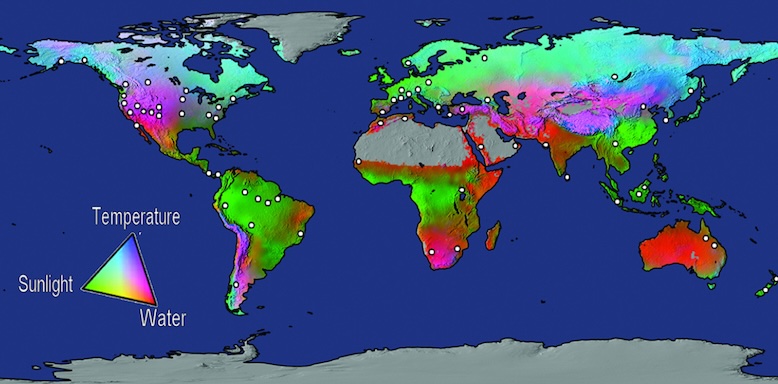
Humans harm trees in many ways. Under climate change it can fairly be said that we have altered every forest ecosystem on earth, whether we live there or not. The primary mechanism of damage is temperature increase, which mainly acts by reducing relative humidity (technically, increasing the vapor pressure deficit) and so increasing drought stress. This map shows in blue forested areas that are heavily affected by temperature stress, and in red, areas heavily affected by drought stress. Green areas have relatively little stress (Allen et al. 2010).
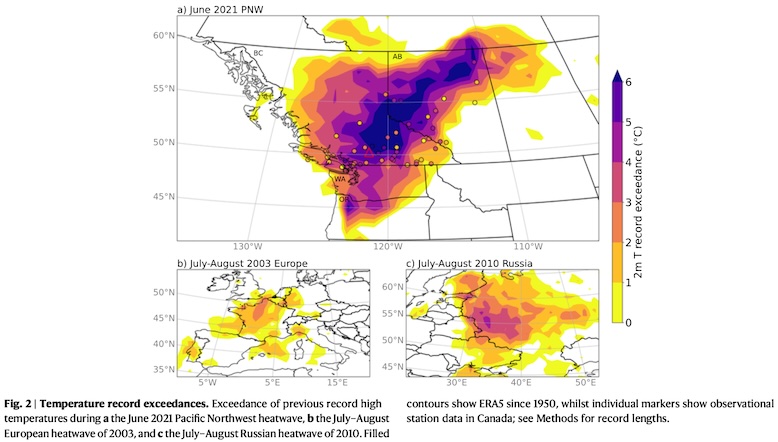
In June of 2021, we learned an important lesson. We learned that extreme heat alone can kill trees here in Pacific Northwest. That heat wave, also called the heat dome, caused the nearly instantaneous death of Douglas-fir foliage at sites across the Northwest. The map shows the most extreme temperatures in the darkest colors (White et al. 2023). This was the first time such a thing had ever been observed. No one knows how common these events will become in the future.
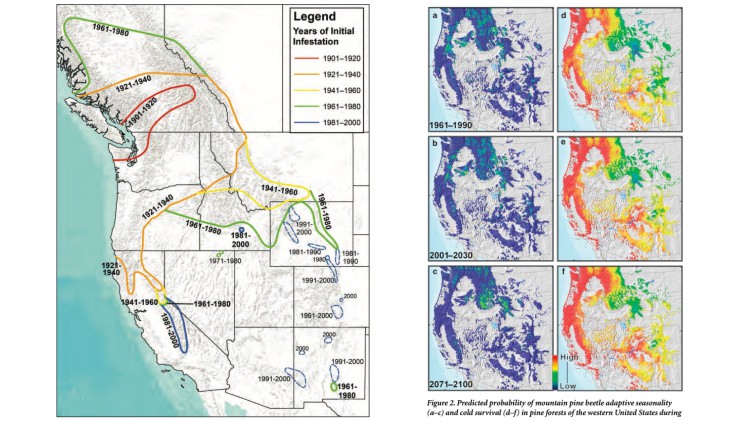
Humans also harm trees by introducing or facilitating pests and pathogens. American trees have repeatedly been decimated by pests that we introduced from Europe or Asia, such as the Japanese chestnut blight in 1900, the Asian white pine blister rust in 1910, the European dutch elm disease in 1930, the Japanese hemlock woolly adelgid in 1950, sudden oak death in 1995 and the emerald ash borer in 2002. All of these diseases have been very destructive in our urban forests. The map on the left here shows the gradual spread of white pine blister rust following its 1910 introduction near Vancouver, BC. It has now affected almost all white pine populations in the US. Also, climate change is allowing native diseases to invade previously immune areas, causing a jump in mortality from native diseases like bark beetles. The map on the right here shows likely future changes in bark beetle habitat as a result of climate change (Schoettle 2019, Bentz et al 2010).
Humans also harm trees simply by managing them poorly. This is dramatically shown by what we’ve done to the fire history of western forests, where almost a century of fire suppression produced extremely high fuel loadings on forests throughout the west, so that now when they burn, the fires are extremely destructive and almost impossible to extinguish. The graph here is one example of that suppression, as observed in the fire history of northern New Mexico (Swetnam et al. 2016). The painting, by Big Tree Bob Van Pelt, shows how fire suppression has altered forest structures. These studies are focused on wild forests, but in the wildland urban interface, they enter the world of urban forests.
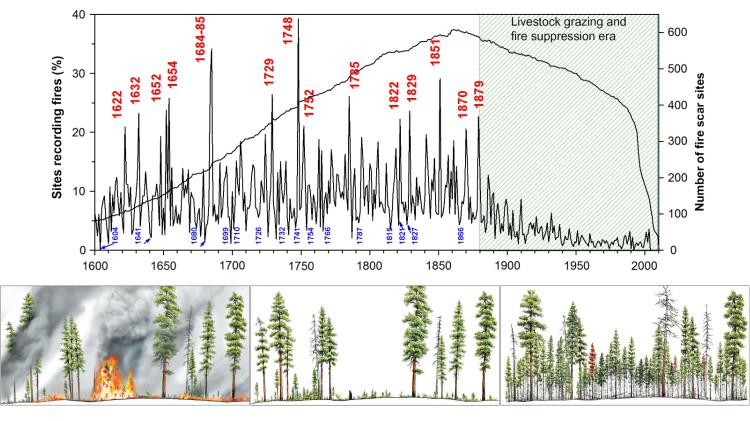
Swetnam et al. 2016, Prichard et al. 2021
| Wrapping up this discussion of human and tree ecology, I want to acknowledge that urban forests have a disproportionate importance. We live on a planet with an increasingly urban population. Most of those people don’t see production forests at all, and many have only occasional access to wild forests. But through urban forests, they are able to see, touch and identify with trees. People in general suffer from plant blindness—they barely even know that plants exist, much less understand how essential they are to human survival. But through identification with trees, that problem can be reduced. So I’m going to finish today with a short study of how that can happen. | 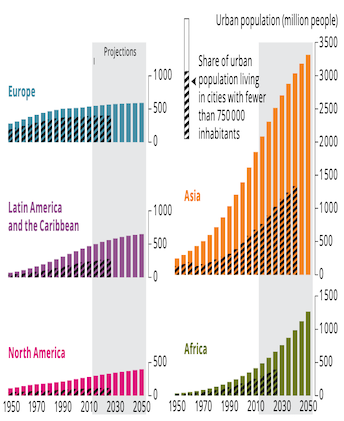 European Environment Agency |
The Irreversibility principle states that “certain environmental changes, once they occur, cannot be undone or reversed.” A classic example is industrial development; how often is a factory torn down to plant a forest? Other examples of irreversible change include extinction, climate change, and habitat loss. Hypothetically such losses might be recoverable; but the track record for achieving these things is dismal. Irreversibility is why we have to consider long timescales when choosing and implementing management actions, especially for long-lived organisms like trees or slowly-developing ecosystems like forests. Protecting and managing long-lived organisms or slowly-developing ecosystems requires long timescales: at least decades, preferably centuries (Lindenmayer et al. 2012). Management at such long timescales requires institutions.
Various principles serve to guide long-term management of urban forestlands. These follow pretty directly from the human-tree ecological principles discussed earlier. One primary goal is to manage for ecosystem services, which include tangible items like air quality, water, and habitat, and also intangible items like community spaces, gardens, recreation, and environmental education.
Management also needs to address active and often ongoing problems on the landscape. Primary examples include invasive species, pests and pathogens, and severe disturbances like fire and windstorms. When these factors are highly destructive, we also need to manage for relatively rapid recovery. For example, in the Pacific Northwest, major windstorms are always landmark events in urban forest management. Hazard trees also present an ongoing management issue.
Mills et al. (2019)
Finally, management goals generally include proactive programs for long-term management. These can be very diverse. The above example shows rewilding to improve ecosystem values. Other proactive goals include community interaction programs and establishing facilities such as interpretive trails. There is usually also some long-term planning of spaces and species within the land footprint to achieve aesthetic, logistic, and biological goals.
| The long timescale needed to protect and manage these lands exceeds the span of a human career or sometimes even a human lifetime. The management vision must be focused on creating institutional protection. That protection can be top-down, meaning it originates from larger institutions like national governments; or it can be bottom-up, originating from concerned individuals; but in most cases it is broad-based, engaging several levels of society. The 19th-Century protection of Yosemite Valley was a case in point, developing over several decades during which it was driven by prominent Californians, by governmental support, and by a broad base of popular support. | 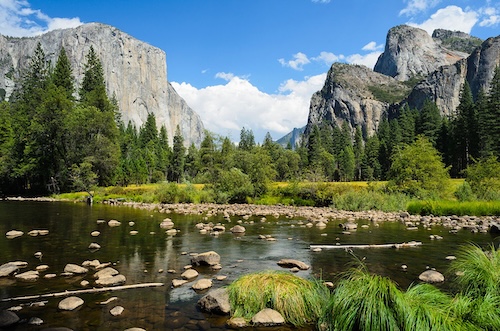 Wikimedia Commons |
 C. J. Earle |
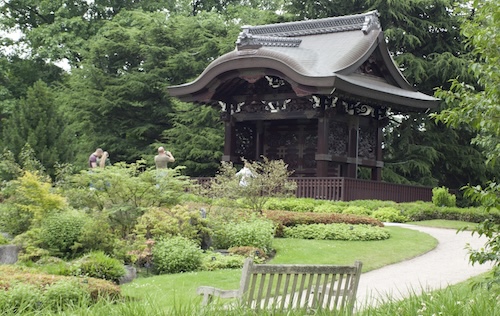
Only formal institutional support can provide strong assurances of long-term consistent management and financial support. The protection of Kew Gardens in the UK was an example; initially established as a philanthropic gift from George III’s mother Princess Augusta of Saxe-Gotha, the gardens later received governmental support to become a scientific establishment, similar to our Smithsonian Institute. |
| A third example is the existing city parks system of the City of Seattle, Washington. In this case popular support, spearheaded by leading citizens, led the City to secure an overall parks plan from the Olmsted Brothers in 1921. This support continued over many years so that today, over a century later, the Olmsted design remains largely intact and hosts some of the most attractive and popular urban forests in the western U.S. | 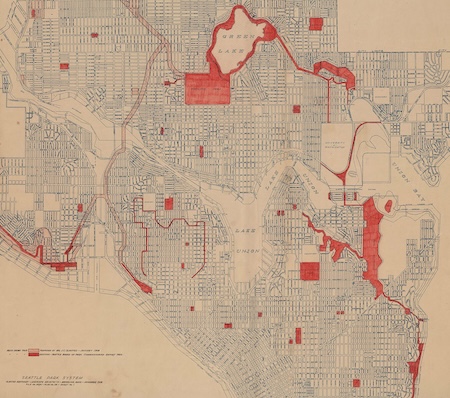 Ott et al. (2018) |
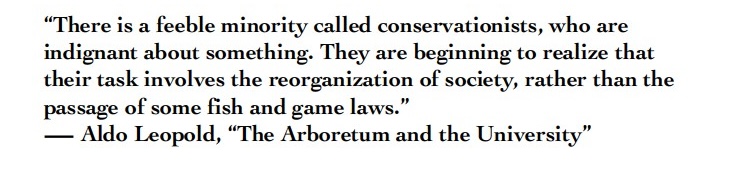
We must remember, though, that these enduring institutions are an outcome as well as a cause. In the 1940s, while helping to establish the fledgling science of Ecology, Aldo Leopold accurately observed that ecosystems would not be protected by laws and regulations, by documents and principles. Protection must come from society, a society of people who care about natural world and its residents. Ultimately the greatest value of urban forests is to help build and maintain that social community.
In summary, humans and trees are complementary organisms. Similar to each other in space and time, we influence each other. Identifying with trees, which play an important role is our practical, metaphorical, and spiritual lives, we grow to care more about the natural world. In fact, for most people, urban forests are the natural world. As long-lived organisms, trees and forests need long-term care, and that requires institutional protection. Such protection is not a top-down process; it flows up from broad-based popular and philanthropic support.
The objective here is not just how to protect the trees. All this talk about our shared biology and ecology serves to remind us that we, too, are biological organisms. We get so busy worshipping our gods, especially god in the machine, that we tend to forget our biological nature. Like the trees, we too can fall victim to invasive diseases, to droughts, to the depredations of developers and the rising tide of climate change. We, too, depend upon ecosystem services, and we, too, have to take the long view. When we save and care for the trees, we also save and care for ourselves.
[This page is closely based on a talk I gave on 2025.10.08 at the PNW-ISA Annual Training Conference in Portland, Oregon.]
Allen, C. D., Macalady, A. K., Chenchouni, H., et al. 2010. A global overview of drought and heat-induced tree mortality reveals emerging climate change risks for forests. Forest Ecology and Management 259(4):660-684.https://doi.org/10.1016/j.foreco.2009.09.001.
Bentz, B. J., J. Régnière, C. J. Fettig, et al. 2010. Climate change and bark beetles of the western United States and Canada: Direct and indirect effects. BioScience 60:602–613. https://doi.org/10.1525/bio.2010.60.8.6.
Bloomenthal, J. 1985. Modeling the mighty maple. ACM SIGGRAPH Computer Graphics 19(3):305-311. https://doi.org/10.1145/325165.325249.
Brienen, R. J. W., G. M. Locosselli, S. Krottenthaler, et al. 2025. Contrasting pathways to tree longevity in gymnosperms and angiosperms. Nature Communications 17:898. DOI: 10.1038/s41467-025-67619-2.
Dr. Seuss [Theodor Geisel]. 1971. The Lorax. New York: Random House.
Flader, S. L. and J. B. Callicott, eds. 1991. The River of the Mother of God and other Essays by Aldo Leopold. Madison: Univ. of Wisconsin Press.
Holzwarth, S., Thonfeld, F., Abdullahi, S., et al. 2020. Earth observation based monitoring of forests in Germany: a review. Remote Sensing 12(21):3570. https://doi.org/10.3390/rs12213570.
Leopold, Aldo. 1948. A Sand County Almanac. Oxford.
Lindenmayer, D., W. F. Laurance and J. F. Franklin. 2012. Global decline in large old trees. Science 338:1305-1306. https://doi.org/10.1126/science.1231070.
Mills, J. G., J. D. Brookes, N. J. C. Gellie, et al. 2019. Relating urban biodiversity to human health with the ‘holobiont’ concept. Frontiers in Microbiology 10:550. https://doi.org/10.3389/fmicb.2019.00550.
Moore, Z. J. 2023. Somatic Mutation Accumulation in Coast Redwood (Sequoia sempervirens (D. Don) Endl.). Dissertation. Univ. of California, Davis.
Ott, J., A. Mitton, C. Abbott, and V. Halligan. 2018. Olmstead Parks Study. Prepared for Seattle Parks & Recreation. Available: https://www.seattle.gov/, accessed 2026.10.08.
Prichard, S. J., P. F. Hessburg, R. K. Hagmann, et al. 2021. Adapting western North American forests to climate change and wildfires: ten common questions. Ecological Applications 31(8):e02433. https://doi.org/10.1002/eap.2433.
Raihan, Asif. 2023. A review on the role of green vegetation in improving urban environmental quality. Eco Cities 4(2). https://doi.org/10.54517/ec.v4i2.2387.
Schoettle, A. W. 2019. Taking the long view and acting now—prioritizing management of high elevation five-needle pines. Mountain Views 13:2–7. https://research.fs.usda.gov/treesearch/59420.
Swetnam, T. W., J. Farella, C. I. Roos, et al. 2016. Multiscale perspectives of fire, climate and humans in western North America and the Jemez Mountains, USA. Philosophical Transactions of the Royal Society B: Biological Sciences 371:20150168. https://doi.org/10.1098/rstb.2015.0168.
Till, R., and T. Prager. 2025, February 7. Tree risk assessment for the Davis-Meeker oak. Todd Prager & Associates.
Van Pelt, Robert. 2001. Forest Giants of the Pacific Coast. Seattle: Univ. of Washington.
White, R. H., S. Anderson, J. F. Booth, et al. 2023. The unprecedented Pacific Northwest heatwave of June 2021. Nature Communications 14:727. https://doi.org/10.1038/s41467-023-36289-3.
Back | Home | Contact us
Copyright 2026 The Gymnosperm Database
Edited by Christopher J. Earle
This page accessed on Friday, October 23, 2026
Last Modified 2026-10-09
 Back to top