Conservation Status

Pectinopitys standleyi
(J.Buchholz & N.E.Gray) C.N.Page (2019)
Common names
Ciprecillo, cipresillo, cobola, lorito (Rojas et al. 1992 in Moreira and Arnáez 2003). The name "ciprecillo" is also applied to other Central American podocarps including Podocarpus costaricensis and P. guatemalensis.
Taxonomic notes
Syn: Podocarpus standleyi J.Buchholz & N.E.Gray (1948), Prumnopitys standleyi (J.Buchholz & N.E.Gray) de Laub. (POWO, accessed 2023.02.25). Page (2019, p. 148) assigns this species to Pectinopitys rather than Prumnopitys on the basis of evidence observable on herbarium collections; field characters are not discussed and it appears no molecular work has yet been performed.
Description
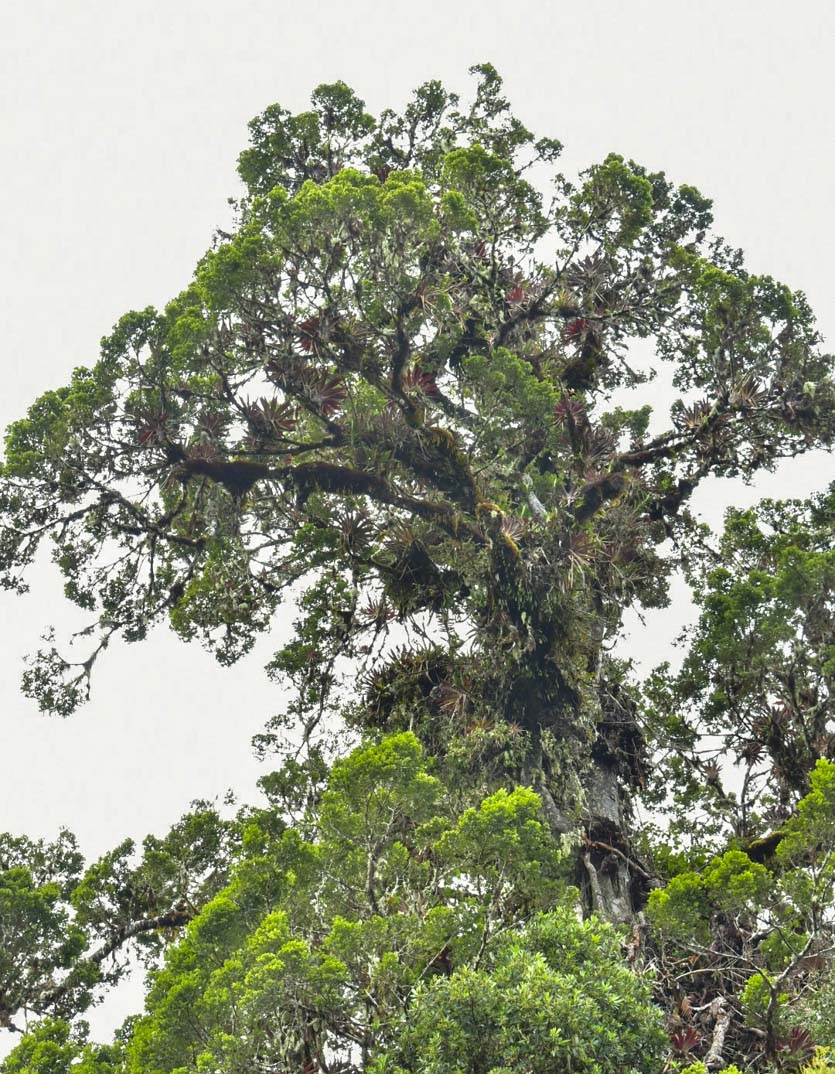
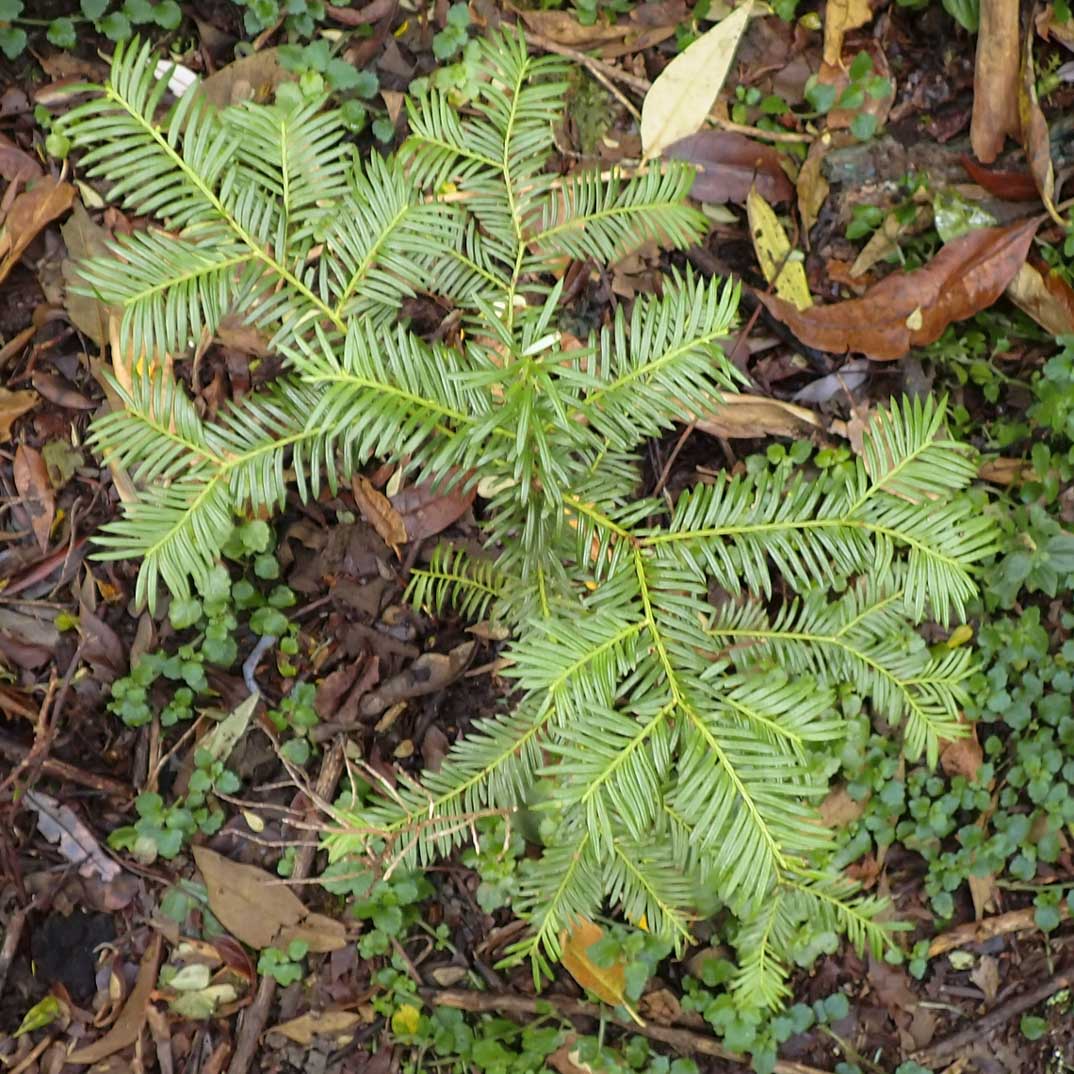
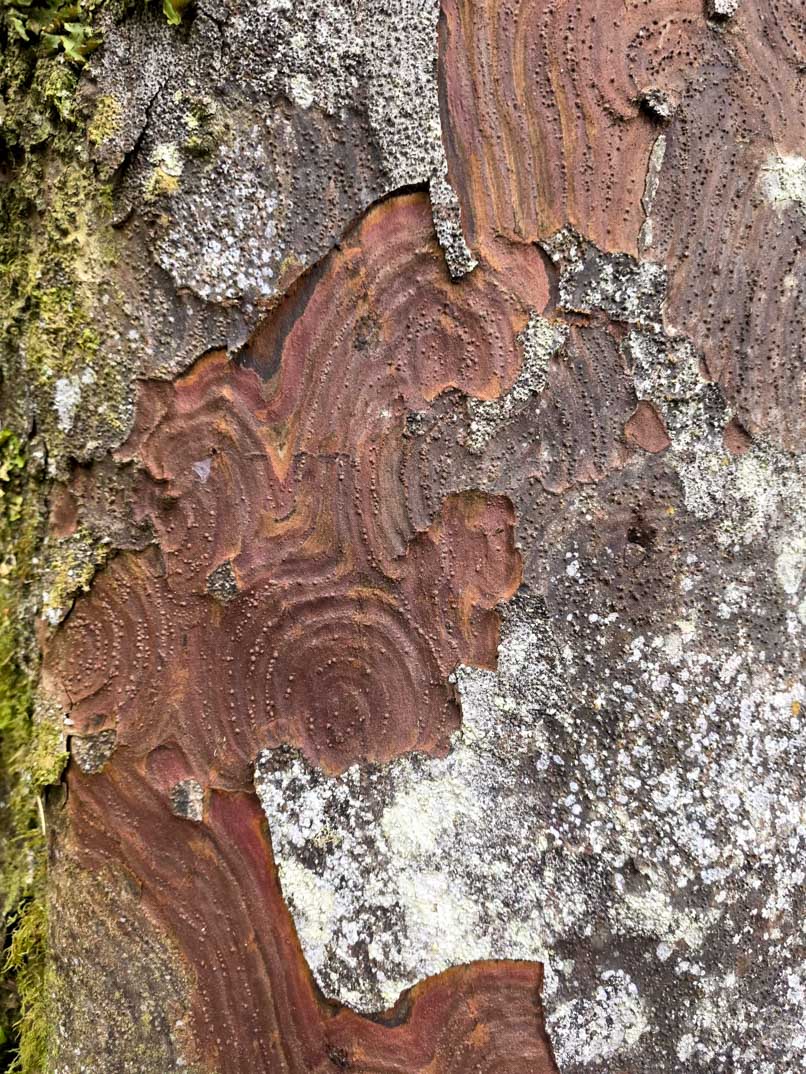
Trees up to 25 m tall. Branchlets alternate, spreading. Leaves linear, acute or mucronate, 12-25 mm long, 1.5-3.5 mm wide, with 2 bright white stomatal bands on lower surface, grooved above the midvein. Pollen cones numerous (up to 25), spicately arranged on a branch terminal shoot 3.8-7.6 cm long, each cone 10-13 mm long. Seed cones borne on a peduncle 2.5 cm long, with bracts 1.5 mm long subtending a 17 mm long seed (Dallimore et al. 1967, Page 2019).
Distribution and Ecology
Costa Rica (prov. Alajuela, Cartago, Heredia, and San José), and perhaps Panama (one 1896 collection). Grows in late-successional tropical montane rainforest at (1350-)2000-2600(-3200) m elevation, in areas with 2000-4000 mm annual rainfall and temperature range of 3-25°C (Budowski 1954 in Moreira and Arnáez 2003, Farjon 2010). Associated species include Podocarpus oleifolius, Magnolia poasana, Cleyera theaeoides, Ilex spp., Weinmannia spp., and a number of Lauraceae species from Nectandra, Ocotea, Persea, and Phoebe (Gardner 2013). See also Chaverri et al. [no date]. Zone 10 (cold hardiness limit between -1°C and +4.4°C) (Bannister and Neuner 2001).
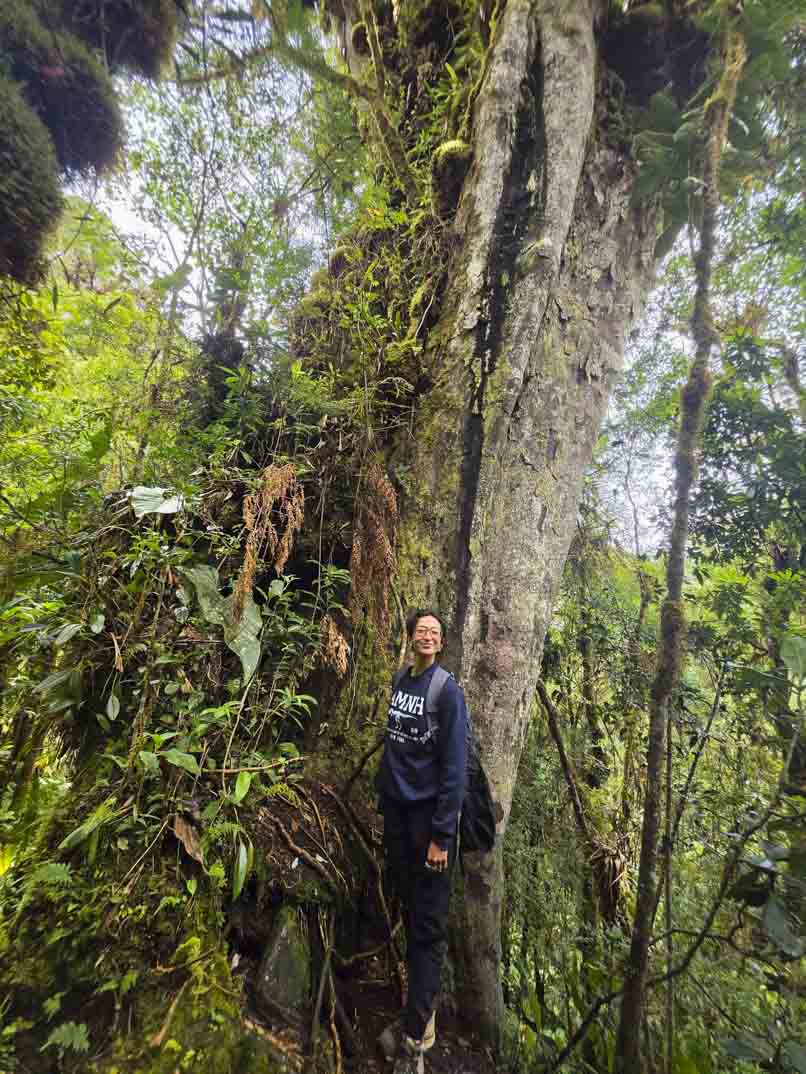
Few studies have examined the species' ecology. Muñoz Mazon et al. (2023) found it to be uncommon, with essentially no evidence of regeneration and most individuals being large, tall, presumably old canopy dominants, occupying elevations near the species' upper limits. This suggests it regenerates episodically in the aftermath of significant disturbance, later entering the canopy and persisting for a very long time, until the next major disturbance. This is quite a common life history for conifers in general and podocarps in particular, but further work is needed to determine how well it applies to this species.
The IUCN classifies this species as "Endangered" due to the small area of occurrence (1,366 km2 based on herbarium data) and the existence of only 3 known populations. There has been an ongoing decline in the number of mature individuals, and there is also a continuing decline in the extent and quality of habitat, particularly outside of protected areas. About half of its range is in 2 protected areas, Parque Nacional Volcán Poás and in La Amistad Biosphere Reserve (Gardner 2013). Outside of those areas, the principal threats are logging (which selectively targets this species for its valuable timber) and habitat conversion to nonforest cover types, chiefly for agriculture, which from 1992 to 2005 (the only documented period) caused a loss of 12.4% of available habitat, or nearly a quarter of the habitat available outside of reserves.
Remarkable Specimens
There is a GBIF record from 2025 of a tree 30 m tall and 4 m in diameter, about 200 m NE of Paraiso Quetzal Lodge at about Km 70 on Highway 2 S of San Jose.
Ethnobotany
The wood is relatively heavy (specific gravity of 0.555), dries quickly without defects, and has a fine, uniform texture (Carpio 1992, Standley 1938, both in Moreira and Arnáez 2003). These traits have suited it to use in construction, flooring, indoor decoration, veneer, farming tools, fenceposts, firewood, furniture, and as pulp for paper and cardboard (Budowski 1954, Carpio 1992, Rojas and others 1992, all in Moreira and Arnáez 2003). The species is not in cultivation, though it may be found in some botanic gardens (Farjon 2010).
Observations
The great majority of observations have been within a few kilometers of Highway 2 between 9.58° and 9.7° N and between 83.8° and 83.88° W. This is roughly between Tres de Junio and Quebrador, SE of San Jose. Parque Nacional Los Quetzales seems to be a particular hotspot, and many other observations are near ecotourism lodges. There are also some records from Parque Nacional Volcán Poás (N of San Jose), mostly between the visitor center and Laguna Botos. In all of these areas you are likely to see Podocarpus oleifolius as well; note that both species are known by the same common name, ciprecillo. This Map of the Podocarpaceae of Costa Rica may be useful.
Remarks
The species is "Named in honor of Paul C. Standley, Curator of the Herbarium, Chicago Natural History Museum, in recognition of his outstanding contributions to our knowledge of the flora of Costa Rica" (Buchholz and Gray 1948). He is also remembered in 2 other gymnosperms, Juniperus standleyi and Zamia standleyi.
The seeds ripen in 5 months and are ready for harvest in April. To germinate, first soak in water at 22°C for 24 hours. Germination is epigeal. The seedlings' roots bear numerous nodules (Moreira and Arnáez 2003).
Citations
Buchholz, J. T. and N. E. Gray. 1948. A Taxonomic Revision of Podocarpus, II. The American Species of Podocarpus: Section Stachycarpus. Journal of the Arnold Arboretum 29: 64-76 (p. 72). Available: Biodiversity Heritage Library, accessed 2023.02.26.
Budowski, G. 1954. La identificación en el campo de árboles forestales más importantes de la América Central. Turrialba, Costa Rica: Centro Agronómico Tropical par la Investigación y la Enseñanza. 326 p. tesis Magister Agr.
Carpio, I. 1992. Maderas de Costa Rica, 150 especies forestales. San Jose, Costa Rica: Editorial Universidad de Costa Rica. 338 p.
Chaverri, A., B. Herrera and O. Herrera-MacBryde. [no date]. CPD: Middle America, Site MA17, La Amistad Biosphere Reserve, Costa Rica, Panama. http://www.nmnh.si.edu/botany/projects/cpd/ma/ma17.htm, accessed 2006.12.15, now defunct.
Gardner, M. 2013. Prumnopitys standleyi. The IUCN Red List of Threatened Species 2013: e.T38324A2868584. https://dx.doi.org/10.2305/IUCN.UK.2013-1.RLTS.T38324A2868584.en, accessed 2023.02.26.
Moreira, I. and E. Arnáez. 2003. Prumnopitys standleyi (Buchholz & Gray) de Laub. P. 660-661 in Tropical Tree Seed Manual. http://www.rngr.net/Publications/ttsm, accessed 2006.12.15, now defunct.
Muñoz Mazon, M., K. Klanderud, and D. Sheil. 2023. Exploring how disturbance and light availability shape the elevation ranges of multiple mountain tree and shrub species in the tropics. Landscape Ecology 38:2005–2018.
Page, Christopher N. 2019. New and Maintained Genera in the Taxonomic Alliance of Prumnopitys s.l. (Podocarpaceae), and Circumscription of a New Genus: Pectinopitys. New Zealand Journal of Botany 57(3):137–53. https://doi.org/10.1080/0028825X.2019.1625933.
Rojas, F., G. Torres, E. Arnáez, and I. Moreira. 1992. Ciprecillo. Especies Forestales Tropicales. Subserie de Cuadernos Cientéficos y Tecnológicos No. 9. Cartago, Costa Rica: Editorial Tecnológica de Costa Ricas. 4 p.
Standley, Paul C. 1938. Flora de Costa Rica. Field Museum of Natural History Botanical Series 18(3):781-1133. Available: Biodiversity Heritage Library, accessed 2023.02.26.
See also
The species account at Threatened Conifers of the World.




 Back to top