Conservation Status

Callitris intratropica
R.T.Baker & H.G.Sm. (1910)
Common names
Northern cypress pine; lagumin [Wagiman] (Wilson 1999); karntirrikani [Tiwi] (McGilvray 1998). As with other Callitris it is variably called "cypress", "pine", or "cypress pine".
Taxonomic notes
Type: Arnhem Land, Northern Territory, F. Mueller s.n. Holotype K000087617. Synonymy:
- Callitris columellaris F.Muell. var. intratropica (R.T.Baker & H.G.Sm.) Silba;
- Callitris columellaris F.Muell. subsp. intratropica (R.T.Baker & H.G.Sm.) Silba;
- Frenela robusta var. microcarpa A.Cunn ex Benth.;
- Callitris robusta var. microcarpa (A.Cunn. ex Benth.) F.M.Bailey;
- Callitris robusta var. intratropica (R.T.Baker & H.G.Sm.) Ewart & O.B.Davies.
Many authorities, most notably Farjon (2005, 2010), treat this taxon as a synonym of Callitris columellaris. However, it was early recognized as distinct on the basis of distribution, morphology, and habitat, and continues to be treated as a distinct taxon by most Australian authorities (e.g. Hill 1998 and the Atlas of Living Australia). The matter was put concisely by Baker and Smith (2010) and remains accurate: "we were at first inclined to regard this species as identical with [C. columellaris], and it was not till after examining herbaria material in Europe, as well as in Australia, that the morphological and histological differences were found to be well marked, and these differences were further supported by chemistry." This determination has, in the 21st century, been confirmed in a long series of molecular studies:
- Pye et al. (2003) showed C. columellaris and C. intratropica to be distinct based on ITS sequence data.
- Piggin and Bruhl (2010), in a comprehensive morphological and molecular study of Callitris, found C. columellaris and C. intratropica to be sister but distinct.
- Sakaguchi et al. (2013) identified C. intratropica as one member of a species complex allied to C. columellaris, recognizing C. glaucophylla, C. gracilis, and C. verrucosa as other members of that species complex. They assessed chloroplast haplotypes and nuclear SSR data for many specimens representing these taxa, and showed relationships between the taxa related to different ecosystems, climates, and glacial-interglacial evolutionary histories. The various species were clearly distinct, with important further genetic variation between the Northern Territory and Cape York Peninsula populations of C. intratropica.
- Larter et al. (2017) used an different and more diverse molecular dataset incorporating loci from plastid (rbcL, matK, trnL, psbB, petB) and nuclear DNA (ITS, needly, leafy) sources; they found C. columellaris and C. intratropica to be distinct but sister taxa, estimated through a molecular clock to have diverged in late Pliocene or early Pleistocene time.
- Crisp et al. (2018) used still another comprehensive dataset incorporating molecular, morphological, and fossil data to evaluate all taxa in the subfamily Callitroideae; here again C. columellaris and C. intratropica were distinct but sister taxa. They also expanded the species complex of Sakaguchi et al. (2013) to include C. preissii and C. tuberculata.
In sum, we have 5 different molecular studies that also used a variety of other lines of evidence, performed over a 15-year period, all concluding that C. columellaris and C. intratropica are distinct but sister taxa. To the extent the question has been examined, these taxa probably diverged at about the time when glacial/interglacial cycles began to influence vegetation dynamics in Australia, which would be in the early Pleistocene (Sakaguchi et al. 2013). That relatively recent divergence, leading to two taxa that now occupy distinct climate regimes in disjunct regions of Australia, probably best supports recognition at subspecies rank as C. columellaris subsp. intratropica. However no one working in the field is using this name, and it is generally recognized by researchers as simply C. intratropica.
Description
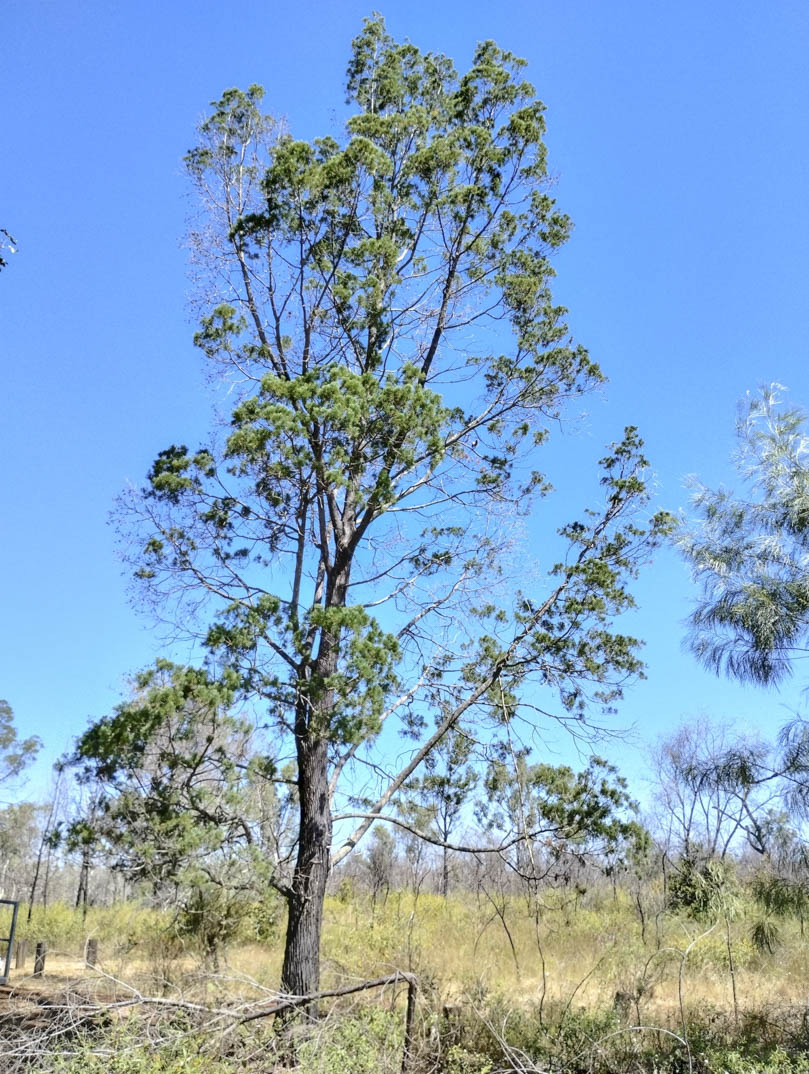
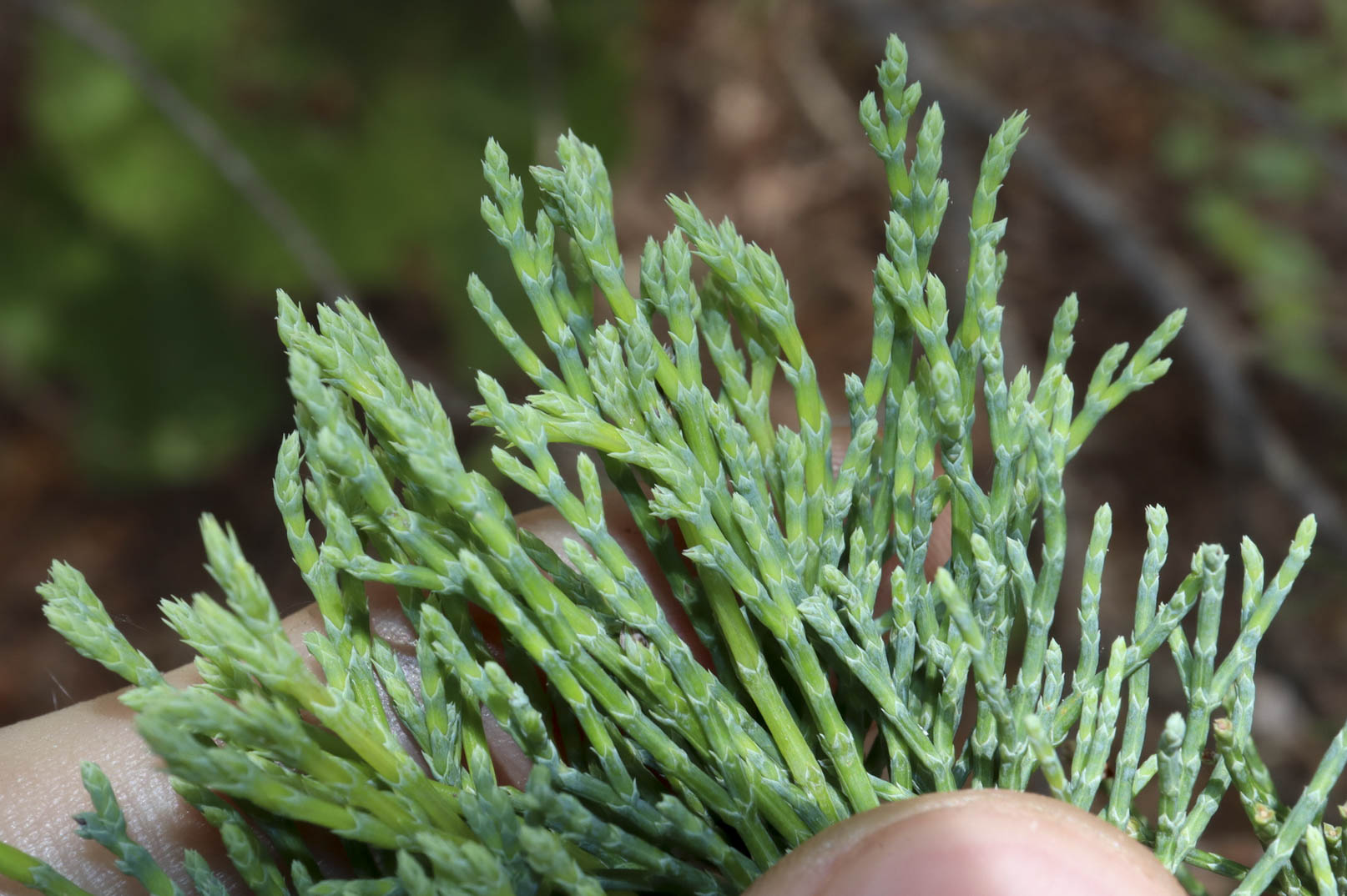
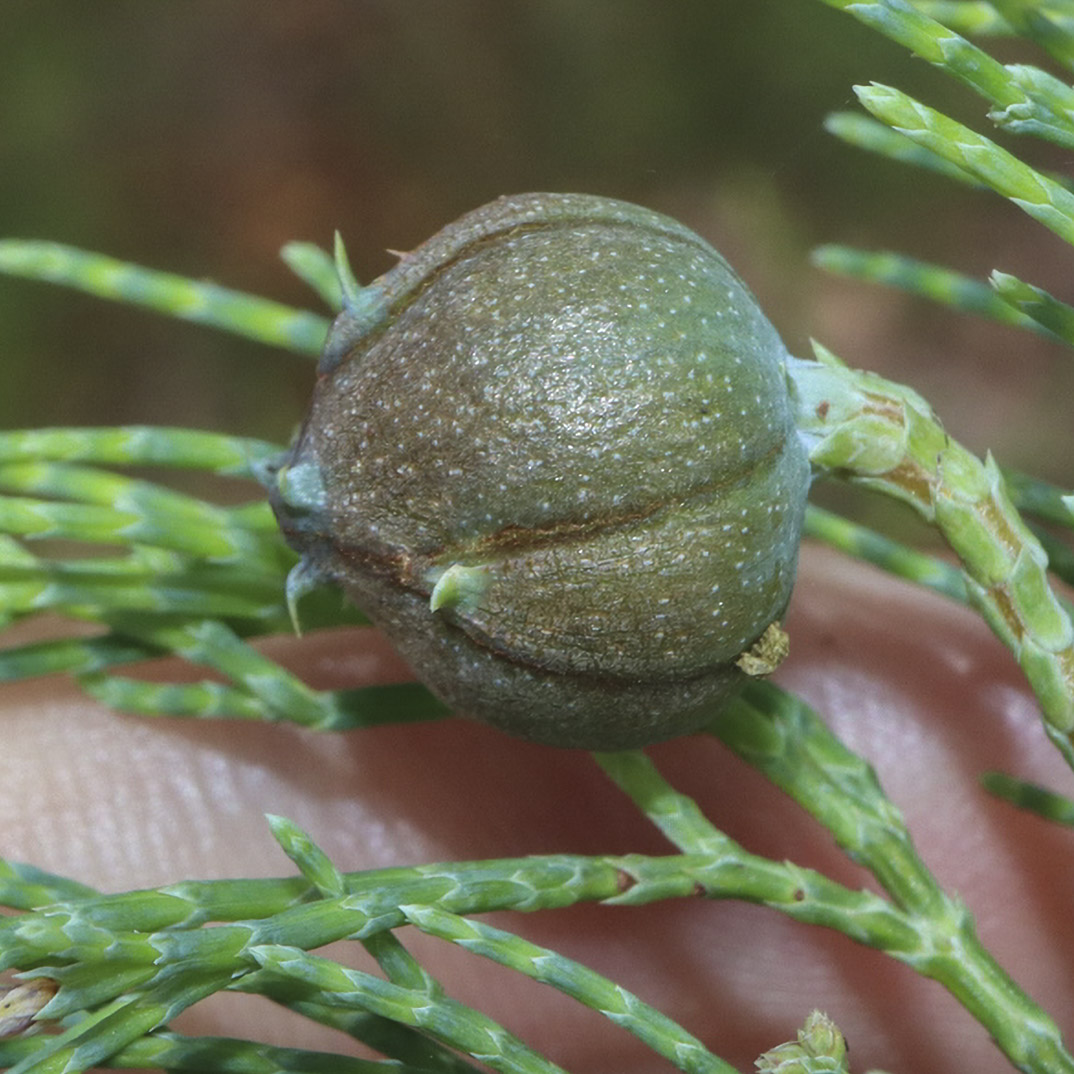
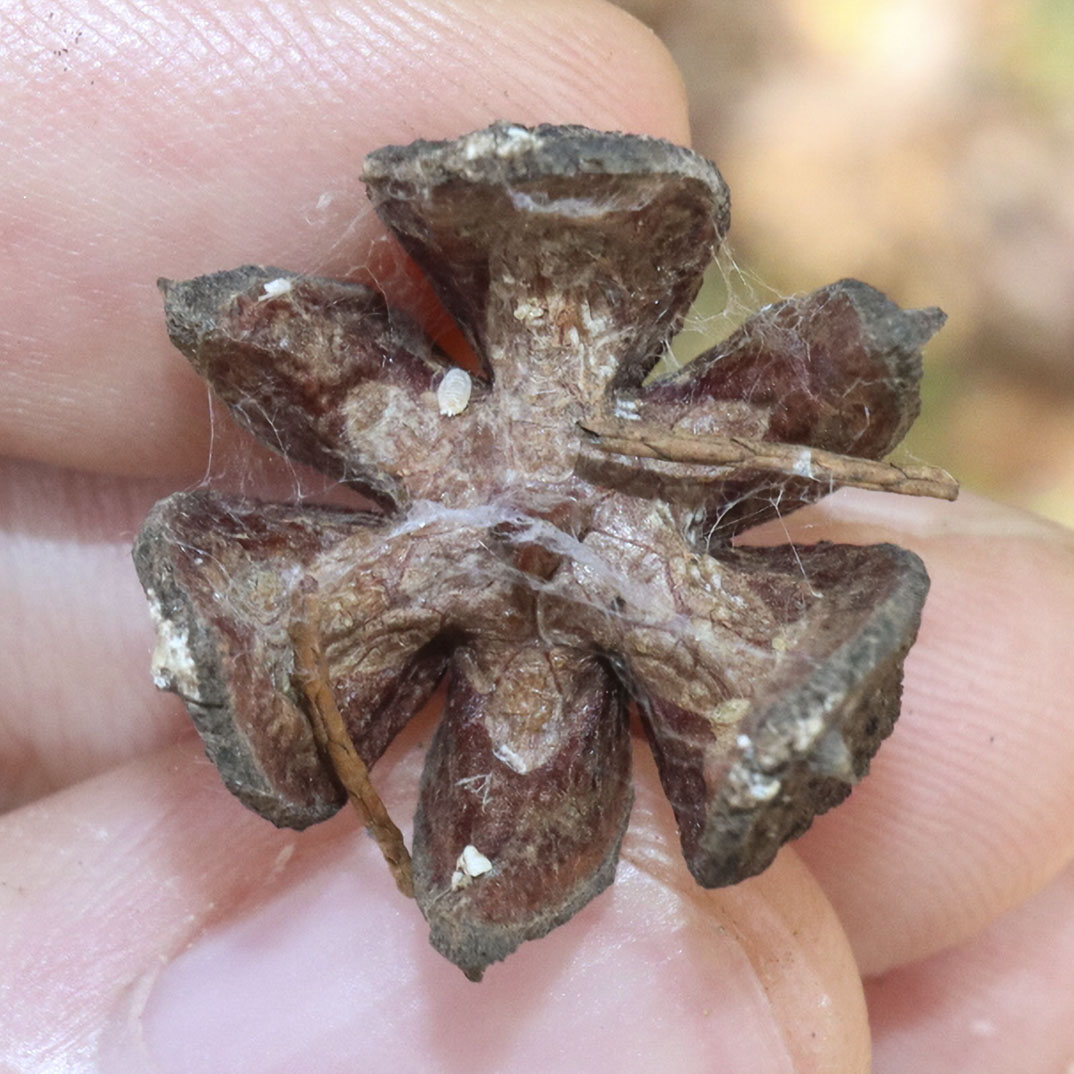
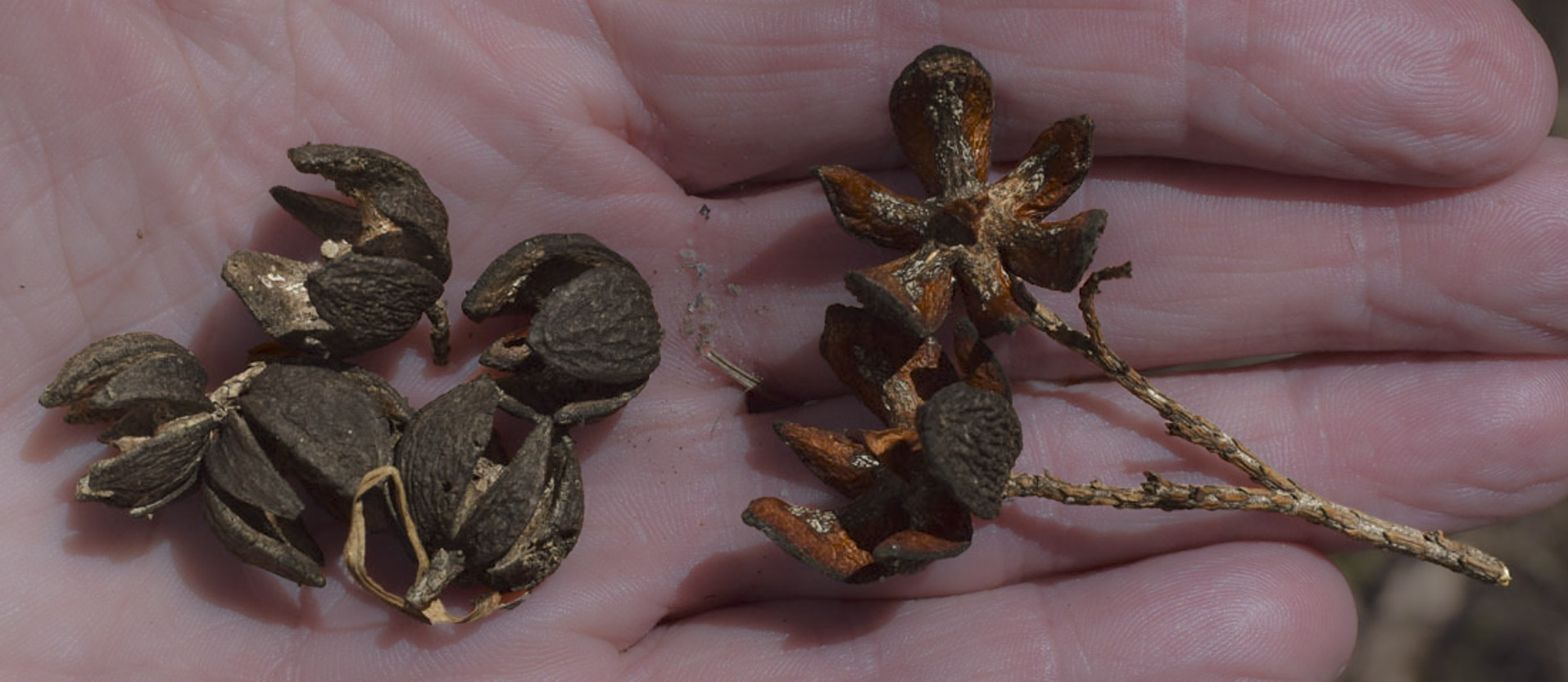
Trees to 30 m tall. Branches spreading to somewhat erect. Leaves on ultimate twigs c. 2 mm long, dark green or gray-green, dorsal surface rounded (not keeled). Pollen cones borne at tips of twigs, solitary or in small clusters, elongate-ovoid, to 3 mm long. Seed cones solitary on slender twigs, depressed-globular with a small dorsal point below the apex, 12-18 mm diameter, shedding seeds and falling soon after maturity; cone scales 6, separating almost to the base and spreading widely after opening; alternate scales reduced; larger scales sharply turned-in towards the apex; columella variable, usually simple and 3-angled, 3-5 mm tall. Seeds numerous, pale brown, with 2-3 wings c. 4 mm wide (Hill 1998). The leaf essential oils composition is dominated by α-Pinene and limonene (Brophy et al. 2007); also see Baker and Smith (1910) for copious detail on anatomy and chemistry of the various tissues. Hill (1998) provides the following key to the three similar species sometimes synonymized as C. columellaris. These species are distinguished from all other Callitris by having dorsally rounded (not keeled) scale leaves, and seed cone scales that separate almost to the base. Also, unlike most taxa in the genus, they are not serotinous (Crisp et al. 2018).
| 1 |
Largest seed cones less than 18 mm diameter; tropical species. |
C. intratropica |
| 1 |
Largest seed cones more than 18 mm diameter; southern species. |
2 |
| 2 |
Foliage gray-green or glaucous; older trees with a spreading habit, not columnar; inland species. |
C. glaucophylla |
| 2 |
Foliage dark green; older trees with a columnar, erect habit; coastal species. |
C. columellaris |
Distribution and Ecology
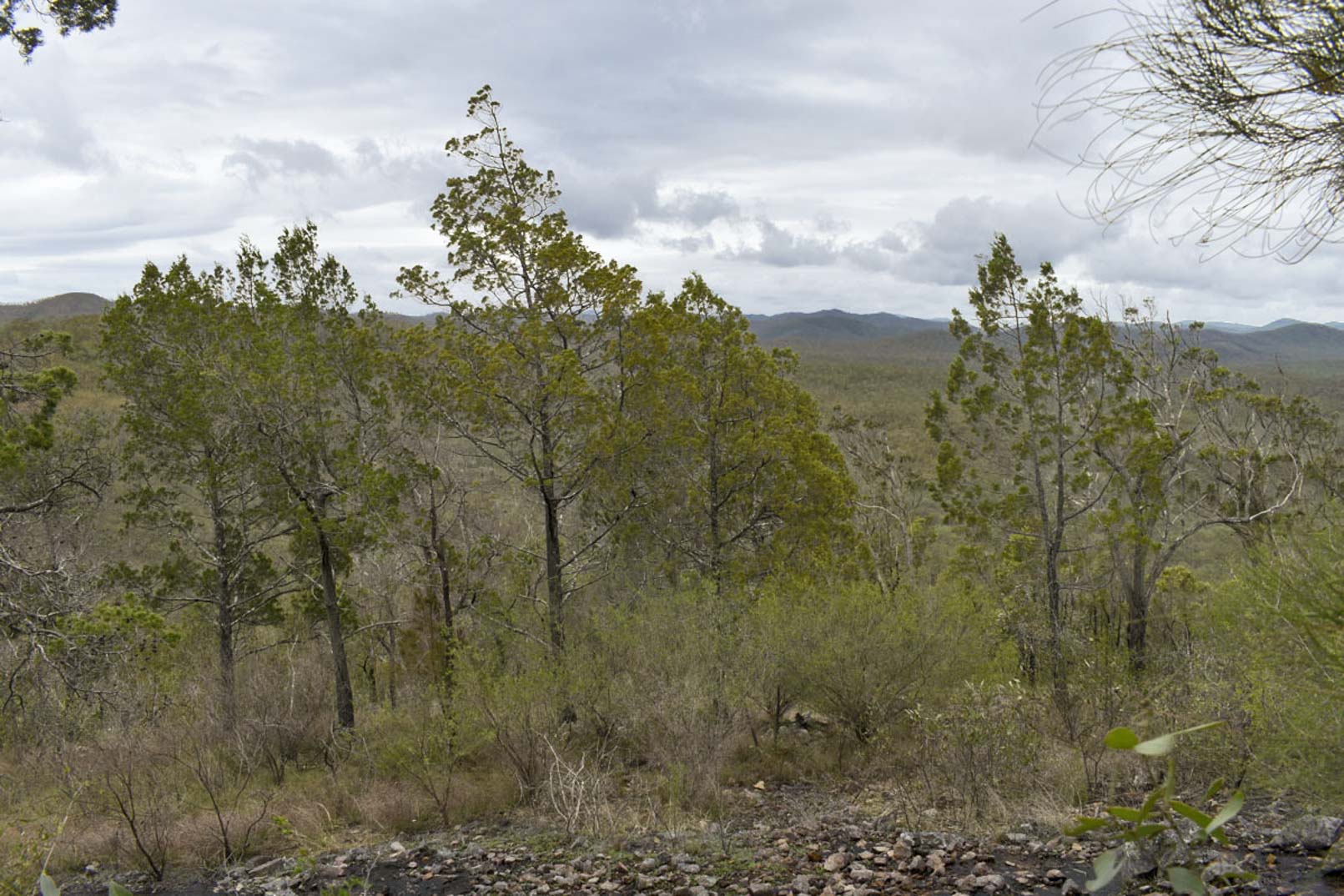
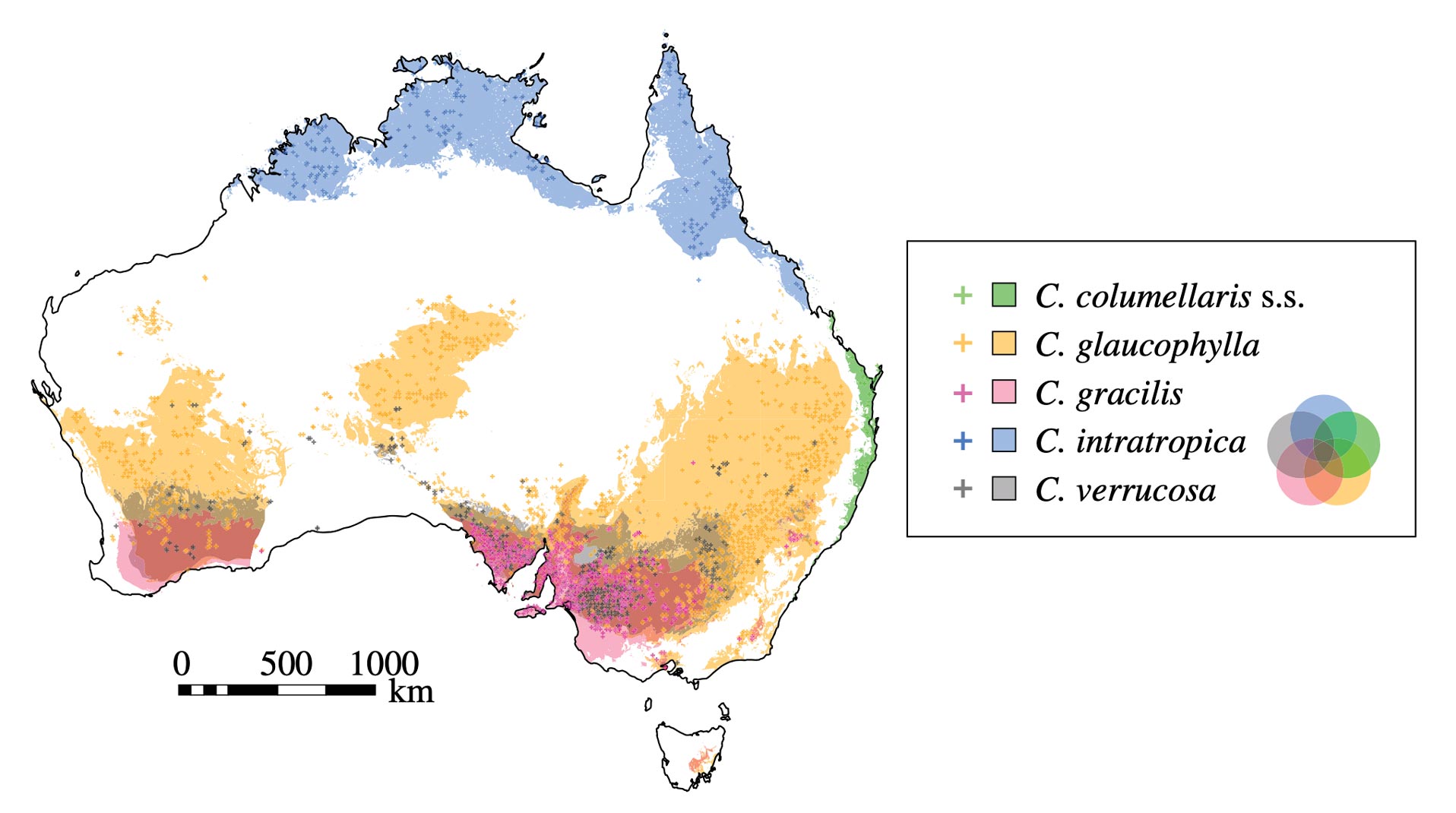
Australia: Western Australia, Northern Territory and Queensland; see map at right (Sakaguchi et al. 2013). The species is locally abundant in sandy soils (Hill 1998).
Bowman et al. (2011) sampled Callitris from across Australia to evaluate climate-growth relationships. They treated all samples of C. columellaris, C. intratropica and C. glaucophylla as C. columellaris, but since these taxa have largely disjunct ranges, it's fairly clear that their northern sites in tropical monsoonal and tropical wet-dry climates were sampling C. intratropica. These sites were at elevations of 9–770 m and had mean annual precipitation of 763–2117 mm with mean annual temperature of 21–28°C. This is a substantially wetter climate than most Australian Callitris experience; their C. glaucophylla sites, for instance, had a mean annual rainfall of 225–751 mm. Climate at the C. intratropica sites featured a relatively low annual temperature range, typically a 6–8°C difference between the warmest and coolest months; and a highly seasonal rainfall regime with a December to March wet season and about 75% of rainfall occurring in that period. The trees grew well during the wet season, producing wider rings than in most Australian Callitris, and they predominately produced clear annual rings, in agreement with the findings of Baker et al. (2008). The relatively warm and wet climate enjoyed by C. intratropica might suggest that it is not as drought-resistant as many other Australian Callitris, and this was shown by Larter et al. (2017), who found that it has "by far the highest xylem conductivity in Callitris." These sites were further examined by Prior et al. (2011) who found that nearly all sites had evidence of past fire; that 44% of sites had recent fire; and that most sites (62%) had a negative-exponential size-class distribution, evidence of regular and sustainable recruitment to the population. None of the sites were disturbed by grazing, either by native or introduced fauna.
There is little doubt that wildland fire poses an important constraint on the extent of C. intratropica forests, as it does for most species of Callitris. The species' distribution favors fire refugia; it typically occurs in areas protected from fire by cliffs, dry lakes, or other unvegetated barriers (Hill 1998). When fires do occur, they "usually do not kill mature trees, and scorch the canopy rather than consume it" (Prior et al. 2011). However, there is debate about the origin and consequences of fires. Some authorities, e.g. Bowman (2001 [and citations therein], Prior et al. (2007), Russell-Smith et al. (2012), Trauernicht et al. (2012), make the case that aboriginal burning with high frequency and low intensity was conducive to the widespread occurrence of C. intratropica within its native range, and that the transition to a European-mediated fire regime of low frequency and high intensity led to the species' current confinement to relatively fireproof refugia, and the relative paucity of large and old trees. Conversely, Sakaguchi et al. (2013) argue that C. intratropica habitat was substantially decreased during late-glacial times due to aridity, that populations expanded with the rise of a monsoonal climate during the current interglacial, and that aboriginal burning has not resulted in any population bottlenecks. By inference, aboriginal burning has not substantially altered the species' abundance. These are not really contradictory viewpoints, though; both argue that aboriginal burning occurred, and was not a particularly adverse effect on the species, not limiting its range nor diminishing the abundance of relatively large and old trees. The greater ecological change was fire suppression by European management methods, which reduced fire frequency while increasing its intensity.
The IUCN has not evaluated the conservation status of C. intratropica, as they consider it to be synonymous with C. columellaris and C. glaucophylla; these three species taken together have a vastly larger range than C. intratropica. Within Australia, the species is not listed as critically endangered or endangered under the Environment Protection and Biodiversity Conservation Act of 1999. Various sources have reported a reduction in occupied habitat due to exploitation (logging) or altered fire regimes, as discussed above, but the extent and severity of these impacts are unclear. Potential climate change effects on the species also seem not to have been evaluated.
Remarkable Specimens
Baker et al. (2008) developed a 160-year tree-ring chronology for the Pine Creek site, located at about -13.5° latitude in the Northern Territory. The chronology appears to have been developed from living trees. Although various authors allege the existence of trees over 200 years old, I have seen no documentation of such ages.
Ethnobotany
Bill McGilvray (1998) reports that the essential oils from C. intratropica foliage have long been used for medical purposes by the Tiwi people of Bathurst and Melville Islands, north-east of Darwin. He also states:
"The Tiwis and some mainland aboriginal groups use Callitris intratropica in very specific ways:
"As a wash: To relieve abdominal cramps. Also applied to sores and cuts. Occasionally used internally to treat abdominal pain and discomfort. About a handful of freshly gathered inner bark is pounded and heated in about 500 mls of water. The cooled liquid is spread over the body, and a long strand of inner bark is wrapped around the abdomen (to relieve abdominal cramps).
"As an insect repellent: The bark is thrown into the camp fire to drive off mosquitoes and midges.
"As an analgesic: To relieve minor aches and pains. The wood ashes are mixed with water and smeared over the affected part of the body...
McGilvray (1998, citing the the Tiwi Land Council Fifteenth Annual Report) also tells us that the Tiwi people, whose word for Blue Cypress is Karntirrikani, recount this legend describing its origin:
"And then Mudangkala, the old blind woman, arose from the ground carrying three babies in her arms. As she crawled in darkness across the featureless landscape, sea water followed and filled the imprints left by her body. Eventually pools became one, and formed a channel. The old woman continued her journey overland, and again the moulded earth filled with the flow of water. Before she left, Mudangkala covered the islands she had created with plants - Karntirrikani - and filled the land and sea with living creatures. Finally the land was prepared for her three babies, and for the generations of Tiwi who followed."
The tree is also used by the Wagiman people, who use the wood to make spear shafts. It is also good firewood as it burns quite well even when it is wet, and the pleasant-smelling smoke keeps away mosquitoes (McGilvray 1998).
European exploitation of C. intratropica is described by Rolls (2001): "The Northern Territory had very big stands of Callitris intratropica both on the mainland and on offshore islands. Though darker in color than the southern species, its timber is highly aromatic, beautifully figured, and the most termite-proof of all... the northern pine is particularly long lasting when laid on the ground." McGilvray (1998) explains "First used by Europeans in Australia in 1905, the timber was then milled for building. Being tough and exceptionally resistant to termites and severe climatic conditions, initially,it seemed a good choice for a plantation timber resource. Large scale plantations were established in the 1960s and 70s on Melville Island and near Darwin, with the aim of producing timber for construction.
"However, Callitris grows very slowly, and the prospect of reasonably quick plantation returns appeared much less certain after 10 years of slow growth. Then, after a severe cyclone devastated Darwin in 1974, building codes were changed to replace timber house frames with steel. The plantations were officially abandoned in 1978 as a source of building material..."
In about 1995, it was discovered that an essential oil could be extracted from the tree. Called "Australian blue cypress" oil in the trade, it is used in perfumery, cosmetics and aromatherapy (McGilvray 1998). The oil is potentially quite valuable and was the subject of a protracted legal dispute, as recounted by Daly (2004), but development of this resource is now moving ahead. Vince Collins, entrepreneur in the essential oil business, reports that harvest of plantations in the Darwin area is now occurring (V. Collins email 2009.11.09). Here is a link to a 2026 commercial website that provides a breakdown of the oil's composition and includes a video showing trees in habitat and discussing the plantations.
This species has proven useful in dendrochronological research. An exploratory study in the Northern Territory developed a live-tree chronology covering the period 1847 to 2006 and demonstrated very high tree-to-tree correlation in ring widths, along with significant sensitivity to metrics of precipitation (Baker et al. 2008). Later studies include those by Bowman et al. (2011), Drew et al. (2011), and Prior et al. (2012).
Observations
It seems to be abundant on the Bathurst and Melville Islands, 80 km N of Darwin in the Northern Territory (McGilvray 1998). iNaturalist records many observations near Palmerston and in Litchfield National Park in the Northern Territory, and also in areas S and W of Cairns, Queensland.
Remarks
The epithet intratropica refers to species' tropical range; it is entirely found N of the Tropic of Capricorn.
Citations
Baker, Patrick J., Jonathan G. Palmer and Rosanne D’Arrigo. 2008. The dendrochronology of Callitris intratropica in northern Australia: annual ring structure, chronology development and climate correlations. Australian Journal of Botany 56(4):311-320.
Baker, R. T. and H. G. Smith. 1910. A Research on the Pines of Australia, p. 172. Sydney: William A. Gulick, Government Printer. Available: Biodiversity Heritage Library, accessed 2026.08.16.
Bowman, David. 2001. The 'frontier': Callitropsis intratropica and landscape change. Pp. 111-116 in J. Dargavel, D. Hart and B. Libbis (eds.), "Perfumed Pineries: Environmental History of Australia's Callitris Forests." Canberra: Centre for Resource and Environmental Studies, Australian National University.
Bowman, D. M. J. S., L. D. Prior, D. Y. P. Tng, Q. Hua, and T. J. Brodribb. 2011. Continental-scale climatic drivers of growth ring variability in an Australian conifer. Trees 25:925–934.
Brophy, J. J., R. J. Goldsack, P. I. Forster, L. M. Copeland, W. O’Sullivan, and A. C. Rozefelds. 2007. Chemistry of the Australian Gymnosperms. Part IX. The leaf oils of the Australian members of the genus Callitris (Cupressaceae). Journal of Essential Oil Research 19:57–71.
Crisp, M. D., L. G. Cook, D. M. J. S. Bowman, M. Cosgrove, Y. Isagi, and S. Sakaguchi. 2018. Turnover of southern cypresses in the post-Gondwanan world: extinction, transoceanic dispersal, adaptation and rediversification. New Phytologist 221:2308–2319. Note that important findings appear in the supplemental data to this paper.
Daly, Martin. 2004.04.21. Bitter blue. www.theage.com.au/articles/2004/04/20/1082395850945.html, accessed 2009.11.09.
Drew, D. M., A. E. Richards, G. M. Downes, G. D. Cook, and P. Baker. 2011. The development of seasonal tree water deficit in Callitris intratropica. Tree Physiology 31:953–964.
Larter, Maximilian, Sebastian Pfautsch, Jean-Christophe Domec, Santiago Trueba, Nathalie Nagalingum, and Sylvain Delzon. 2017. Aridity drove the evolution of extreme embolism resistance and the radiation of conifer genus Callitris. New Phytologist 215(1):97–112. https://doi.org/10.1111/nph.14545.
McGilvray, Bill. 1998. The birth of the blue from plantation to perfume: the history, development and marketing of an indigenous Australian essential oil. From a presentation given by Bill McGilvray at the 1998 Australian Aromatherapy Conference held in Sydney, Australia. http://www.australessence.com/blue.htm, accessed 2002.01.18, this link to a 2002 archived version.
Piggin, J., and J. J. Bruhl. 2010. Phylogeny reconstruction of Callitris Vent. (Cupressaceae)
and its allies leads to inclusion of Actinostrobus within Callitris. Australian Systematic Botany 23:69-93.
Prior, L. D., D. M. J. S. Bowman, and B. W. Brook. 2007. Growth and survival of two north Australian relictual tree species, Allosyncarpia ternata (Myrtaceae) and Callitris intratropica (Cupressaceae). Ecological Research 22:228–236.
Prior, L. D., W. L. McCaw, P. F. Grierson, B. P. Murphy, and D. M. J. S. Bowman. 2011. Population structures of the widespread Australian conifer Callitris columellaris are a bio-indicator of continental environmental change. Forest Ecology and Management 262:252–262.
Pye, M.G., P.A. Gadek, and K.J. Edwards. 2003. Divergence, diversity and species of the Australian Callitris (Cupressaceae) and allied genera: evidence from ITS sequence data. Australian Systematic Botany 16:505–514.
Rolls, Eric. 2001. Perfumed pines: the exploited and the exploiter. Pp. 195-201 in J. Dargavel, D. Hart and B. Libbis (eds.), "Perfumed Pineries: Environmental History of Australia's Callitris Forests." Canberra: Centre for Resource and Environmental Studies, Australian National University.
Russell-Smith, J., A. C. Edwards, and O. F. Price. 2012. Simplifying the savanna: the trajectory of fire-sensitive vegetation mosaics in northern Australia. Journal of Biogeography 39:1303–1317.
Sakaguchi, S., D. M. J. S. Bowman, L. D. Prior, M. D. Crisp, C. C. Linde, Y. Tsumura, and Y. Isagi. 2013. Climate, not Aboriginal landscape burning, controlled the historical demography and distribution of fire-sensitive conifer populations across Australia. Proceedings of the Royal Society B: Biological Sciences 280:20132182.
Trauernicht, C., B. P. Murphy, T. E. Portner, and D. M. J. S. Bowman. 2012. Tree cover-fire interactions promote the persistence of a fire-sensitive conifer in a highly flammable savanna. Journal of Ecology 100:958–968.
Wilson, Stephen. 1999. Wagiman online dictionary. http://www.sultry.arts.usyd.edu.au/swilson/wagiman/dict/dict.html, accessed 2002.01.18, this link to a 2001 archived version.
See also
Bowman, D. M. J. S. and W. J. Panton. 1993. Decline of Callitris intratropica R.T. Baker & H.G. Smith in the Northern Territory: implications for pre- and post-European colonisation fire regimes. Journal of Biogeography 20:373-381.
Drew, D. M., A. E. Richards, G. M. Downes, G. D. Cook, and P. Baker. 2011. The development of seasonal tree water deficit in Callitris intratropica. Tree Physiology 31:953–964.
Prior, L. D., P. F. Grierson, W. L. McCaw, D. Y. P. Tng, S. C. Nichols, and D. M. J. S. Bowman. 2012. Variation in stem radial growth of the Australian conifer, Callitris columellaris, across the world’s driest and least fertile vegetated continent. Trees 26:1169–1179. Largely a continuation of the work described by Bowman et al. (2011), although curiously none of their sites are in the range of C. columellaris s.s.

 Back to top